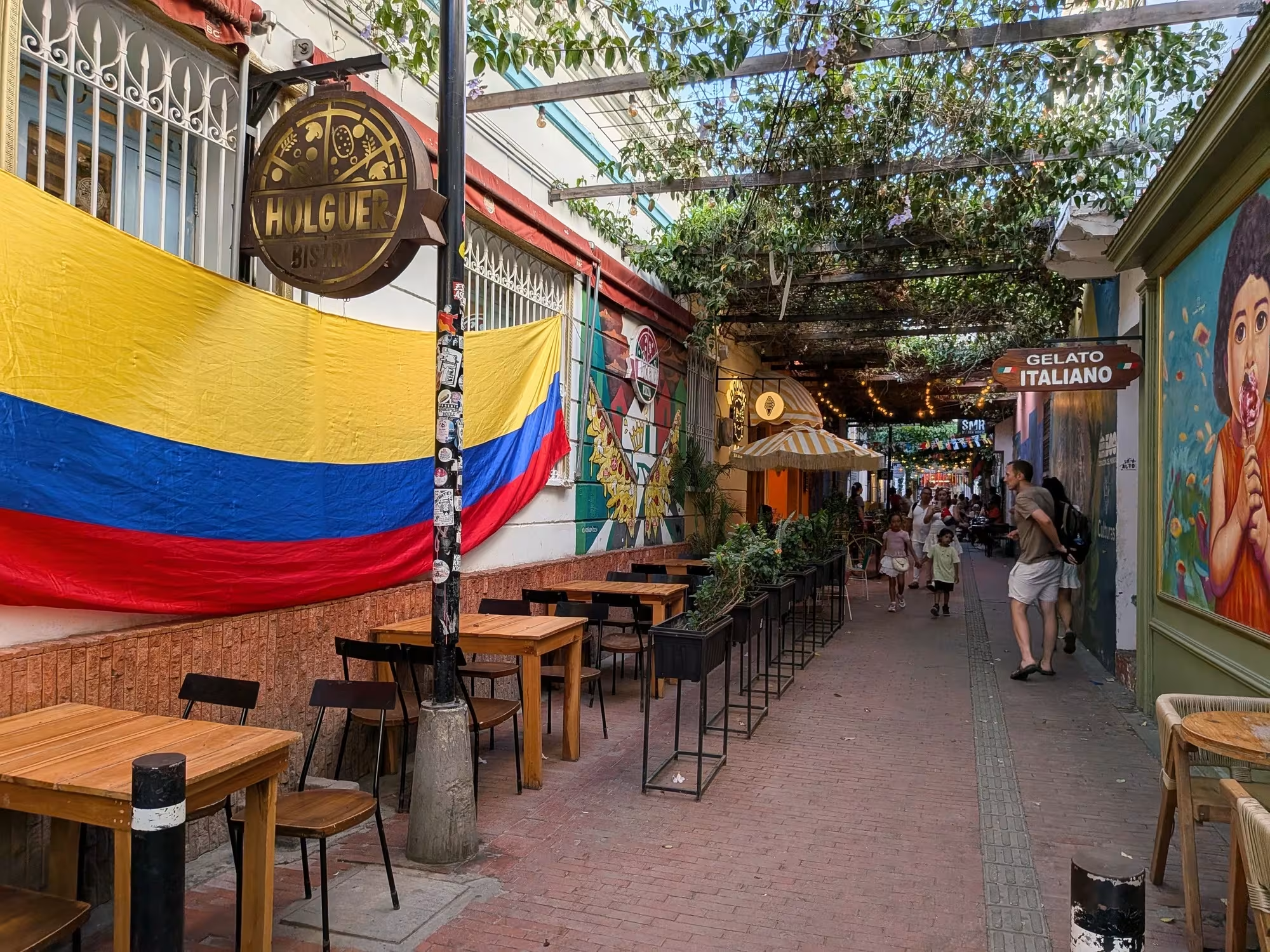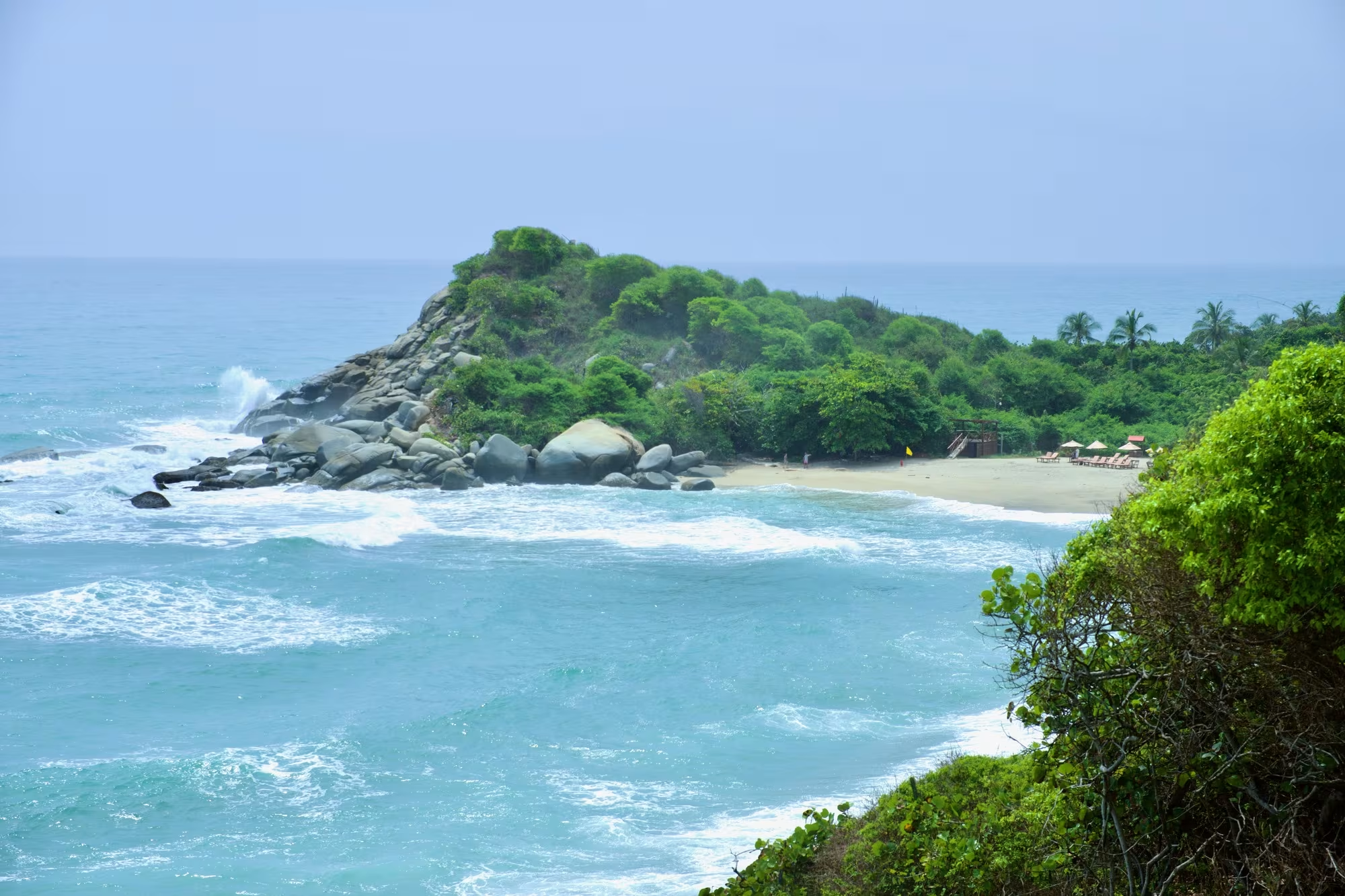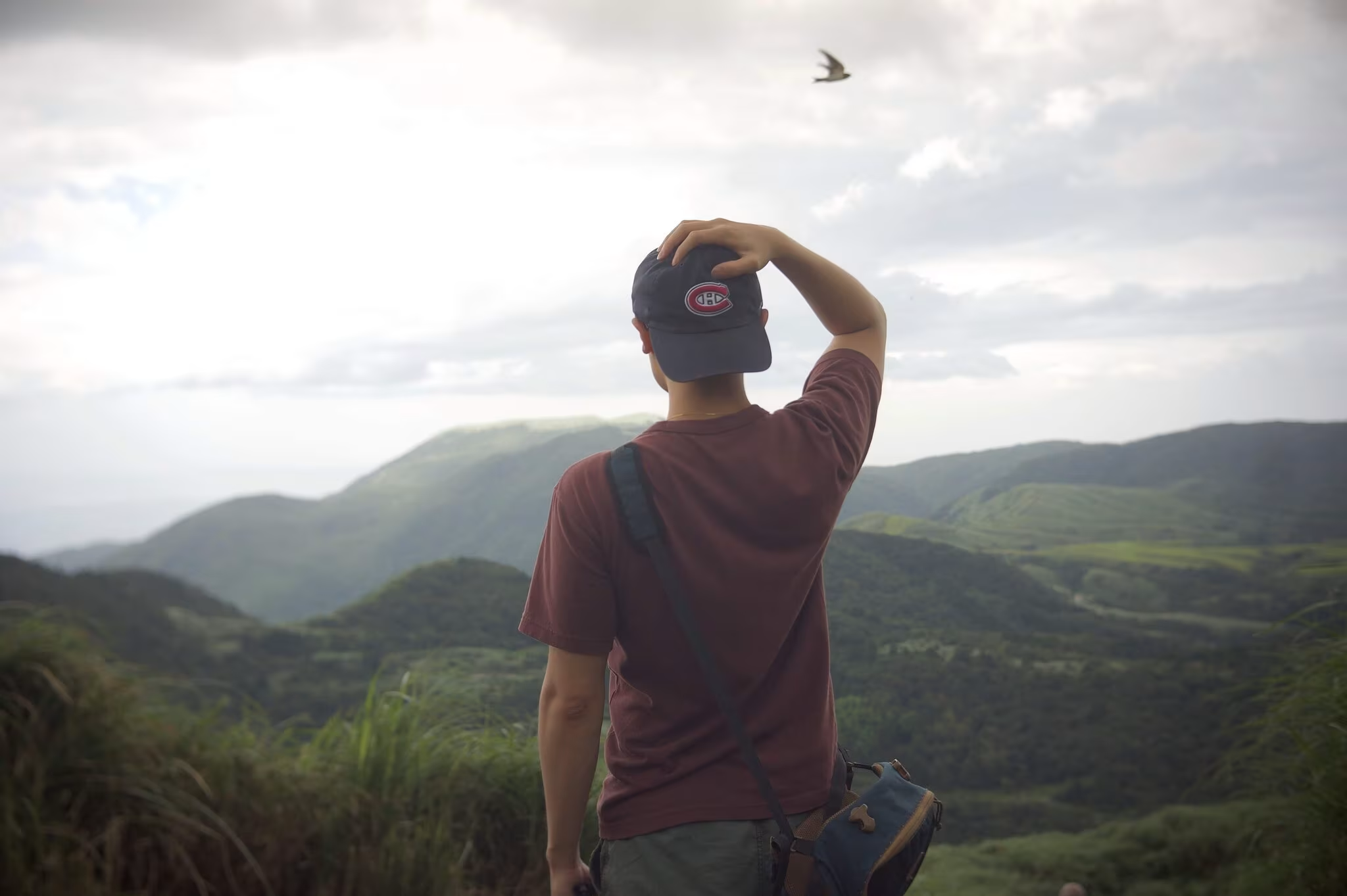
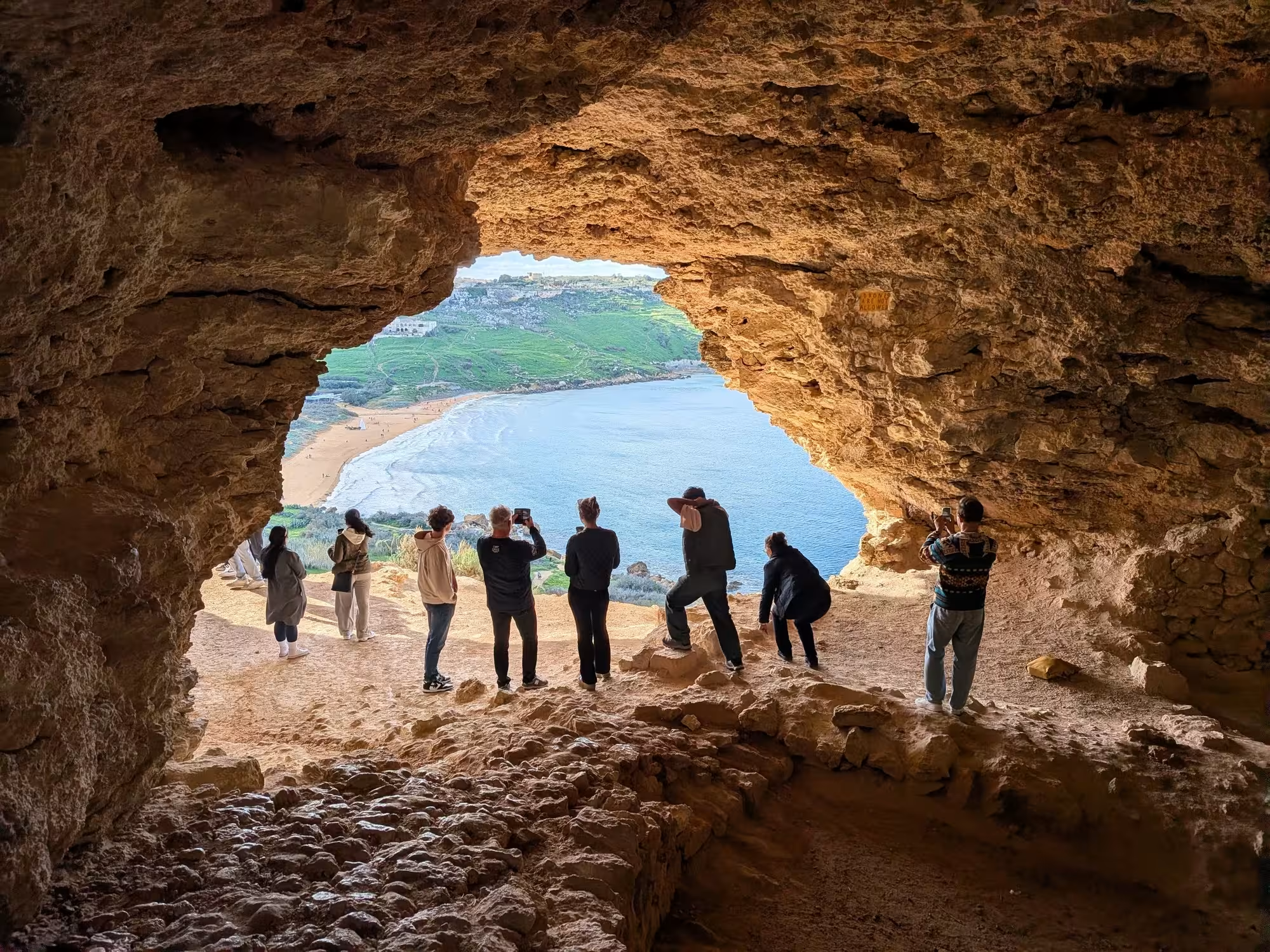
In recent years, after having traveled abroad several times, it is necessary to face the facts that mass tourism has become a real problem.
This is a topic of discussion that I hear a lot about around me, and it is clear that the travel experience has deteriorated over time.
This phenomenon is not new, but it is only progressing as each individual has the means to be able to afford to travel further than their own country.
For those who like to travel in a backpack, we often like to stand out by saying to ourselves that we explore the world differently, that we like to go off the beaten track to avoid this crowd of tourists.
Even if in fact this seems like a good initiative, the fact remains that some people travel only for the simple pleasure of discovering new places, without really digging deep into understanding where they are going.
Neglect of habits and customs, bad behavior and the goal of only taking photos or videos for social networks are the causes of a lot of debate in the tourism industry.
In this case, what alternative should be adopted to make the trip much healthier and more respectful? Should we simply review the way we travel?
An alternative solution to mass tourism: responsible tourism
In my opinion, there is an approach that seems fundamental to make each of our trips the most memorable and the most rewarding both culturally and on a human level: responsible tourism.
Responsible tourism consists of 3 main axes.
🌍 Environmental impact
Reducing your carbon footprint (transport)
Today, it is a hot topic that is being talked about a lot. We all know that each of us leaves traces behind us by emitting carbon on a daily basis. And one of the biggest emission points concerns transport, including planes.
For some of us, flying is the most preferred mode of transport to travel around the world, but unfortunately it is the one that releases the most CO2.
Note that for a Paris - New York flight, the emission of CO2 by a plane would be enough to meet our annual greenhouse gas emission quota.
But then, how do you combine your passion for travel while being concerned about its ecological impact?
The radical answer would be to stop traveling by plane, and to use only the train and the bus as a means of transport. Except that in fact, it's not that simple.
Because we all have time and money constraints. Sometimes it is not possible to take the train because it is more expensive than flying and longer. Same for the bus. So if you want to stay in line with its principles, you will have to make some sacrifices.
If I had to give you my opinion on this, I think it is necessary to find the right balance. You don't have to give up flying, as it's still a really practical means of transport.
Only, we will have to review the way we travel. I recommend practicing slow tourism, or “slow tourism” in English.
Preserving ecosystems and biodiversity
More and more, you can see hotels and resorts built in order to attract more tourists. If we look at Southeast Asia, many investors see tourism as a profitable niche where tourist comfort remains the priority at the expense of the preservation of nature.
The consequence of this is massive deforestation and the privatization of certain areas formerly accessible to the public.
This also leads to a gradual influx of new tourists to these areas, who can degrade the environment through disrespectful behavior: throwing trash, condescending and hostile towards the local population.
Among those targeted, there are of course some native populations who still live in these areas, and who are threatened by the development of all these infrastructures.
However, what makes the beauty of a country so attractive are the many preserved places where local people live to share their culture and tradition by making us discover their own country in their own way.
One does not travel to simply relax in front of the pool in a paradisiacal setting with all the hotel services included. We travel to discover a different reality, to learn things that do not exist at home.
Limit your consumption (water, energy, waste)
At our level, if there is one way to protect our environment even while traveling, it is of course to limit the consumption of water, energy, plastic-based products as well as food waste.
It's often tempting to say to yourself that when you travel, you can afford to relax and do whatever you want.
When you are in the hotel, you will use a lot more water than usual or leave the air conditioning on all day. Outside, we will also allow ourselves to buy bottles of water, ask for plastic bags, taste various local dishes, etc.
This excessive consumption leads to a disruption in the supply chain of vital resources.
Where the local population allows themselves to use only the bare minimum for their consumption, the average tourist will take advantage of their situation to consume much more than they really need.
To this end, we can also ask ourselves the question of the waste that is gradually piled up at the dump. In some countries, the treatment is not optimized to have so much waste, because it is mainly based on the consumption habits of the local population.
Given the arrival of tourists, it is therefore not uncommon for the garbage dump to be saturated, but that in addition, this waste is left in the wild.
For this reason, we must know how to become aware of our own impact as a traveller, and the consequences that each of our actions can have.
A piece of advice : prefer to bring your water bottle, and if possible to bring back a fabric bag for all your purchases at the market. And it's even better if you can make yourself food by taking Tupperware with you!
Respect natural areas and wildlife
The human being, at its core, lives in symbiosis with fauna and flora. With the emergence of tourism and excessive overconsumption, we have ended up creating a disorder so brutal that our planet is suffering the consequences of our actions.
The massive quantity of plastic waste kills animals, our consumption habits lead to the intensive production of unsavory products, which are then thrown into the wild.
Beyond waste, certain illegal practices, including the exploitation of animals, are used to serve as entertainment for tourists. The use of elephants and monkeys in Thailand is the perfect example of how far tourism can go for our simple pleasure.
My advice : if we want to ensure that our trips are as authentic as possible, we must commit to respecting certain codes that respect the environment and review the way we discover a country.
👥 Social and cultural impact
Respect local populations and their traditions
Discovering a new country doesn't have to be limited to just visiting historic places and seeing beautiful landscapes.
Besides that, there is also a duty of respect for the local population and their traditions.
Understanding the country's habits and customs, dress codes, level of politeness, and methods of interacting with locals are essential to avoid misunderstandings and disrespect.
It is also a way of sending a positive message to our interlocutor to tell him that we are interested in his culture, in his daily life, and that we treat him equally despite differences.
Learning even a few sentences in the local language is a proof of respect and open-mindedness, because it shows that you want to understand the reality of the other by trying to dialogue with the other.
Encouraging authentic encounters
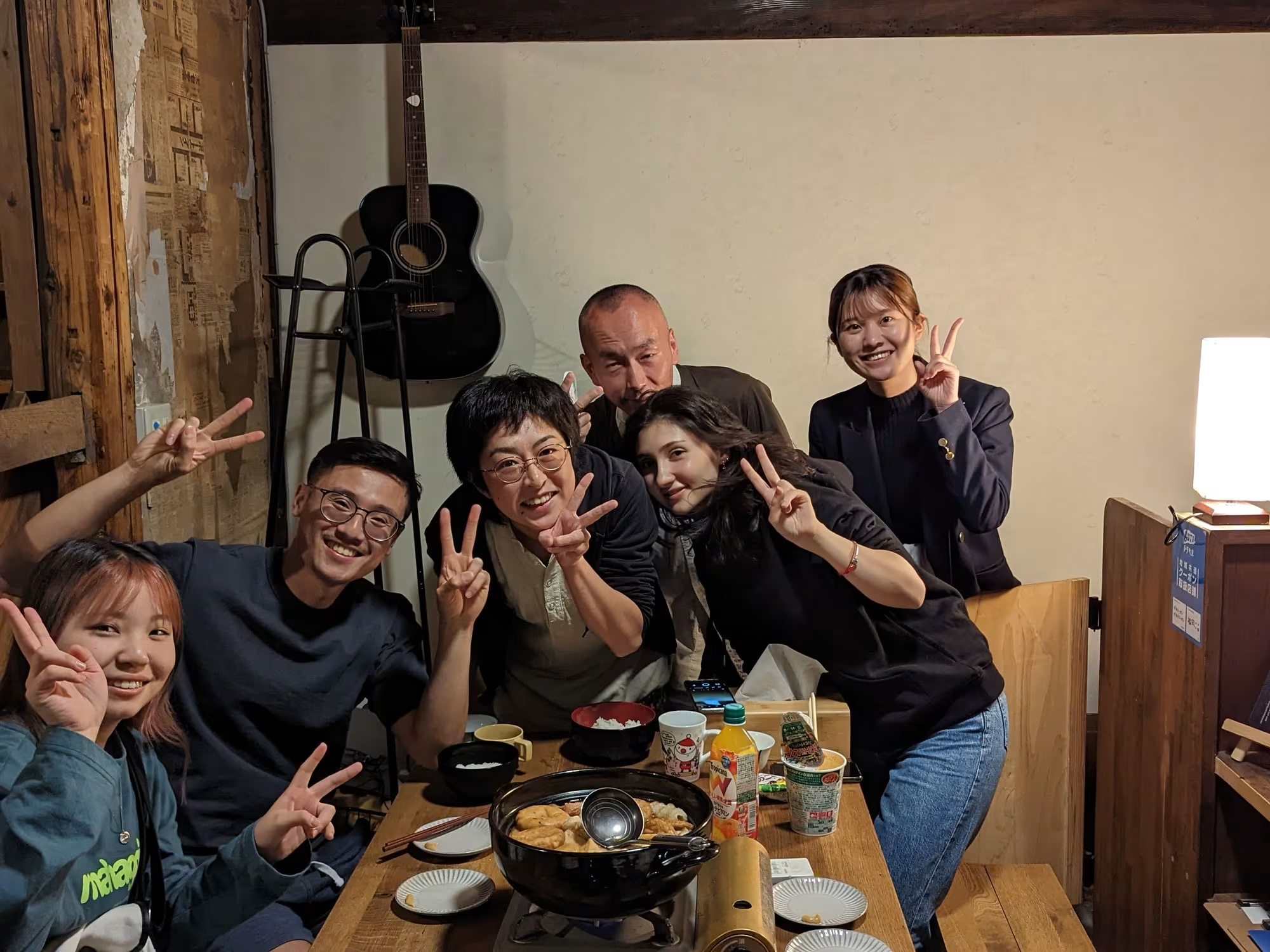
In all of my solo trips, authentic encounters are the most important for me.
We often tend to think of a trip as a destination where we will discover must-see places, taste different dishes and participate in local activities.
Except that travel is above all a way to discover new visions, stories and realities through the eyes of each of our encounters.
For some of these meetings, many will be fleeting. But sometimes, only a handful of them will be rich in learning.
You learn a lot about yourself by comparing the ideas of someone from a different country.
In my opinion, this point should not be overlooked, because far too often when traveling, we tend to stay locked in our bubble and not try to reach out to others.
However, it is these moments of discussion, even if only a few minutes, that can really change the situation in your adventure!
Avoid intrusive mass tourism
Mass tourism is often perceived as a plague for the local population. And for good reason, this drastically reduces the quality of life of inhabitants who are close to tourist places.
The vast majority of tourists come for the simple fact of taking photos of themselves in historic monuments, sometimes without understanding what this monument may well represent to them.
Some even go so far as to disturb local residents to access private properties, in order to find good “Instagrammable” spots.
This is why intrusive mass tourism can generate sometimes aggressive behaviors on the part of locals, which shows a rejection of tourists in their place.
And in itself, it is completely understandable for them to act in this way. Who would want to be disturbed where they live?
As time goes by, many of these places lose their souls because they are far too crowded. The travel experience therefore becomes degraded.
One solution could be to reinforce security measures in certain places, by ensuring that the instructions are respected. Except that very often, these rules are not always followed to the letter.
At our level, the only thing we can do is to always respect each place we visit: do not shout, do not try to enter private property, ask local traders for information about the place and respect the private space of the inhabitants.
Preserving cultural heritage
One of the reasons why the local population is proud of their city is the preservation of their cultural heritage. And in this sense, it is quite normal for them to want to show these beautiful monuments and historical museums on a larger scale.
Tourism as such helps promote the development of these cities, which is good for the local economy.
However, uncontrolled tourism can bring its share of inconveniences for the city: vandalization of walls, gradual deterioration of certain infrastructures and non-compliance with places of worship.
It is important to understand that each country has its own history, customs, and civilization. To destroy their cultural heritage is to destroy part of their identity.
This is why, as a tourist, you have to know how to position yourself as a “guest” among the local population: you come to them to share moments and respect their cultural heritage.
💰 Economic impact
Focus on the local economy (restaurants, accommodations, local guides)
Today's tourism relies a lot on packages developed by travel agencies in order to make him discover what he wants to see: paradisiacal beaches, comfortable hotels, quality restaurants and convenient transport.
However, this type of trip mainly finances businesses that are already well established, but does not finance much or even the local economy.
Especially since when you know what these companies do with this money, it is mainly for the sole purpose of developing new hotel complexes in order to meet a strong demand.
And yes! Unfortunately, the market world works according to supply and demand. The more demand there is for this type of trip, the more companies will do everything to satisfy their customers.
Except that for some traders, hosts and local guides, faced with the weight of these businesses, they then find themselves neglected. However, many of them have a real passion for sharing their culture, for having a great time and for making you discover things off the beaten path.
So everything depends on where you invest your money in your trip: do you prefer to invest it in order to finance these money-hungry companies with the sole aim of making you see what you want? Or do you prefer to leave room for discovery by going directly to see the locals for a real immersion?
Fair remuneration for local actors
Many local retailers, hosts and guides work for themselves and are paid for their services.
When a tourist spends their money at home, a very large part of the money will be used to finance the local economy: recruiting local employees, declaring their tax income, reinvesting in other local projects, etc.
To know which establishments benefit the local economy, some information makes it quite easy to detect how they work: how are employees treated, how are they trained, are they passionate about their field, is it a chain, etc.
By going directly to the locals, we ensure that the money spent can be paid directly to them without intermediaries.
Avoid major international chains when possible
As the name suggests, major international chains rely on their influence to control how people consume.
It is now no longer unusual to see these channels proliferate all over the world. Their strength lies in their brand identity: when something is very well known to the public, the first thing that comes to mind is that brand, not another.
If I take the example of Starbucks, the first thing we will think of is its coffee. If tomorrow, I want to have a coffee while I am traveling, I will immediately think of having a Starbucks coffee.
As a result, all our thinking is oriented towards this chain, and no longer towards novelty, even though other coffee shops are much better.
The trap is there, especially during a trip. You have to get rid of this cognitive bias in order to learn to discover something other than what you are used to consuming.
By venturing outside of our thought system, we open ourselves up to opportunities that we didn't expect.
Conclusion
Mass tourism is one of the consequences of a system based on the desire of customers to travel more comfortably without headaches and by relying on certain organizations specialized in tourism.
Nowadays, travelers rely above all on destinations where you can see beautiful landscapes and historical monuments that please the eye, without necessarily looking to dig further. Social networks and marketing strategies divert the attention of the public to show another reality of travel that is not intended to add value to their stay.
We are turning to tourism that pushes us to always see more, without going deep into the environment that surrounds us. We are then only seeing the surface of an iceberg without trying to see its culture and traditions deep inside a country.
The tourism industry is therefore based on large companies that focus on customer satisfaction by seeking to meet their need for comfort and speed. As a result, this leads them to develop their offer by focusing on new infrastructures and new experiences without taking into account all the ecological and social challenges that this may generate.
This system completely distorts the essence of a trip, which is to make the experience the most authentic and the most human.
This is a subject that interests me enormously, but requires a lot of information research. In this article, I have only shared with you my impressions as well as my thoughts based on my own experience. Travelling allowed me to question myself about certain aspects of tourism, while knowing that I am aware that I too am a tourist.
Therefore, it is our duty to deal with such magnitude by rethinking travel in a different way. And responsible tourism must be able to respond to this problem.