How not to come to South Korea without going through the second largest city, Busan? It is a must in your visit to the land of calm mornings!
Unlike its Seoul counterpart, Busan has the advantage of having the most beautiful beaches as well as the most beautiful spots to stroll along the coast.
Located in the southwest of the peninsula, Busan has the advantage of having a relatively mild climate throughout the year. Having gone there in summer and winter, the temperature difference is not extreme.
Visiting the city of Busan is not complicated, as you will have the subway as well as buses crossing all the main tourist points. You don't have to wait long for the next public transit to arrive, which is very convenient.
But what makes this city really cool to visit is the various landforms that make up Busan. Indeed, you are close to the coasts, the various hiking trails and thus have the opportunity to see it from all angles.
In the evening, Busan is transformed into a magnificent festive city with many events: concerts, night markets, lots of atmospheres in the main districts or shopping quite late. It is not for nothing that this city practically never sleeps!
So there are a lot of things to do. You will therefore have to choose carefully which places you would like to visit and for how many days.
But that's good news! Because I have for you a big list of spots to do at least once in your life, and things that are a little less well known but that are really worth a visit.
That's what we'll see next!
How do I get to Busan?
There are several ways to get to Busan. Everything will depend on where you are located.

Getting to Busan from Seoul
- Travel time : ~2h30 by KTX train (equivalent to the French TGV)
- Cost : 60,000999 (~40€) one way
- Departure station : Seoul Station
- Arrival station : Busan Station
Getting to Busan from Pohang
- Travel time : ~1h30 by bus
- Cost : 15,000999 (~10€) one way
- Departure station : Pohang Intercity Bus Terminal
- Arrival station : Haeundae Bus Terminal
note : In fact, there are several bus terminals in Busan. There are 3 in total: Busan Central Bus Terminal, Busan Seobu Intercity Bus Terminal and Haeundae Bus Terminal. If you want to head east of the city instead, close to the beaches and the main tourist spots, then Instead, choose to get off at Haeundae Bus Terminal.
Getting to Busan from Gyeongju
- Travel time : ~1:00 by bus
- Cost : 10 000999 (~6 €) one way
- Departure station : Gyeongju Intercity Bus Terminal
- Arrival station : Haeundae Bus Terminal
Getting to Busan from Suncheon
- Travel time : ~2h20 by bus
- Cost : 19,500999 (~13 €) one way
- Departure station : Suncheon Express Bus Terminal
- Arrival station : Busan Seobu Intercity Bus Terminal
Where to stay in Busan
Since Busan is a very big city, it can be quite difficult to choose the best place to stay for a few days of sightseeing. In my opinion, there are 3 main neighborhoods where you should stay according to your desires: Seomyeon, Haeundae, or Busan Station.

Where to stay in Busan in the Seomyeon district
The Seomyeon district is famous by young Korean students for its night life. Indeed, it is a place where you will find lots of bars, restaurants, and cafes on every corner. If you like to go out at night to meet new people, this is surely one of the places to stay.
The first time I arrived in Busan, I booked a Blue Backpackers Hostel, located not very far from Seomyeon station. The cost of one night is really cheap, around €12 for a bed in a dorm room. The advantage of this hostel is that it is very well located, in addition to having a common area that encourages exchanges with other travelers.
My other housing recommendations:
- Travel Light Hostel (~20€ per night for a dorm bed, ~35€ for a private room)
- Sangsang Stay Busan (~40€ per night for a private room)
Where to stay in Busan in the Haeundae district
The Haeundae district is quite similar to the Seomyeon district, with one difference: you are much closer to the beach, as well as to the famous Haedong Yonggungsa Temple.
As a result, Haeundae is very popular with tourists during the summer month, because it is the period when it is the hottest and can swim at the beach. It is a fairly quiet place during the day, but it is very dynamic at night with its street-food market.
If you want to be a bit away from the noise of cars, enjoy the beach while taking walks along the coastline, then this is the place to stay.
As far as I am concerned, I did not have the opportunity to stay in Haeundae. But as I have already visited it twice, I can recommend what seems to me to be the best accommodations in terms of quality/price/location:
- Mama Guesthouse Haeundae (~40€ per night for a private room)
- O'guest in Haeundae (~30€ per night for a private room, breakfast included)
- Best Louis Hamilton Hotel Haeundae (~34€ per night for a private room, breakfast not included)
Where to stay in Busan near Busan Station
If you prefer to be close to the main station in Busan to avoid carrying your luggage for too long, then know that it is quite well located to allow you to optimize your travel time and visit the city in a more comfortable way.
In addition to being well served by the subway, you also have plenty to discover in the area, including Jagalchi Market, Busan Tower, BIFF Street and many more!
For my part, I mainly stayed in One Way Guesthouse Busan, located right next to Busan Station. It is an accommodation that is both cheap (~12 € per night), very well located and close to restaurants and places to visit. Also note that the guesthouse offers you the opportunity to volunteer in exchange for free accommodation (subject to a WHV to be able to apply)!
Overall, I am quite satisfied considering the price, but hygiene is not always there. You'll have to get out of your comfort zone a bit if you want to sleep here cheaply.
Of course, there are other accommodations that are much better and at the same price that are more interesting:
- Sohostel Korea (~15€ per night for a dorm bed)
- Dante House (~17€ per night for a dorm bed, ~32€ for a private room)
- Hostel Single Single (~33€ per night for a room, but shared bathroom)
And if you don't find what you're looking for among those I mentioned, you can always search for other accommodations below by playing with the reservation date, location and number of people you are going to travel with !
What to do in Busan: the best places to visit
Since there are so many things to do in Busan, I couldn't go into the details for each location.
Instead, I am going to make a list with the best things that seem essential to me during your visit to this magnificent city with its multitude of contrasts.
This is a non-exhaustive list of places that travel from West to East in the city of Busan.
- Gamcheon Cultural Village
- BIFF Street and Gwangbok Fashion Street
- Bupyeong Kkangtong Market
- Songdo Sky Park
- Jagalchi Market and Chungmu-dong
- Seomyeon district
- Oryukdo Skywalk and the Igidae hiking trail
- The traditional market and Haeundae Beach
- Haedong Yonggungsa Temple
Here is the complete map of the various places that I have visited and that I recommend that you visit. As you know, I only recommend the best to make the most of your trip!
Gamcheon Cultural Village
If there is one place to visit when visiting Busan, it is the Gamcheon Cultural Village. And for good reason, it is one of the most visited places with a very interesting historical past.
Its history dates back to the 1950s, when refugees from the Korean War began settling in the region. Over time, the neighborhood experienced economic and social challenges, but in the 2000s, a community revitalization initiative was launched to transform the village into a place of art and culture.

Today, Gamcheon's narrow streets are dotted with colorful artwork, art galleries, craft shops, and hip cafes. The village attracts visitors from all over the world who come to admire its unique charm, discover its history and get lost in its winding streets.
BIFF Street and Gwangbok Fashion Street
BIFF Street (Busan International Film Festival) and theA fashion street in Gwangbok are two iconic destinations in Busan, South Korea, which embody the cultural and artistic evolution of the city.
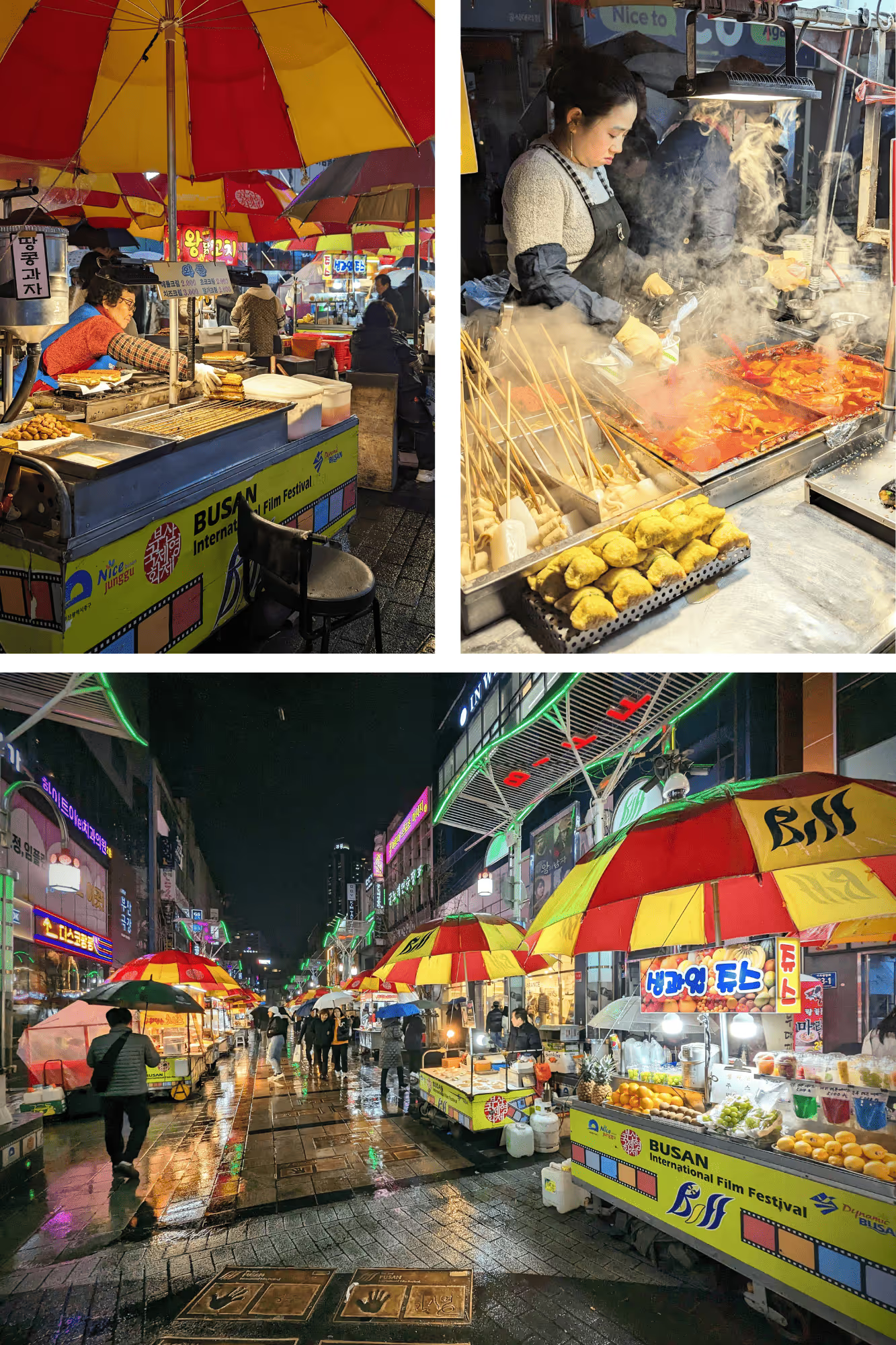
BIFF Street, once a simple shopping street, became famous thanks to the Busan International Film Festival, one of the biggest film festivals in Asia. Founded in 1996, the festival brought international attention to this part of Busan, turning the street into a hub of the Korean film industry. Today, BIFF Street is lined with movie shops, trendy cafes, and souvenir shops, drawing both movie fans and tourists from around the world.
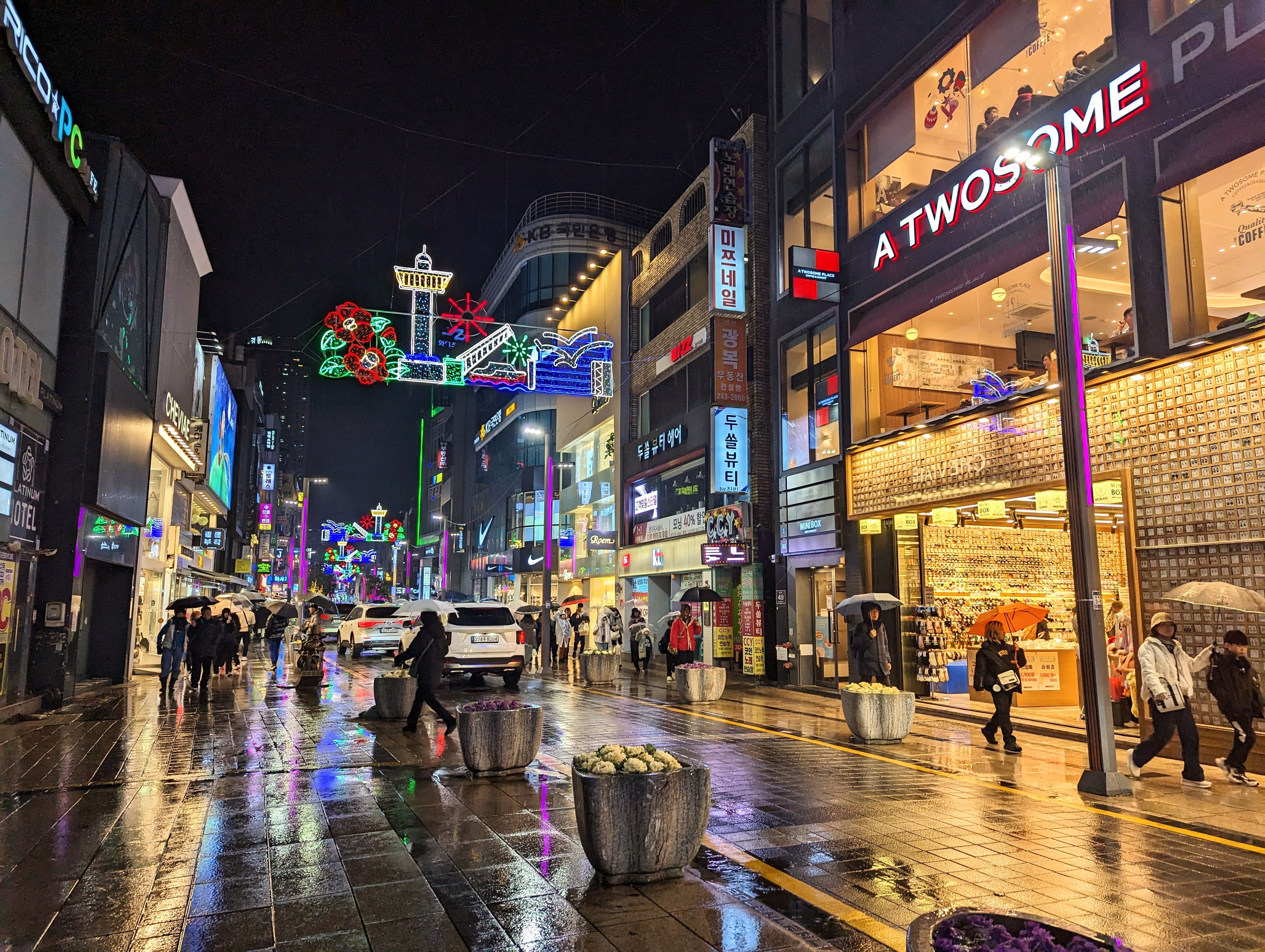
Gwangbok Fashion Street, on the other hand, is renowned for being one of the main shopping destinations in Busan. Its history dates back to the 1950s, when it was known as the “street of fashion stores.” Over the decades, it has become a fashion and shopping hotspot, with a concentration of clothing boutiques, shopping malls, and international brand stores.
Bupyeong Kkangtong Market
Bupyeong Kkangtong Market is one of the oldest and most famous traditional markets in the city. Its history dates back to the period of the Japanese occupation of Korea in the early 20th century, when local merchants began to gather in the region to sell a variety of fresh produce, seafood, and other goods.

Over the decades, Bupyeong Kkangtong Market has become a go-to meeting place for Busan residents, offering not only fresh local produce but also an immersive experience of local culture. The lively alleys of the market are full of colorful stalls offering a variety of Korean food specialties, from traditional clothing to handmade souvenirs to delicious street snacks.
Songdo Sky Park
Songdo Sky Park is a spectacular urban park built on the site of the ancient port of Songdo. The history of this park dates back to the 1910s, when Songdo Port was Korea's largest fishing port. However, over time, the port lost its importance and became an abandoned wasteland.

In the 2000s, as part of an ambitious urban revitalization project, Busan authorities set out to transform the abandoned site into a modern public green space. So, in 2017, Songdo Sky Park was inaugurated, offering residents and visitors to Busan an impressive urban oasis with breathtaking views of the East Sea.
Jagalchi Market and Chungmu-dong
Jagalchi Market and Chungmu-dong are an iconic destination that embodies the city's maritime history and culinary tradition.
Jagalchi Market, in particular, is the largest fish market in South Korea and has a history that dates back to the end of the 19th century. At the time, local fishermen started selling their catch directly on the wharf, creating an informal market that became the Jagalchi fish market we know today.
Over the decades, Jagalchi Market has become a Busan institution, attracting not only locals looking for fresh seafood, but also tourists curious to discover the vibrant and colorful life of the market. Here you can find an astonishing variety of fresh seafood, as well as restaurants serving delicious dishes made from the catch of the day.

Next to the Jagalchi Market is Chungmu-dong, a historic district that was once the heart of Busan's fishing industry. Today, Chungmu-dong still maintains much of its former charm, with its narrow streets, traditional houses, and numerous seafood restaurants serving authentic Busan cuisine.
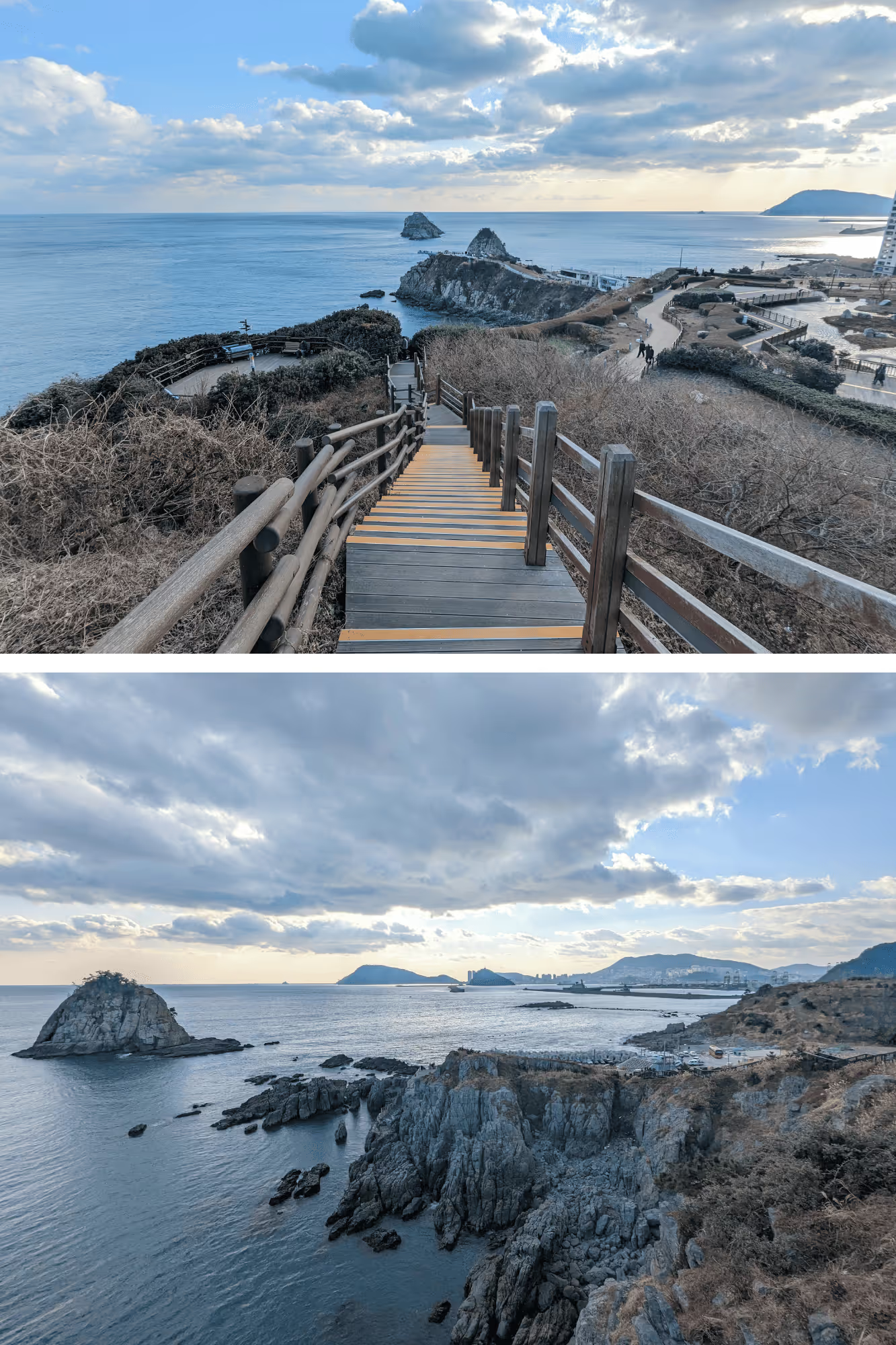
Oryukdo Skywalk and the Igidae hiking trail
The Oryukdo Skywalk and the Igidae hiking trail are iconic attractions that offer visitors a unique experience of the natural beauty of the city's coastal region.
The Igidae hiking trail is a picturesque coastal trail that winds along the rocky cliffs of Busan's south coast. This hike offers breathtaking views of the ocean and surrounding islands, as well as the city of Busan in the distance.

The Igidae trail is renowned for its preserved natural beauty and offers hikers an immersive experience in nature. With its rugged cliffs, secluded coves, and varied flora, the Igidae hiking trail is a true Busan gem, offering visitors a relaxing getaway from the hustle and bustle of the city.
The Oryukdo Skywalk is a suspended glass platform that offers breathtaking views of the beautiful Oryukdo Islands and the East Sea. This spectacular attraction was opened in 2013 and quickly became one of Busan's most popular destinations. It allows visitors to walk on a transparent glass walkway that overlooks the steep cliffs and offers breathtaking ocean views.
The Oryukdo Skywalk is not only a popular tourist attraction but also a great place to take spectacular panoramic photos of Busan.
The traditional market and Haeundae Beach
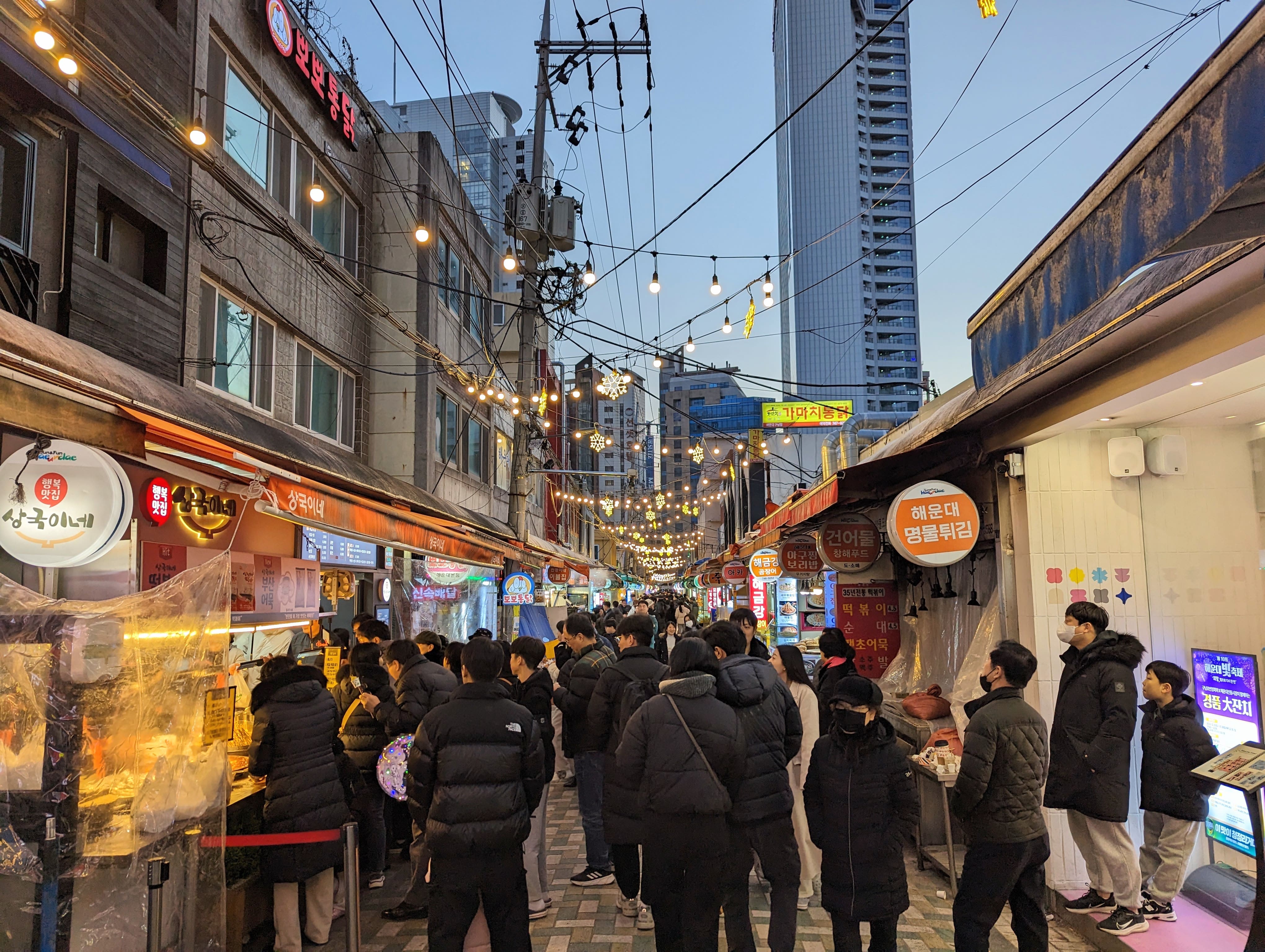
The traditional market of Haeundae dates back over 30 years and is one of the liveliest and most colorful markets in Busan. It offers a variety of fresh produce, seafood, clothing, souvenirs, and more.
The market is also known for its delicious street food, where visitors can enjoy a variety of traditional Korean dishes. Over the years, Haeundae Market has become a popular destination for locals and tourists alike, offering an authentic experience of daily life in Busan.
Haeundae Beach is one of the most famous and busiest beaches in South Korea. It has a history that dates back to the time of the Joseon dynasty, but became a popular tourist destination in the 20th century.

Haeundae Beach is known for its fine sand and crystal-clear waters, as well as recreational facilities such as water sports, seafood restaurants, and seasonal festivals. Every summer, thousands of visitors flock to Haeundae Beach to enjoy the sun, sand, and sea, making it one of Busan's most popular attractions.
Haedong Yonggungsa Temple
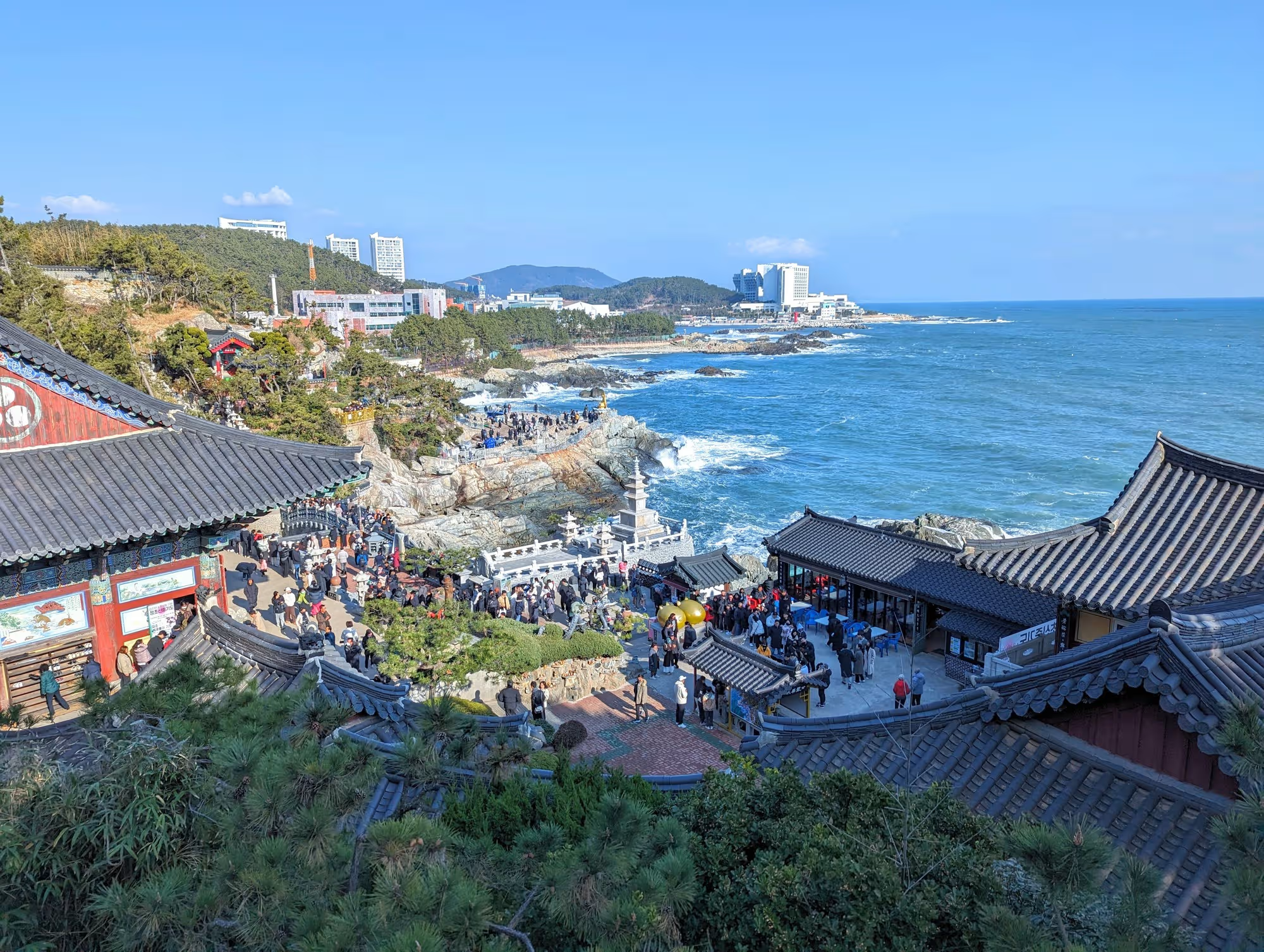
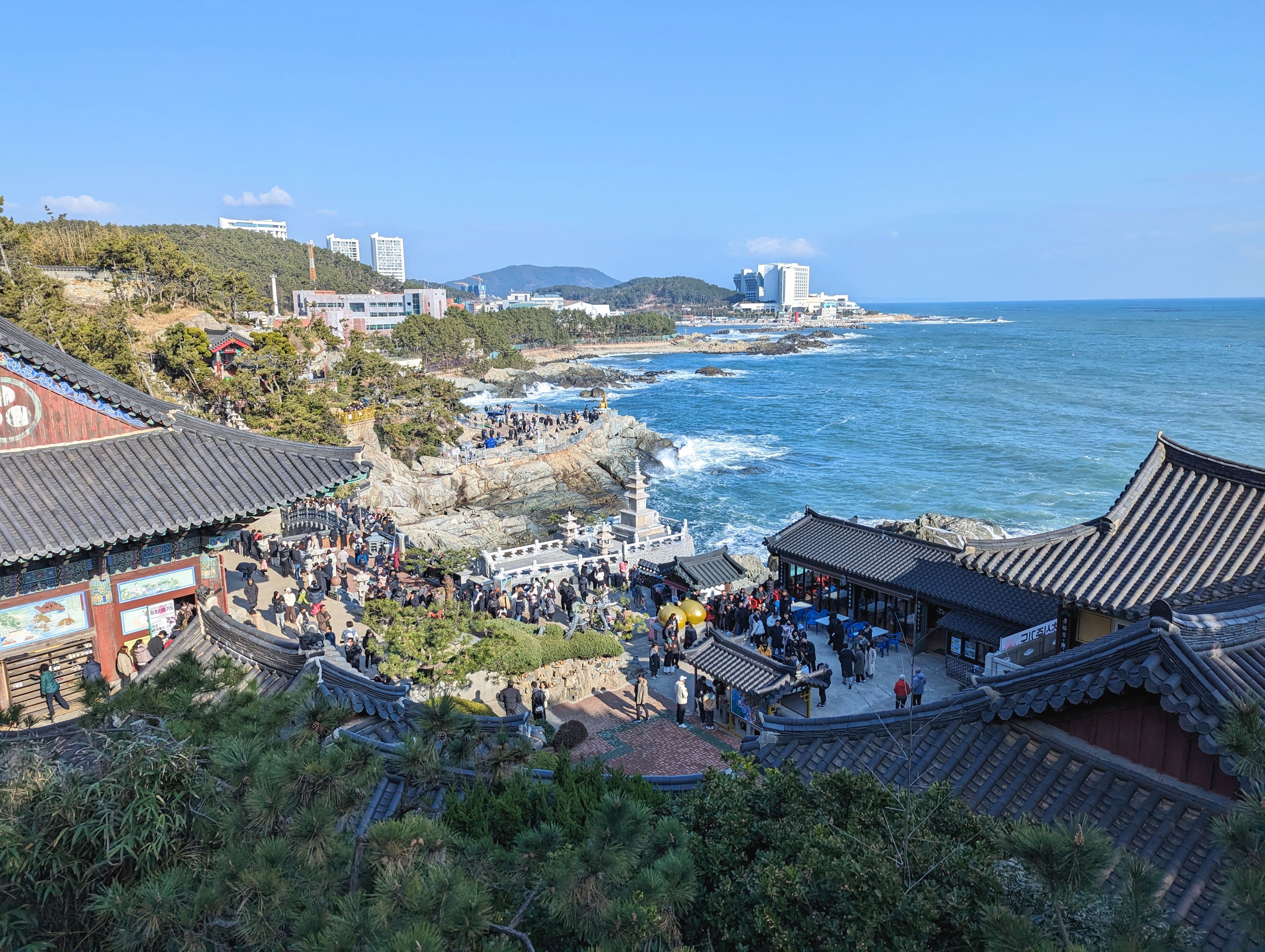
Haedong Yonggungsa Temple is an iconic historical and religious site in Busan. Its history dates back to the Goryeo dynasty (918-1392), although it was rebuilt several times over the centuries due to damage caused by wars and fires.
What makes Haedong Yonggungsa Temple unique is its spectacular coastal location, perched on a cliff overlooking the East Sea. Unlike most Korean Buddhist temples that are nestled in the mountains, Haedong Yonggungsa is one of the few temples located directly on the coastline. This characteristic gives it a particular aura and makes it one of the most picturesque sites in Busan.

Every year, thousands of devotees and tourists come to the temple to admire its traditional architecture, Buddhist statues, and enjoy the panoramic sea views.
Today, Haedong Yonggungsa Temple is not only a place of worship but also a major tourist attraction in Busan, drawing visitors from around the world who come to immerse themselves in its ancient history and timeless beauty.
What to eat in Busan
As the city of Busan is quite large, it is very easy to get lost with the numerous restaurants and street food stalls on almost every corner.
Google Maps will then be your favorite tool to find the best rated restaurants.. But if you want to take it to the next level by looking for restaurants that are very local, then it's not always an easy task.
Because Busan is an internationally oriented city with many neighborhoods from foreign countries, you will then have to look for the best places where you can find a table and be able to enjoy traditional culinary dishes.
For that, I recommend walking in the streets and looking around you Where do most of the Korean population gather to spend their evening there.
If a lot of them line up outside a restaurant, that's a pretty good sign!
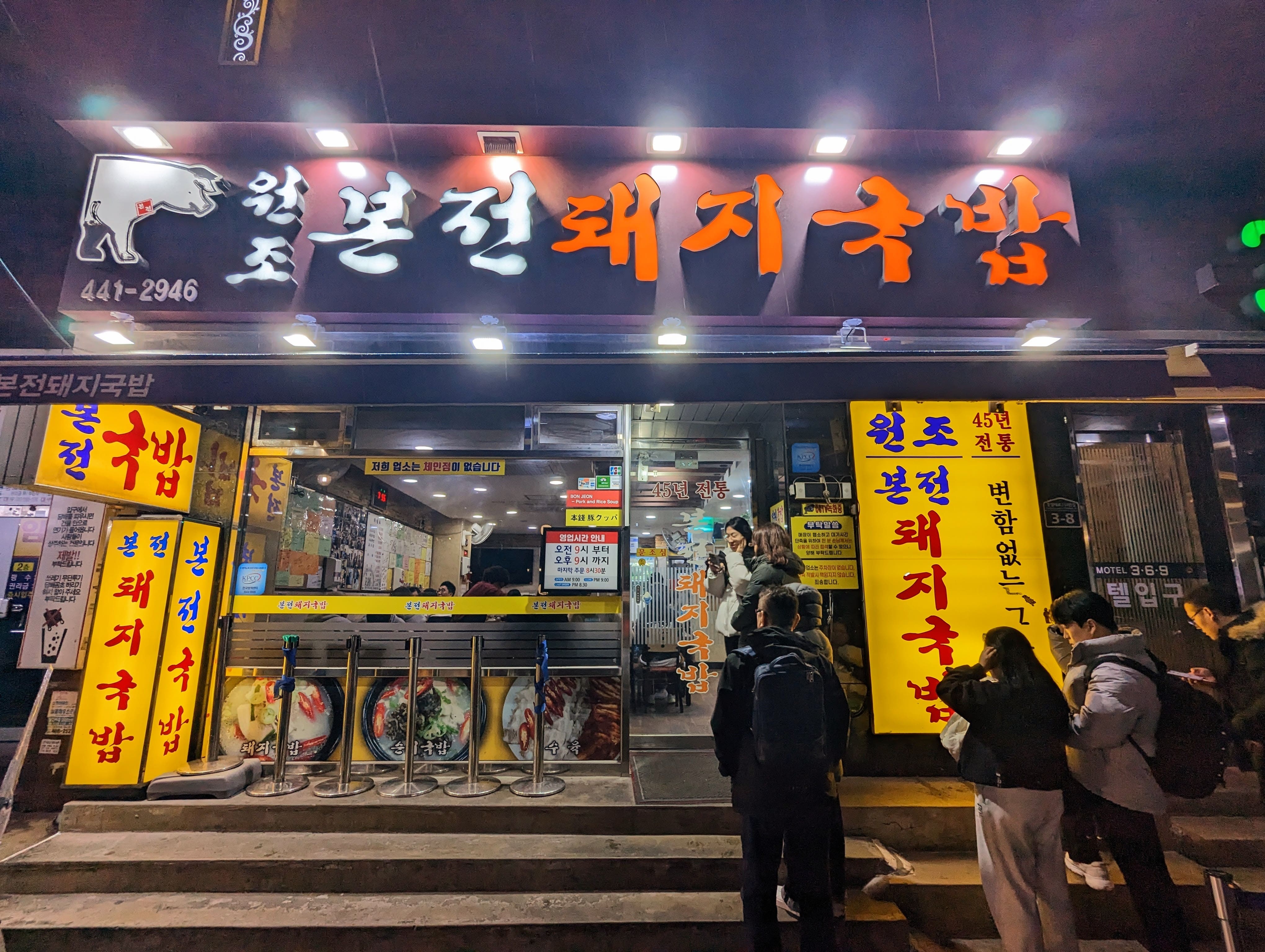
Using this technique, I ended up finding a very local restaurant right next to Busan's main station: Bonjeon Dwaeji Gukbap.
Bonjeon Dwaeji Gukbap
Located right next to Busan's main station, so you won't have a hard time finding it. It was when I passed right in front of this restaurant that I realized that it was a restaurant where almost all the locals come to eat a Gukbap.
Korean men and women eat Gukbap regularly due to several cultural and practical reasons. First of all, Gukbap is a traditional Korean dish that has been an integral part of local cuisine for centuries. It is a hot rice broth served with various sides, such as meat, marinated vegetables, seaweed, and condiments.
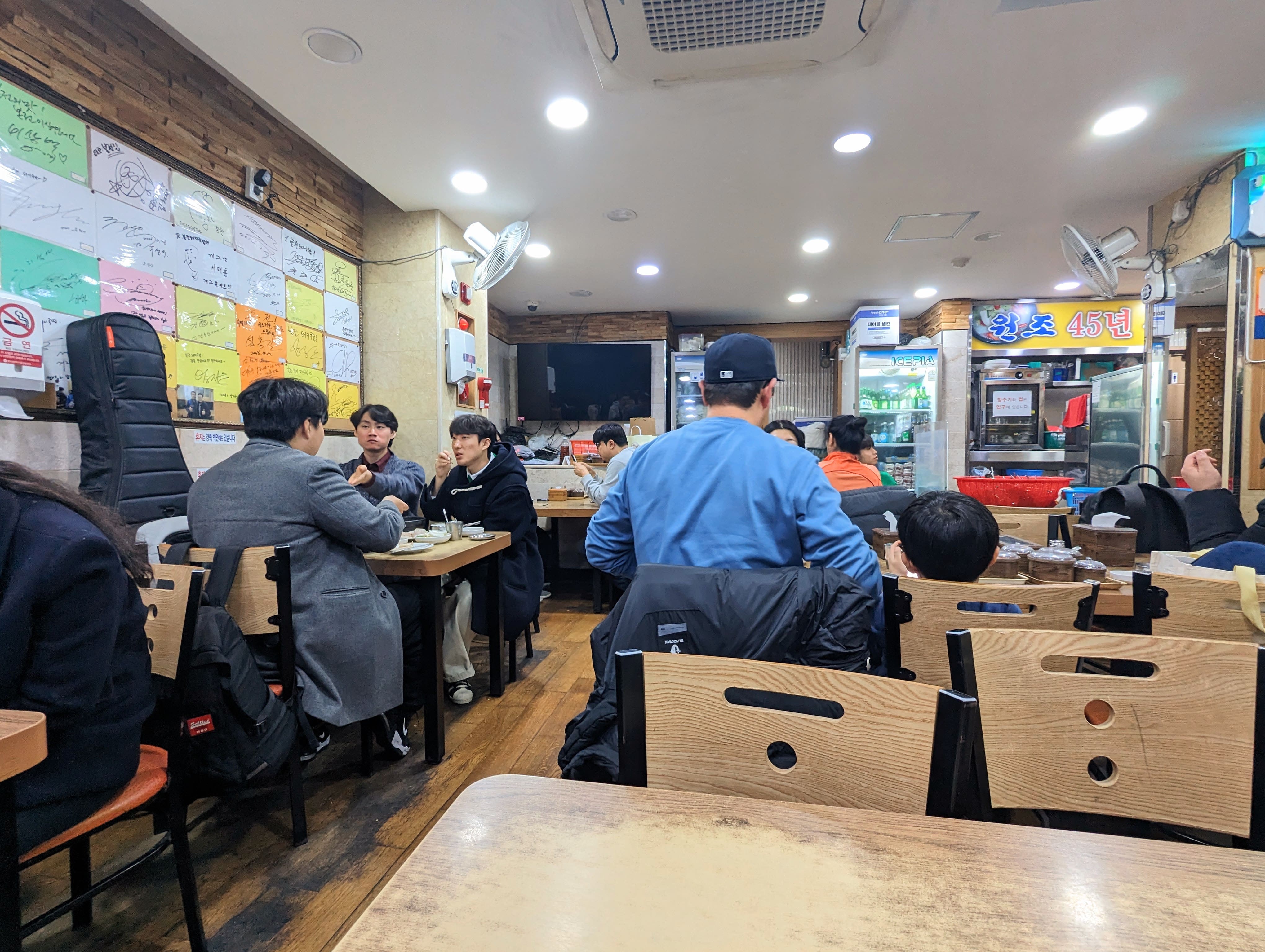
In addition, Gukbap is also considered to be a restorative and invigorating food, often consumed after a party night or a long day at work. Its warm broth and nutritious ingredients help restore energy and relieve headaches and fatigue.
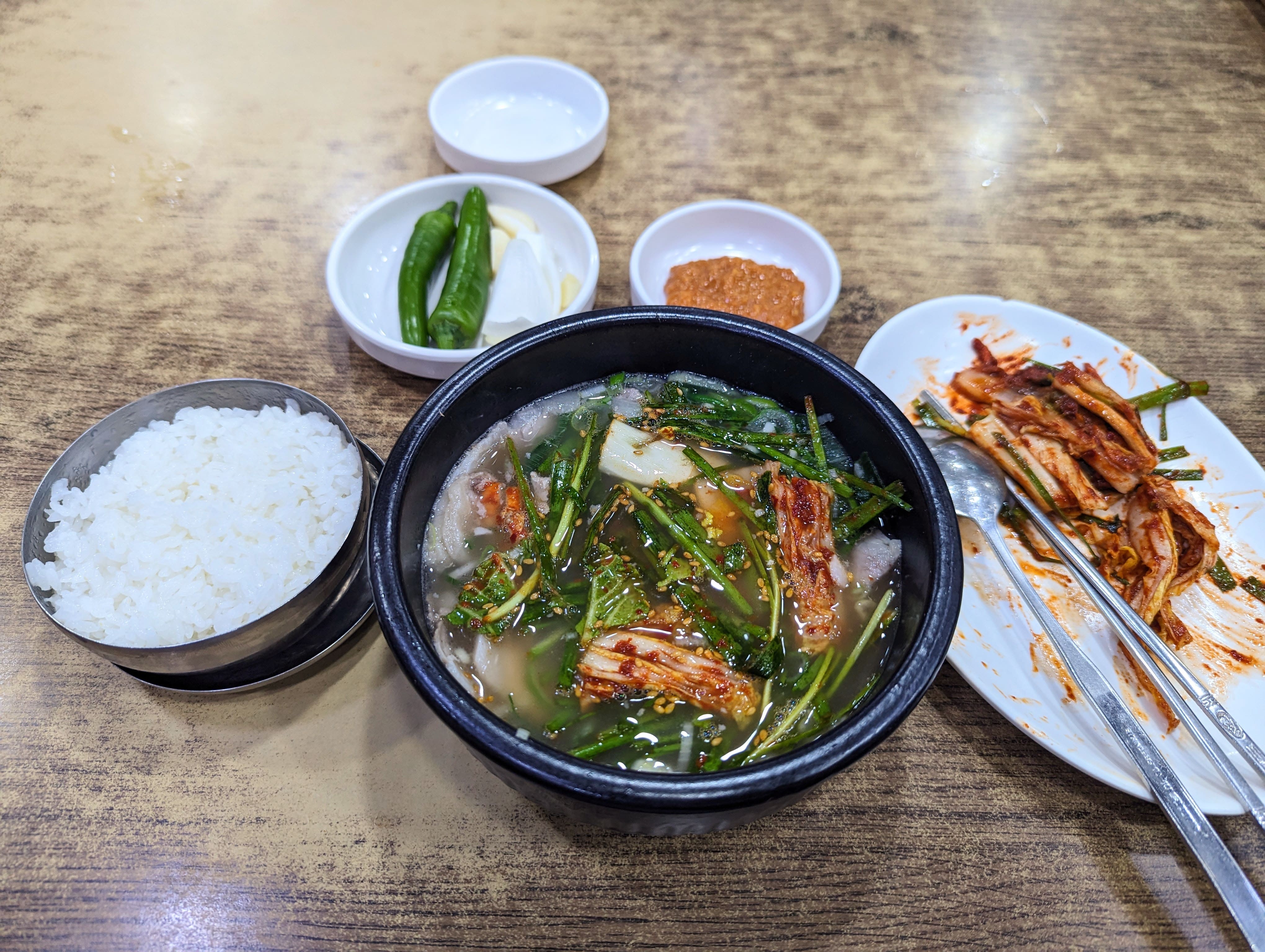
Finally, Gukbap is widely available and affordable, making it a popular choice for daily meals or for a quick lunch break. It can be found in numerous restaurants, street stalls, and fast food establishments across Korea, providing a convenient and delicious option for locals and visitors alike.
Count approximately 9000999 (~6 €) Gukbap's dish with its assortments. It is actually not expensive at all for the quantity offered.
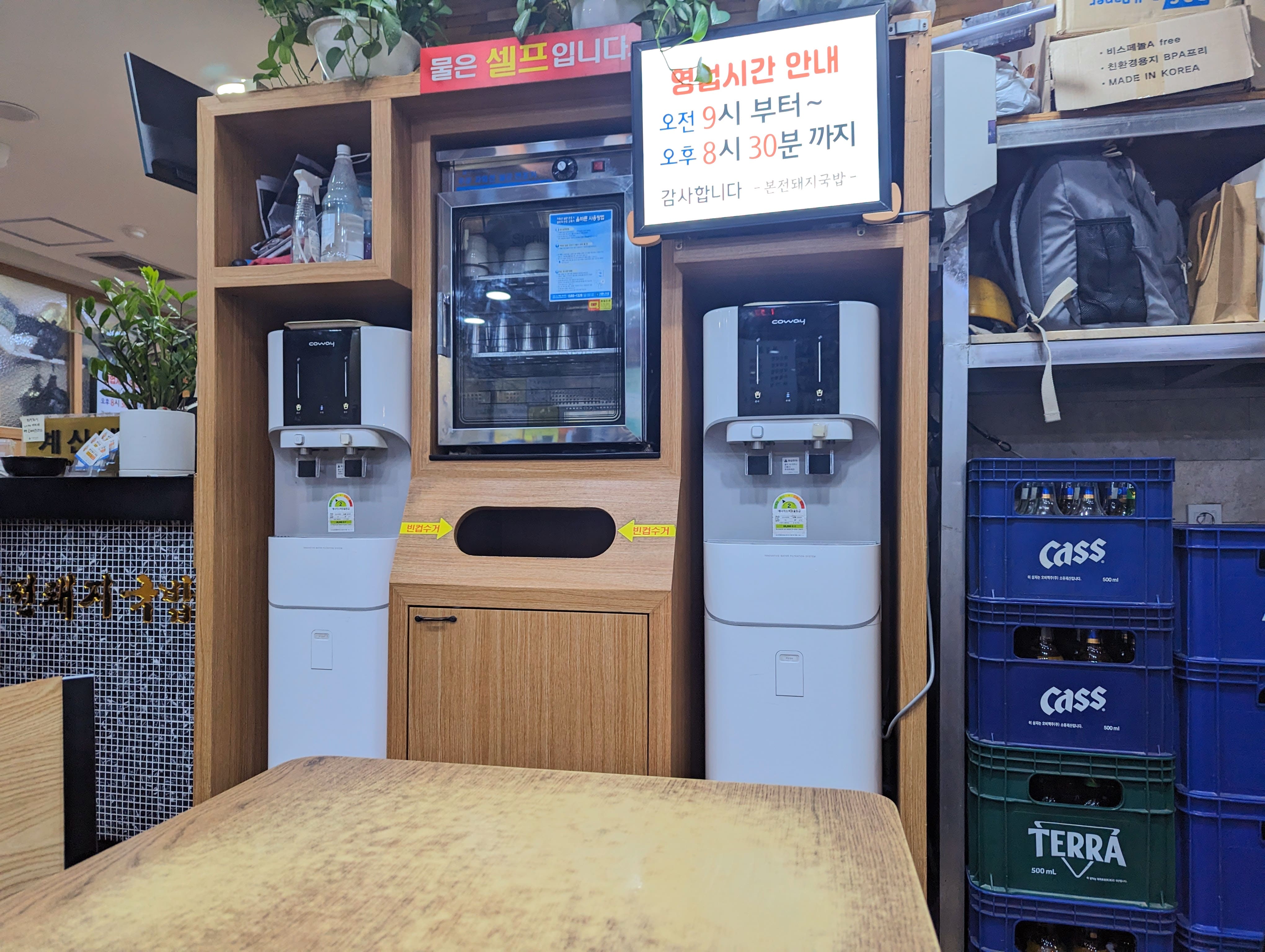
In each restaurant, you will find a self-service water point. A fridge with metal glasses is available so that you can serve yourself directly without having to call on a server. Pretty practical isn't it?
Busan street food
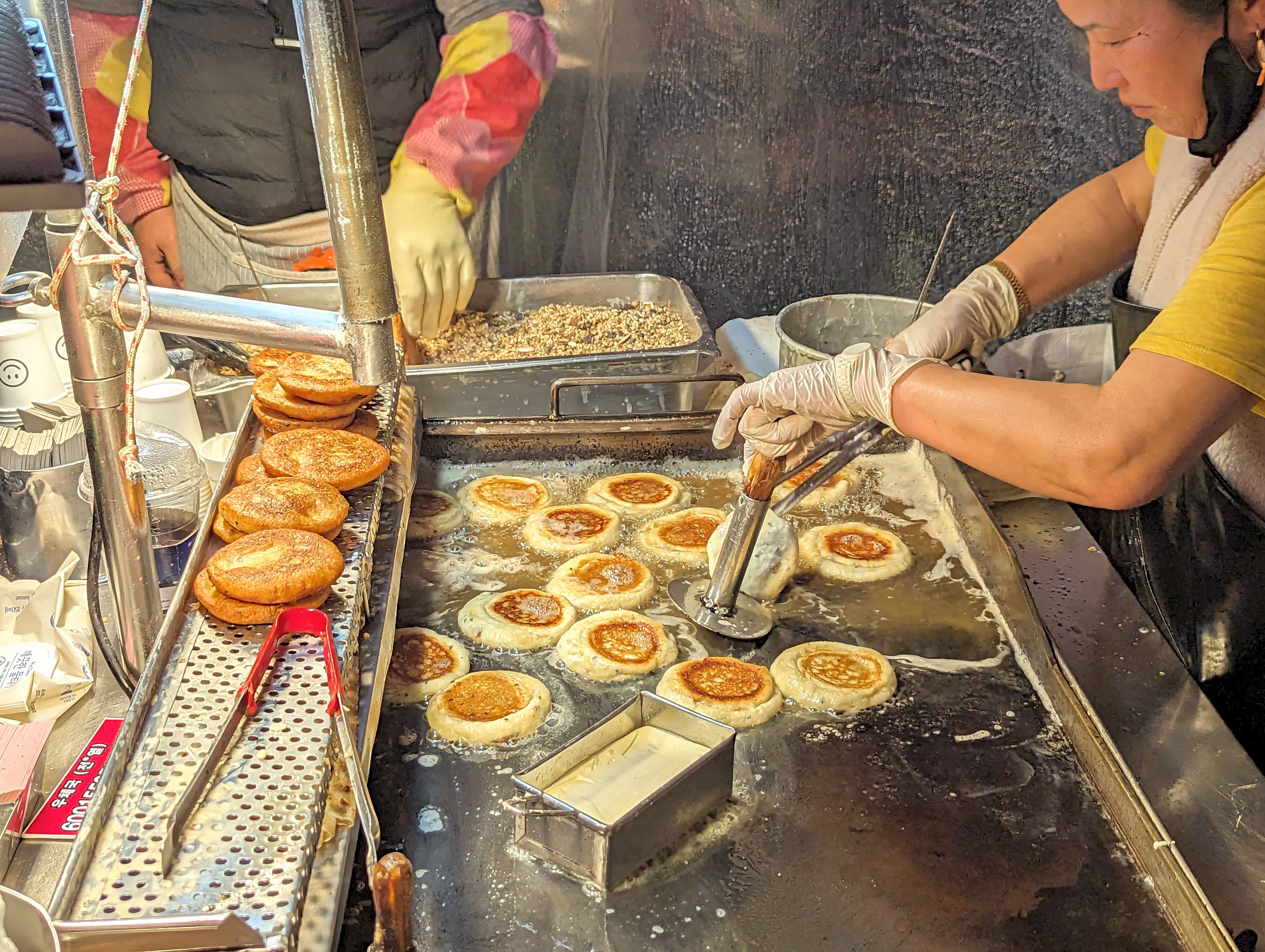
In my opinion, coming to Busan is above all to try the various street-food dishes scattered all over the city. If you are passing through BIFF Street, consider trying a seed-based cake with a touch of honey: The Hotteok.
For the modest sum of 3000 (around €1.50), you can enjoy one of the desserts that many Korean men and women like when they go out at night with friends.

Conclusion
At the end of this exploration of Busan, it is clear that this dynamic city in South Korea offers a captivating experience for solo travelers. From picturesque beaches to bustling markets, to majestic temples and unique culinary delights, Busan is brimming with charm and authenticity.
Whether you're venturing through the alleys of Gamcheon Culture Village or enjoying the sunset on Haeundae Beach, every corner of the city reveals a new side of its enchanting character.
With a rich history, vibrant culture, and a thriving food scene, Busan offers an unforgettable getaway for travelers seeking adventure, discovery, and connection with local culture.
Whether your trip takes you through the bustling alleys of Jagalchi Market or along the winding paths of Igidae Park, you won't be disappointed with the multitude of things to discover and experience in this magnificent city of Busan!