Are you heading to Colombia soon and wondering what to eat there, and which typical Colombian dishes you should try?
During my month in Colombia, with the help of my Colombian girlfriend and her family, I discovered a wide variety of typical Colombian dishes that I tried myself, and most of them were real taste surprises.
From cities like Santa Marta and Cartagena on the Caribbean coast, to my 4-day trip in the Coffee Region (Eje Cafetero), my journey through the Boyacá region and my family meals in local restaurants in and around Bogotá, here are 17 Colombian dishes you should try at least once on your first trip to the country!
1. Bandeja Paisa: the quintessential traditional Colombian dish
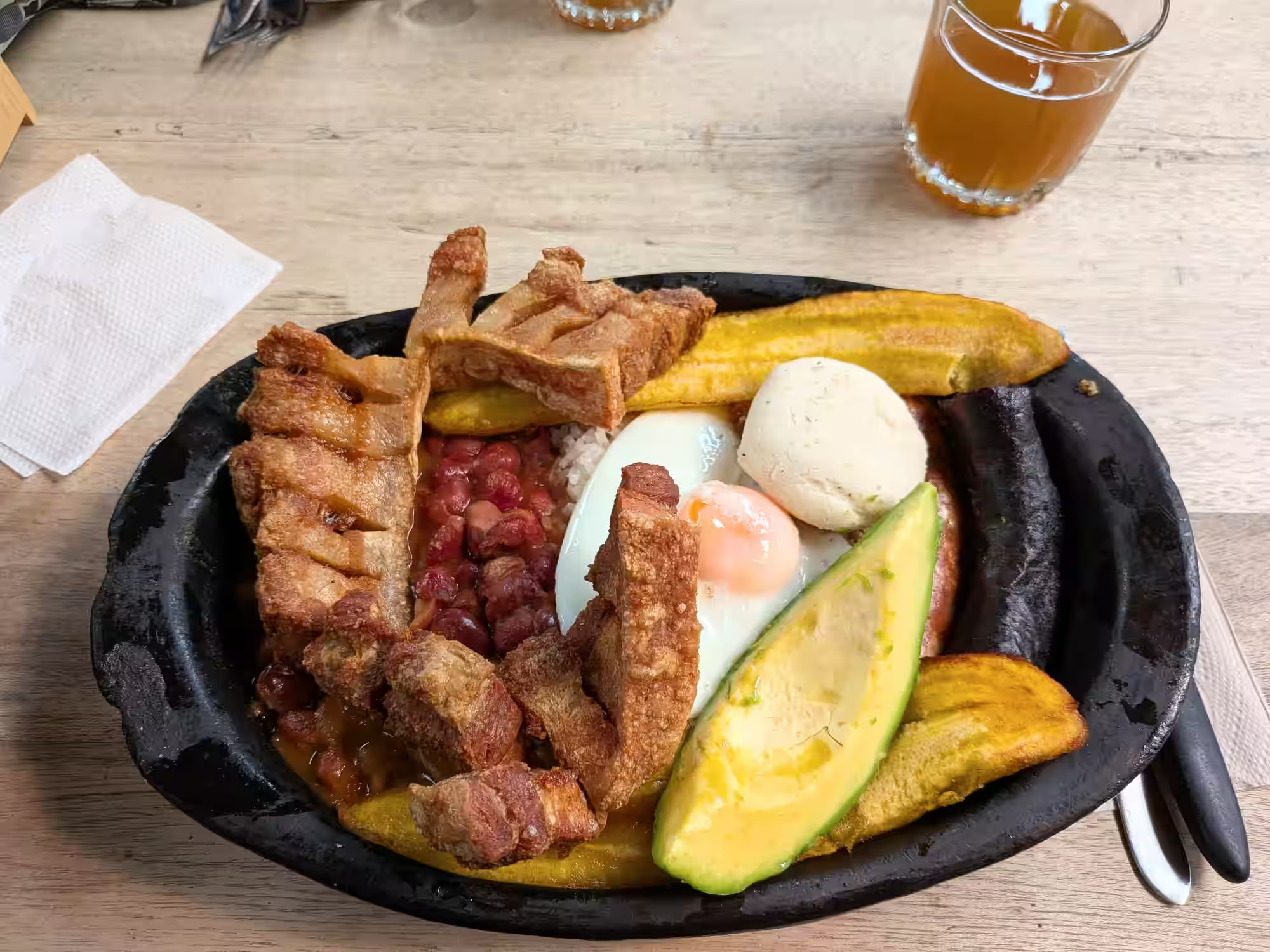
The Bandeja Paisa is probably THE dish you have to try at least once on your first trip to Colombia.
It comes with 5 proteins: chicharrón (crispy pork belly), chorizo, carne molida (minced beef), huevo (fried egg) and morcilla (blood sausage made with rice, peas, pork blood and pork offal). Sometimes the morcilla is left out.
It also comes with a slice of aguacate (avocado), sweet plantains, an arepa (corn cake), red beans and white rice on the side.
The dish is usually very filling, but there are two versions: the original one and a lighter one called “media bandeja paisa”.
Price: from 40,000 COP
My opinion: It’s one of my favourite dishes in Colombia, especially when I’m starving after a long walk. But I usually leave the table with a very full stomach. In some places, the portion was so big that I couldn’t finish it! So expect very generous servings.
A bit of history: Originally, this dish was designed for the farmers who worked hard in the fields of the Antioquia region, whose main city is Medellín. Back then, eating a Bandeja Paisa every day was common to regain strength and keep working.
Where to eat a Bandeja Paisa in Colombia?
You can eat a Bandeja Paisa almost anywhere in Colombia. Here are the restaurants I personally recommend:
2. Ajiaco: a hearty family soup full of flavour
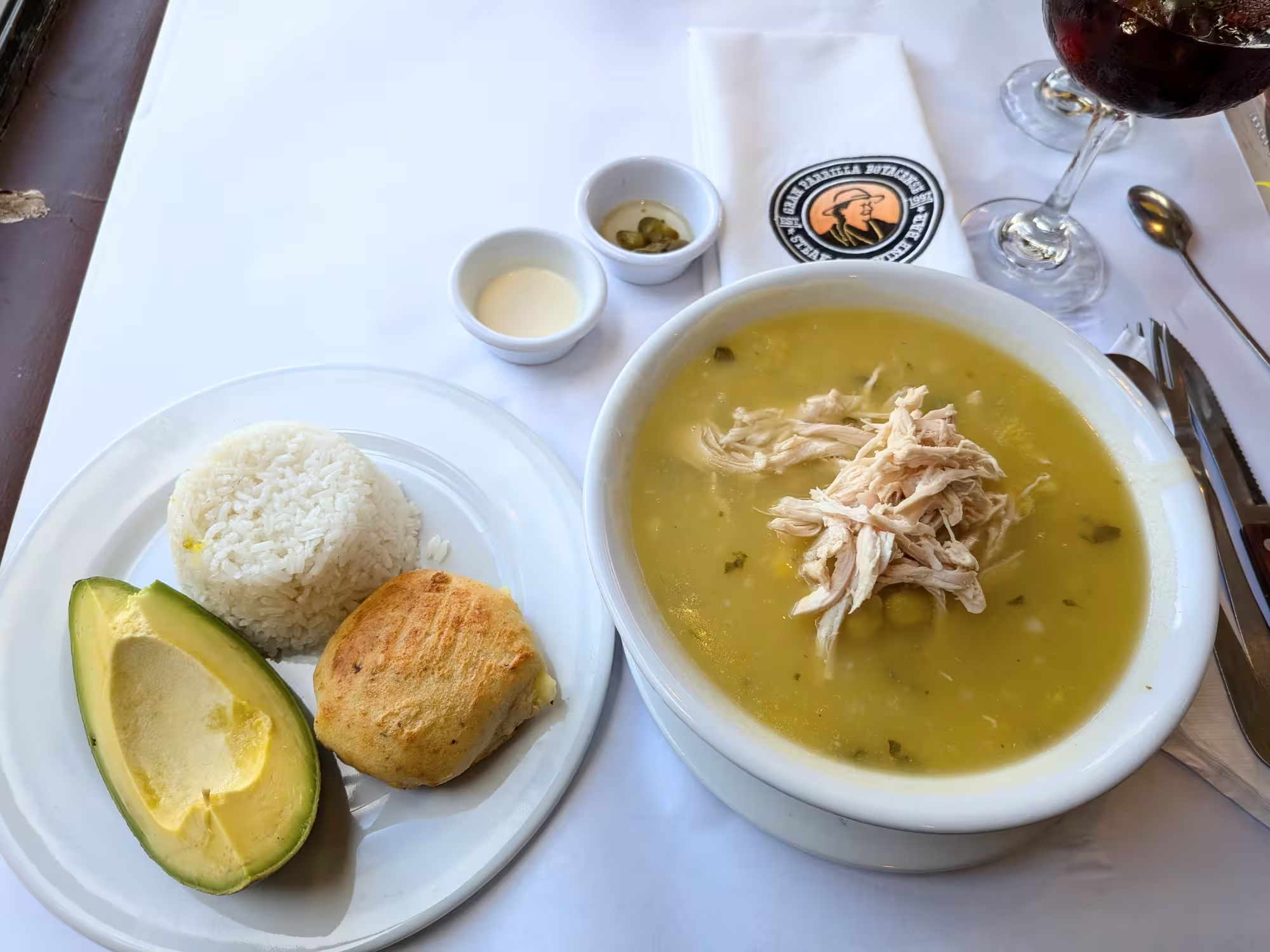
If, like me, you love soup, Ajiaco is a dish made for you and you’re going to love it.
The broth is made with chicken and 3 different kinds of potatoes (papa criolla, papa sabanera and papa pastusa), sometimes with a piece of corn on the cob. Once the broth is ready, the dish is served with shredded chicken, a slice of avocado, capers, a little cream and a touch of coriander.
It also contains a herb native to South America that is almost impossible to find elsewhere: guasca. This is the ingredient that gives Ajiaco its unique taste.
Ajiaco is served with rice on the side. Together, they make a very complete meal.
Price: from 22,000 COP
My opinion: I really love this dish. The soup isn’t very greasy and goes perfectly with the rice. It doesn’t leave you feeling heavy at the end of the meal either, unlike the Bandeja Paisa for example. In my opinion, it’s the ideal dish when you travel in a cold region of Colombia (Boyacá or Cundinamarca, for instance).
A bit of history: Ajiaco is a traditional dish from the Cundinamarca region, very often eaten with family during the end-of-year holidays or on special occasions.
Where to eat Ajiaco in Colombia?
You can eat Ajiaco in the colder regions: Cundinamarca, Santander and Boyacá.
I personally tried Ajiaco in a restaurant in Bogotá:
3. Changua: a Colombian breakfast soup
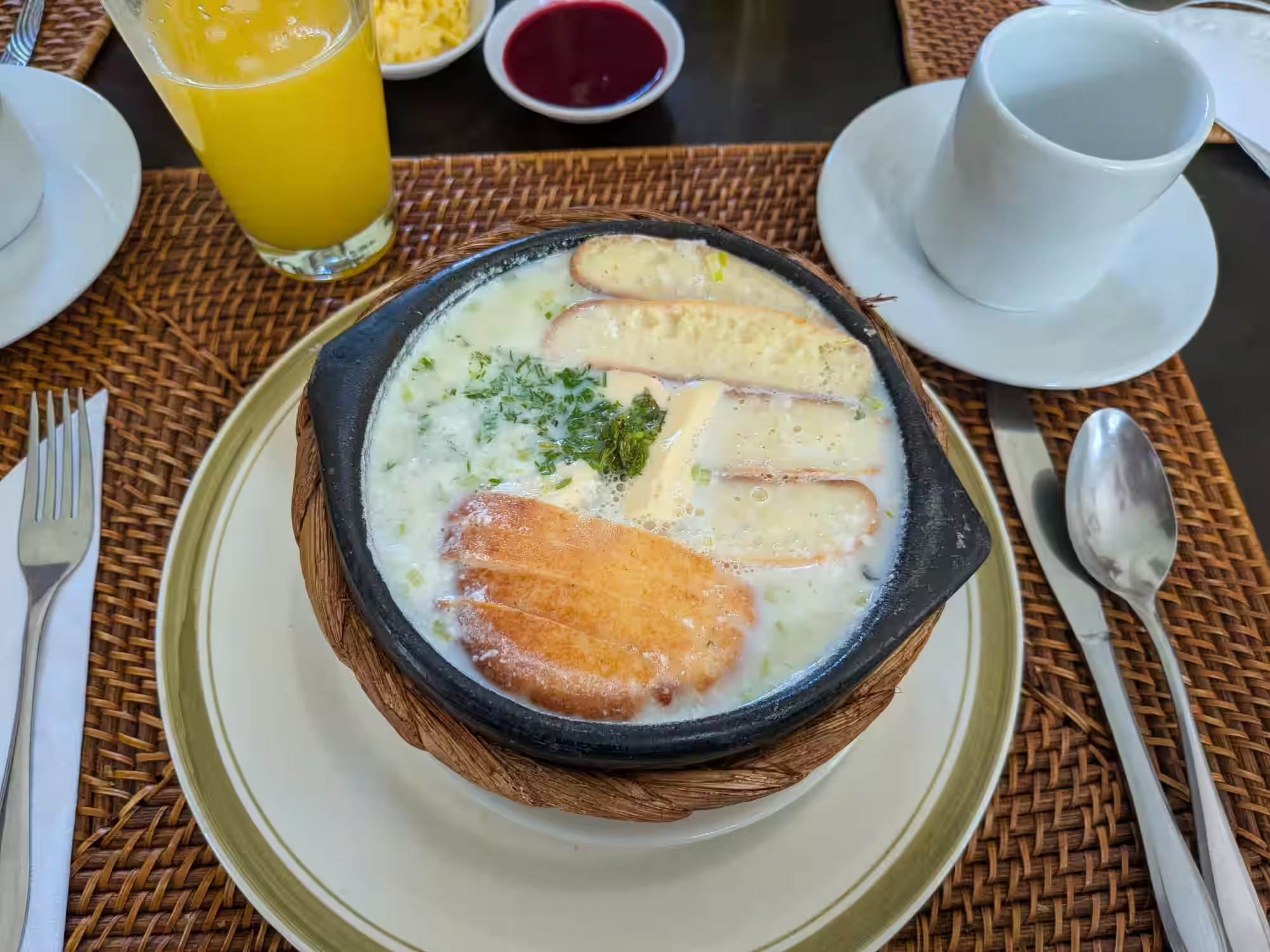
This dish sparks a lot of debate among Colombians. Some simply hate Changua, while others love it.
The broth is made with milk seasoned with spring onion and coriander. A poached egg and toasted or soft bread are added. It’s common to also add a slightly rubbery Colombian cheese for extra flavour.
It’s mainly eaten at breakfast for its nutritional and energy value: a real morning boost before heading to work.
Price: from 8,000 COP
My opinion: Changua was my favourite breakfast when I woke up in the morning and my Colombian mother-in-law made me this soup. In cold places like Cota, near Bogotá, where I spent most of my trip, it was the perfect dish to warm up!
A bit of history: The name “Changua” comes from the Muisca indigenous people, whose broth was originally made only with salted water, local herbs, corn and tubers. The arrival of the Spanish, who brought milk, transformed the original recipe into the dish we know today.
Where to eat Changua in Colombia?
Here are two places where I ate Changua, which I recommend if you’re driving towards the Boyacá region (it’s harder to reach by public transport):
4. Sancocho: Colombia’s comforting soup
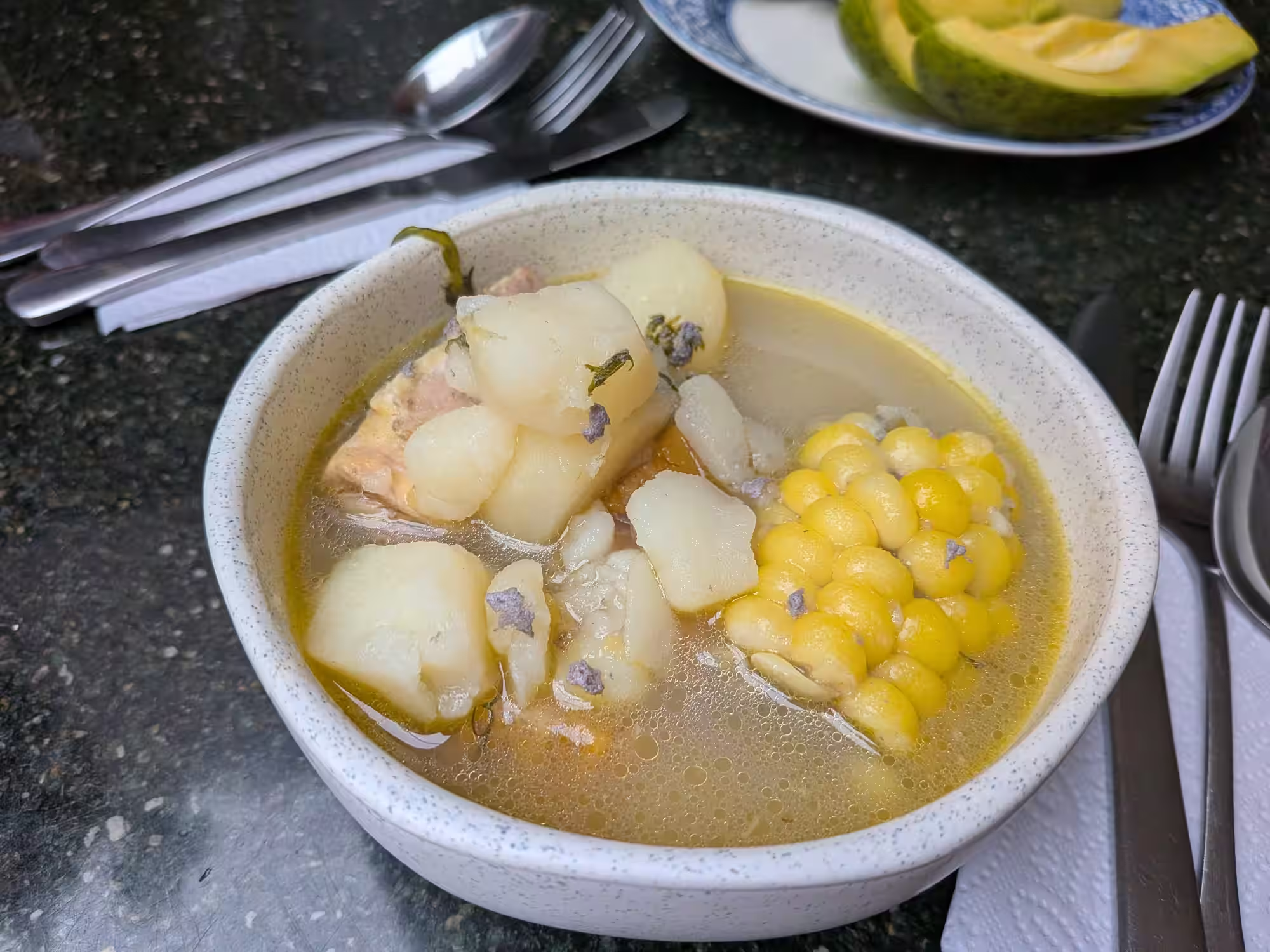
I got to taste a Sancocho made by my Colombian mother-in-law, and it was excellent!
It’s a traditional soup mostly eaten with family at the weekend, for lunch or dinner.
It’s cooked in a big pot with meat (free-range chicken, beef ribs or pork depending on the region) and vegetables (cassava, plantains, potatoes and corn on the cob form the base), seasoned with onion, garlic, cumin, fresh coriander, salt and pepper.
The result is a soup eaten for lunch or dinner when the weather starts getting cold.
As well as being a comforting and tasty dish, Sancocho has all the nutrients you need to recharge after a day’s work.
Price: from 30,000 COP
My opinion: Of all Colombian soups, Sancocho is one of my favourites, especially for its delicious, light broth and its tender meat. The corn on the cob adds a sweet touch when you bite into it. It’s the perfect dish when it’s cold, especially in Bogotá or the Boyacá region.
A bit of history: At the time of the conquistadors, Spain already had slow-cooked stew recipes, and the Spanish brought this technique to Latin America. Some European ingredients were missing in the conquered territories, so the original recipe had to be adapted. Indigenous and African contributions were decisive, since they created the soup using local produce.
Where to eat Sancocho in Colombia?
Even though I travelled in Colombia for a month, I only ate Sancocho at my in-laws’ house (they make excellent and healthy ones!)
But here are some places where you can try it for the first time:
5. Arepas: corn cakes served with almost every Colombian meal
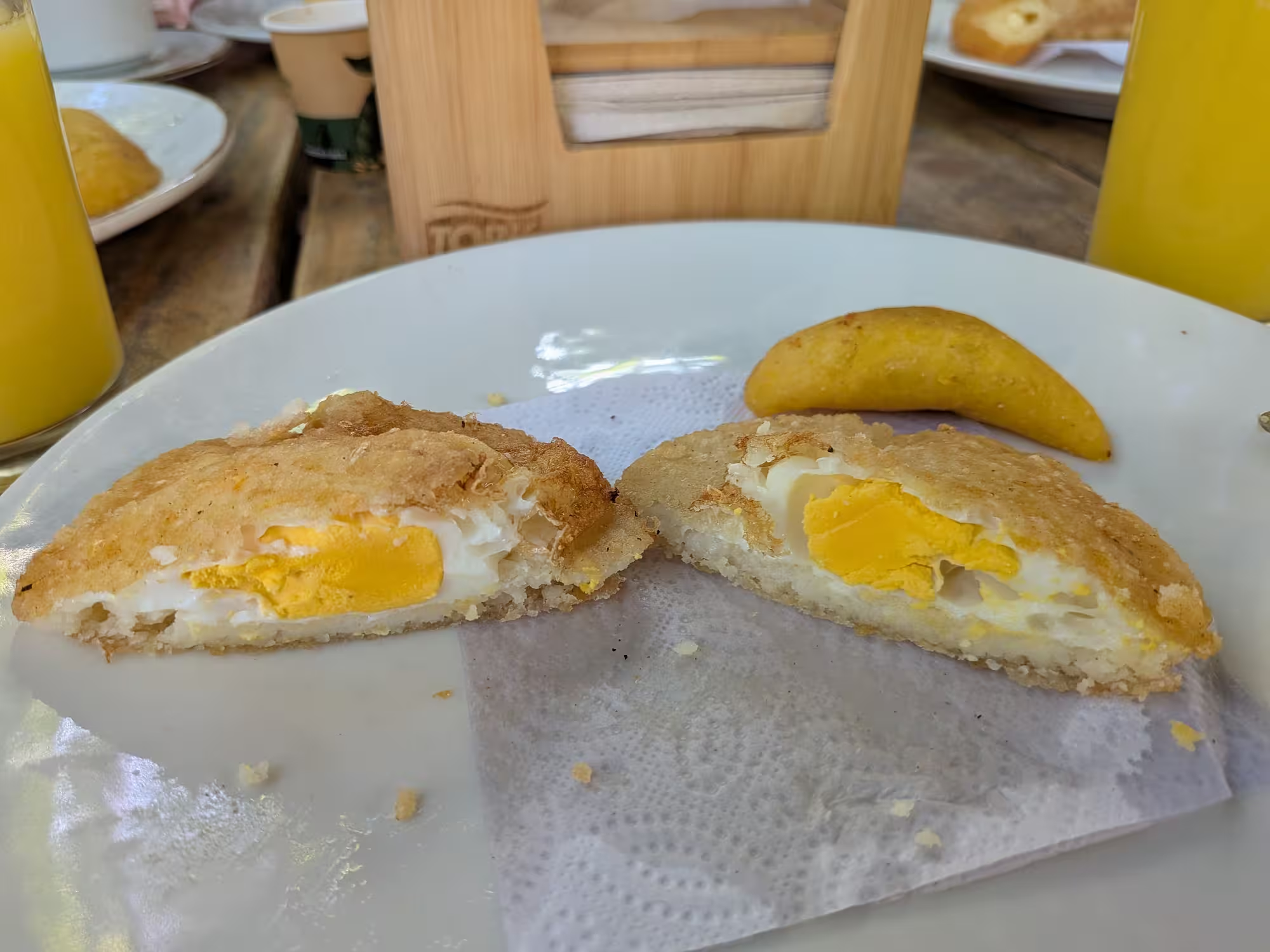
Arepas are a bit like the French baguette: you eat them at almost any time of day, and always alongside other dishes.
They are typically corn flour cakes, sometimes stuffed with cheese or fried with an egg inside.
Depending on the type, an arepa can be eaten on its own or served as a side.
For example, arepas from the Quindío region are fairly plain, while arepas from the Caribbean coast, called “Arepa con Huevo”, are tastier and crispier. In the Cundinamarca region, “Arepas de Chócolo” are filled with cheese and have a sweet and savoury taste.
Price: from 2,000 COP
My opinion: Some arepas really stood out for me: the Arepas de Chócolo I ate near Laguna de Guatavita (which I recommend), and the Arepas con Huevo, sold almost everywhere on the Caribbean coast, which are excellent.
A bit of history: Arepas are a strong symbol of Colombian cuisine. They date back a very long time, to when the peoples of northern South America, in what is now Venezuela and Colombia, made their own corn bread. The tradition lives on today, and you can find them almost everywhere in the country.
Where to eat arepas in Colombia?
You’ll find arepas almost everywhere you go. Only the taste changes from one region to another.
But here are some places where I really enjoyed them and that I recommend:
6. Empanadas: crispy turnovers to eat at any time of day
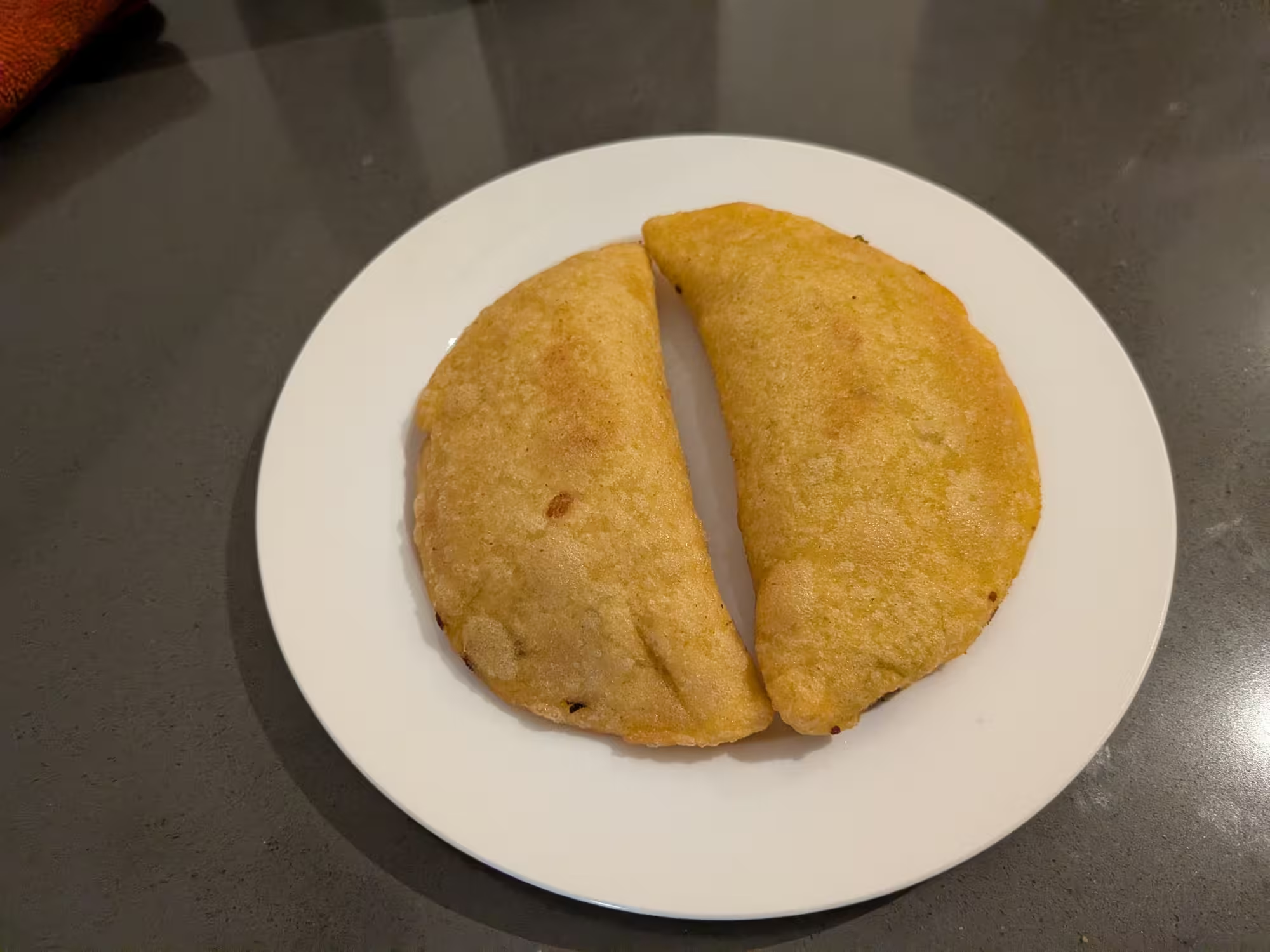
You’ll find empanadas all over Colombia, and their taste varies from region to region.
They are snacks eaten at any time of day. You’ll find them almost everywhere: in “panaderías” (local bakeries), cafeterias and of course in restaurants.
They are usually half-moon shaped, with a corn flour crust fried in oil.
The filling is made with minced beef or pork and mashed potatoes with garlic, onion and coriander.
Empanadas are very often eaten with Aji sauce, which adds a spicy kick and lifts the taste of the crust.
You can eat them alone or share them with family or friends.
Price: from 2,000 COP
My opinion: The first time I ate empanadas in Colombia was at the Termales de Santa Rosa de Cabal. They were very good and crispy, just how I like them. But the best ones are still those of a Colombian friend, who made me try his homemade version: by far the best!
A bit of history: Empanadas existed long before they reached Latin America. They go back to the 8th century, when the Arabs, then present in Spain, brought their technique of preserving food inside dough. When the recipe crossed the Atlantic, indigenous people and African slaves adapted it, replacing wheat flour with corn flour and frying the dough to make it crispy.
Where to eat empanadas in Colombia?
If I had to recommend one place for traditional empanadas, it would be this one:
7. Pescado frito: Colombian-style fried fish

Fish lovers will be spoilt in Colombia: there are many varieties, served in different ways.
Here, I’ll tell you about the dish you’ll find most often in Colombian restaurants: pescado frito.
The type of fish depends on the region. On the Caribbean coast, for example, they mostly use “mojarra” (tilapia) or “bocachico”. It’s often served with coconut rice, patacones (smashed and fried green plantain) and a little salad.
Price: from 40,000 COP
My opinion: The way Colombians fry fish is simply excellent. It was almost always served whole, which makes the dish very filling. Nearly all the fish I ate was tender and juicy, and that’s what I love most. Being able to alternate easily between meat and fish also keeps you from feeling overfed all day.
A bit of history: Pescado Frito is an ancestral tradition: fishermen ate it because fish was plentiful along the coasts and in the rivers. The dish gradually evolved as Afro-Colombians added their own touch, until it became the dish we know today. Good to know: during Holy Week in Colombia, red meat is replaced by fish and seafood.
Where to eat Pescado Frito in Colombia?
Here are 3 places I recommend for Pescado Frito:
8. Cazuela de Mariscos: the traditional seafood stew of the Caribbean coast
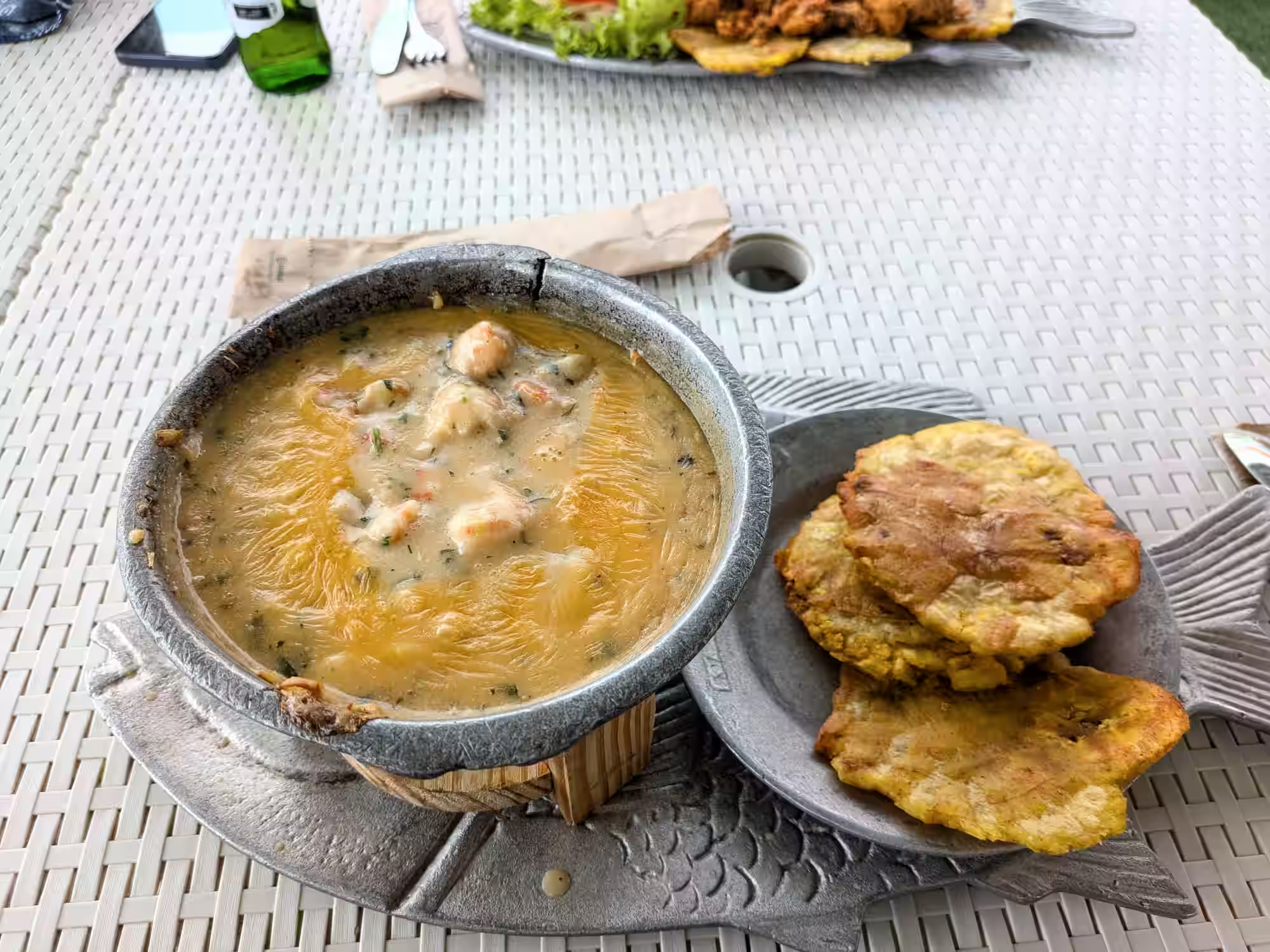
Cazuela de Mariscos is definitely the dish to try if you like seafood.
It’s a typical Colombian dish found mainly on the Caribbean coast, in cities such as Santa Marta and Cartagena.
Its thick, rich broth brings out all the flavours. It’s often served with sides, such as patacones and coconut rice.
The broth is made with coconut milk and spices for extra flavour. Local fish and seafood are then added generously, along with a few colourful vegetables.
It’s a very hearty dish, which can be hard to finish if you’re not very hungry.
Price: from 45,000 COP
My opinion: This is the dish not to miss when travelling on the Caribbean coast. I ate 2 Cazuelas de Mariscos in total, one in Tayrona National Park and one in Barranquilla, and both were simply delicious.
A bit of history: When Spanish settlers arrived in Colombia with their own seafood recipe, Afro-Colombians added a touch of their culture: coconut milk and spices, for a richer broth and a thicker texture.
Where to eat Cazuela de Mariscos in Colombia?
I recommend 2 places for a Cazuela de Mariscos:
9. Cuchuco: the soup of the Colombian highlands
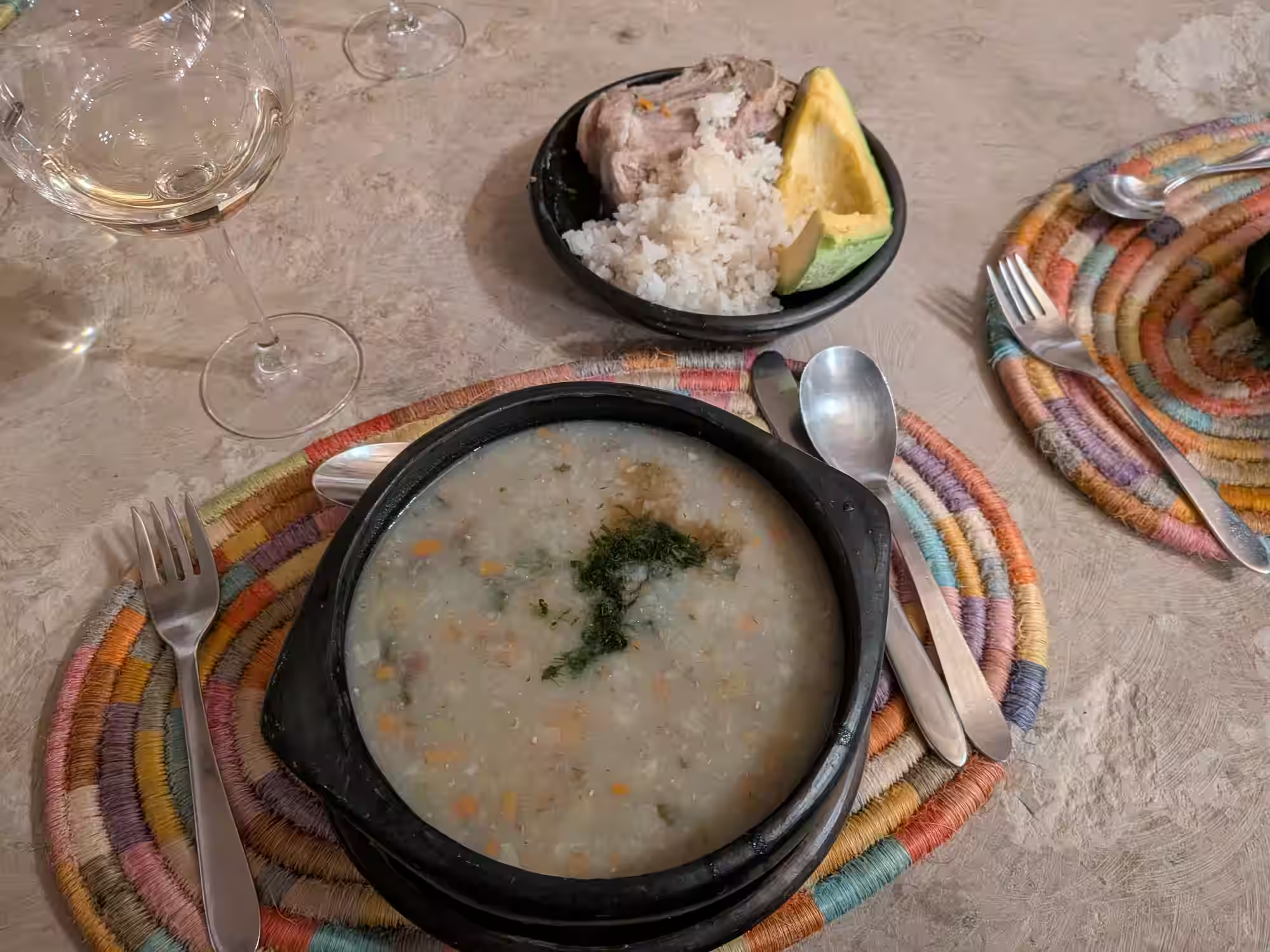
Cuchuco is a typical soup eaten mainly in the colder regions. This is especially true in Boyacá, where it’s eaten all year round, as it’s the coldest region in Colombia.
Originally, the word “Cuchuco” refers to hulled, cracked or ground wheat grain, and by extension it became the name of the soup.
For vegetables, local potatoes (papas criollas and papas pastusas), peas, broad beans, carrots and squash are added, along with garlic and spring onion for flavour.
The meat used is pork backbone, which gives the broth its rich taste.
Price: from 15,000 COP
My opinion: The only place I ate Cuchuco was in Boyacá, at a secluded hotel just outside the village of Villa de Leyva. It was made with cracked wheat, and the soup was very good and nourishing. It came with rice and avocado, which made it a very filling meal.
A bit of history: Cuchuco as we know it today was born from a cultural mix more than 500 years ago, between Spanish settlers, who brought cereals such as wheat and barley to the Colombian highlands, and indigenous people, who added them to their ancestral soup recipes.
Where to eat Cuchuco in Colombia?
The only place I recommend is the hotel where I first tried Cuchuco:
10. Posta Negra Cartagenera: tender beef in Cartagena’s traditional black sauce

If you’re passing through Cartagena, there’s an iconic local dish you can try: Posta Negra Cartagenera.
On the plate, it’s tender beef in a black sauce made with Worcestershire sauce and Coca-Cola, which give it its colour and sweetness.
Depending on the restaurant, it’s served with coconut rice, patacones and a slice of avocado.
It’s a typical Colombian dish that blends Afro-Colombian, Spanish and indigenous cultures.
Price: from 35,000 COP
My opinion: The beef I tasted in Cartagena had an incredible flavour! Its tenderness, its juiciness and its special sauce make it irresistible. For meat lovers, Posta Negra Cartagenera is a must.
A bit of history: Colombia wasn’t originally a beef-eating country like it is today. It was only with the arrival of Spanish settlers that beef became common. Then African slaves brought to Cartagena introduced their own cooking techniques to make the meat more tender and the sauce richer. Indigenous people, for their part, contributed “panela” (unrefined cane sugar), which gives the sauce its sweetness, texture and black colour. Today, many cooks use Coca-Cola instead (or as well) to make the sauce even darker.
Where to eat Posta Negra Cartagenera in Colombia?
Posta Negra Cartagenera has become an upscale dish lately, and finding a really good one isn’t easy, except at the place where I first tried it:
11. Tamal: the traditional Colombian breakfast
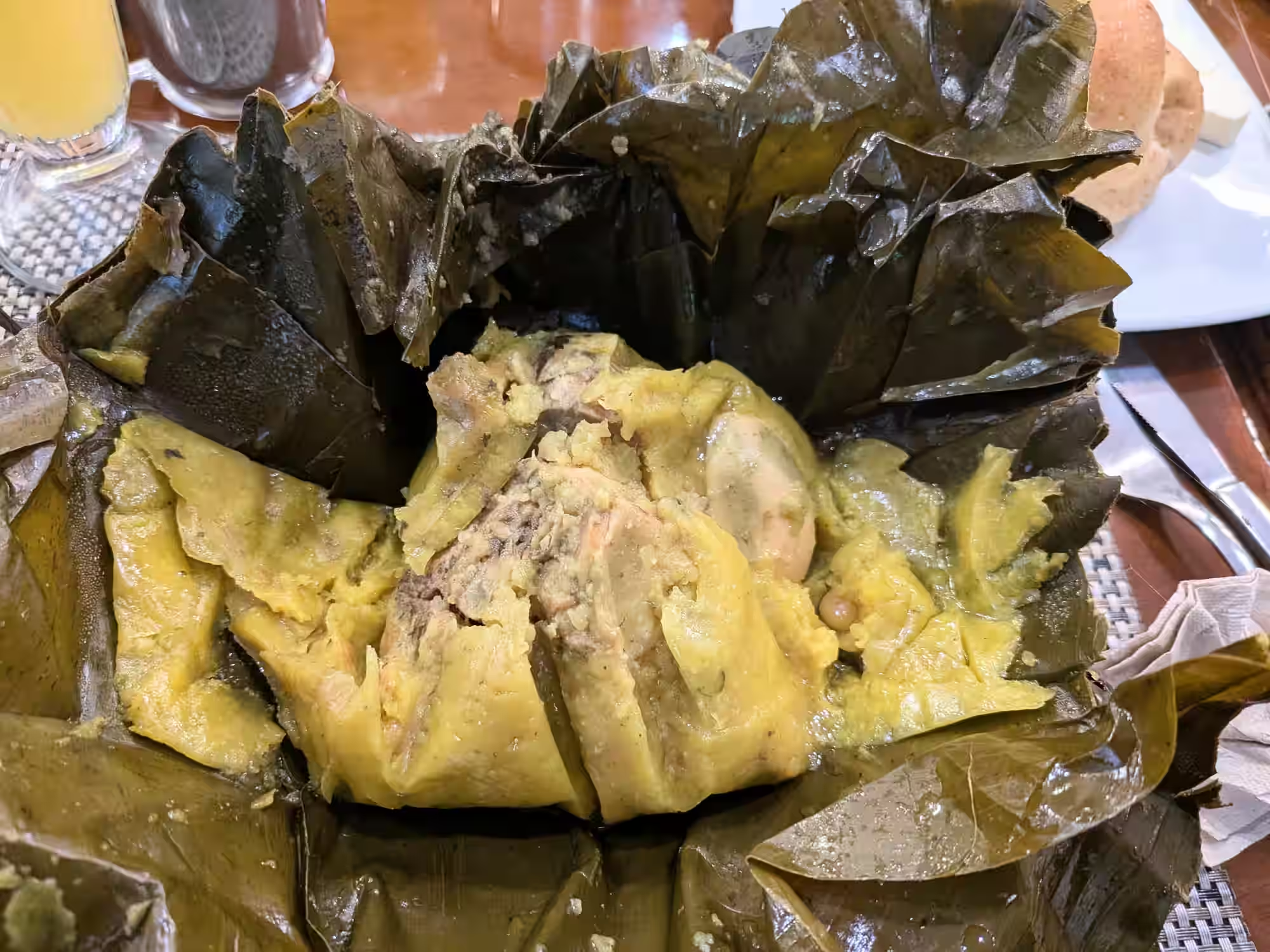
Like the Bandeja Paisa, the Tamal is a traditional and iconic Colombian dish. It’s mainly eaten for breakfast and during the end-of-year holidays.
It’s eaten straight from a banana leaf, which holds meat (chicken, pork and a hard-boiled egg), vegetables (peas, carrots and potatoes), all wrapped in a corn dough.
As you can see in the photo above, it’s a very filling meal, almost always served with a cup of hot chocolate, an arepa or a small bread roll (such as “pan de bono”).
There are several regional versions of the Tamal: from Tolima, from Santander and from Bogotá, the capital. You can try one of each to compare the flavours!
Price: from 8,000 COP
My opinion: For my first time, I chose the Tamal from the Tolima region. It’s very rich in protein and carbs, and very tasty too! Finishing it, however… is another story.
A bit of history: The word “tamal” comes from Nahuatl, the language of the Aztecs, and means “wrapped”. It spread throughout Latin America, including Colombia, with the arrival of the Spanish conquistadors. But the recipe existed long before: indigenous communities (Muiscas and Pijaos) prepared it as an offering during religious ceremonies. Wrapped in banana leaves, the Tamal had another advantage: travellers could take it on the road, as it kept well.
Where to eat a Tamal in Colombia?
There’s one place in Bogotá’s historic centre where you have to try your first Tamal:
12. Trucha: trout served in many different ways
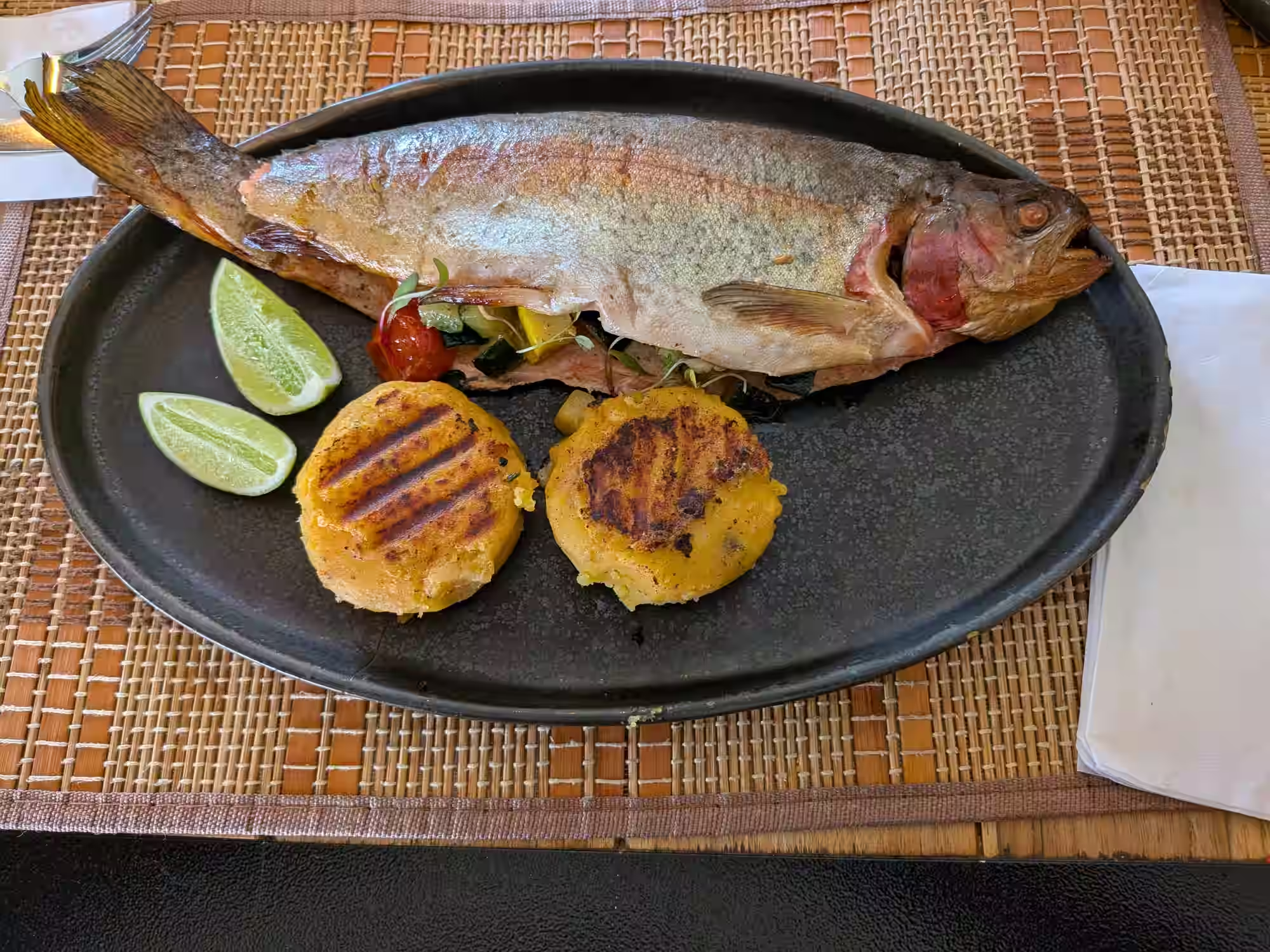
Trucha, or trout in Spanish, is a very common fish in some regions of Colombia, especially Quindío, Boyacá and Cundinamarca, where I ate trout dishes prepared in different ways.
It’s served in many forms: as a risotto, grilled or smoked.
Price: from 28,000 COP
My opinion: I got to try Trucha in all its forms. I especially loved the risotto, a real treat! But the grilled trout is great too, with a taste close to salmon. Either way, it’s a dish to try at least once in Colombia!
A bit of history: There were no trout in Colombia before the 20th century. It was only in 1938 that the country, to diversify the diet of people living in the highlands, introduced a new species into its lakes: the rainbow trout, imported from North America. But this introduction also had its downsides, including the near-extinction of some endemic species, such as the Pez Graso and the Guapucha.
Where to eat Trucha in Colombia?
Here are 2 restaurants I recommend for good-quality Trucha:
13. Sobrebarriga: tender beef that melts in your mouth
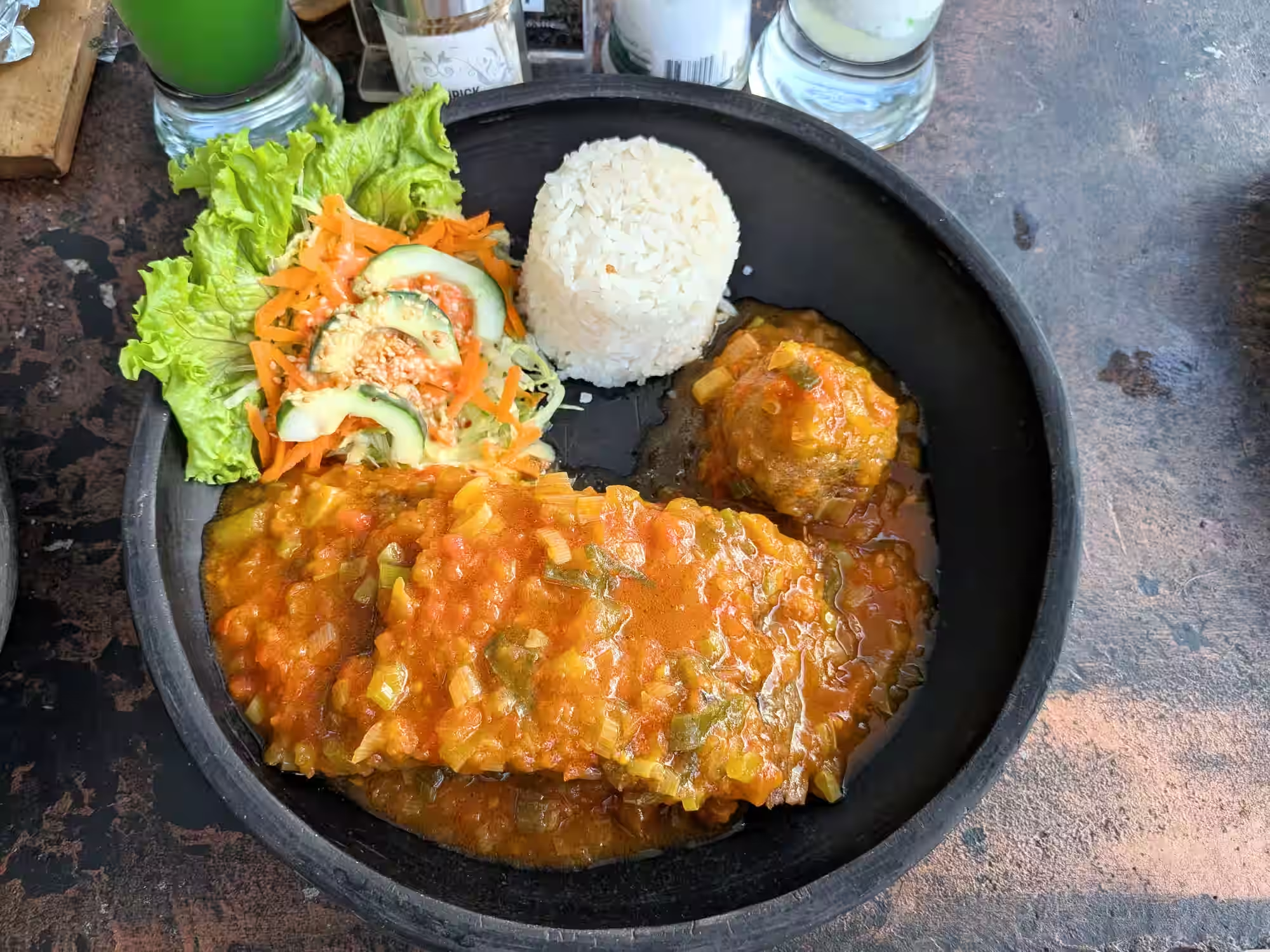
I couldn’t leave out Sobrebarriga, one of my favourite dishes in Colombia, which I first tasted in the Quindío region!
The heart of this dish is beef flank, from the animal’s belly. After long, slow cooking, the meat becomes tender and juicy.
It’s then topped with a fragrant sauce called “Hogao”, made with tomato, onion and cumin, which adds a tangy touch without masking the taste of the meat.
Served with rice, lettuce and sometimes a slice of avocado, Sobrebarriga is a very complete meal, rich in protein and carbs.
It’s widely eaten in the Colombian highlands: Cundinamarca, Boyacá and Santander.
Price: from 32,000 COP
My opinion: For meat lovers, I highly recommend this dish for its tenderness and its wonderful Hogao sauce. Where I tried it, the Sobrebarriga was served as a thick steak, in a very generous portion!
A bit of history: While wealthy families ate the most tender and expensive cuts, farmers prepared Sobrebarriga with the toughest cuts of beef, thanks to long cooking. Once considered a humble dish, it now appears on the menus of top Colombian restaurants.
Where to eat Sobrebarriga in Colombia?
If there’s one place in Colombia to try Sobrebarriga, it’s this restaurant:
14. Mondongo: a beef tripe soup
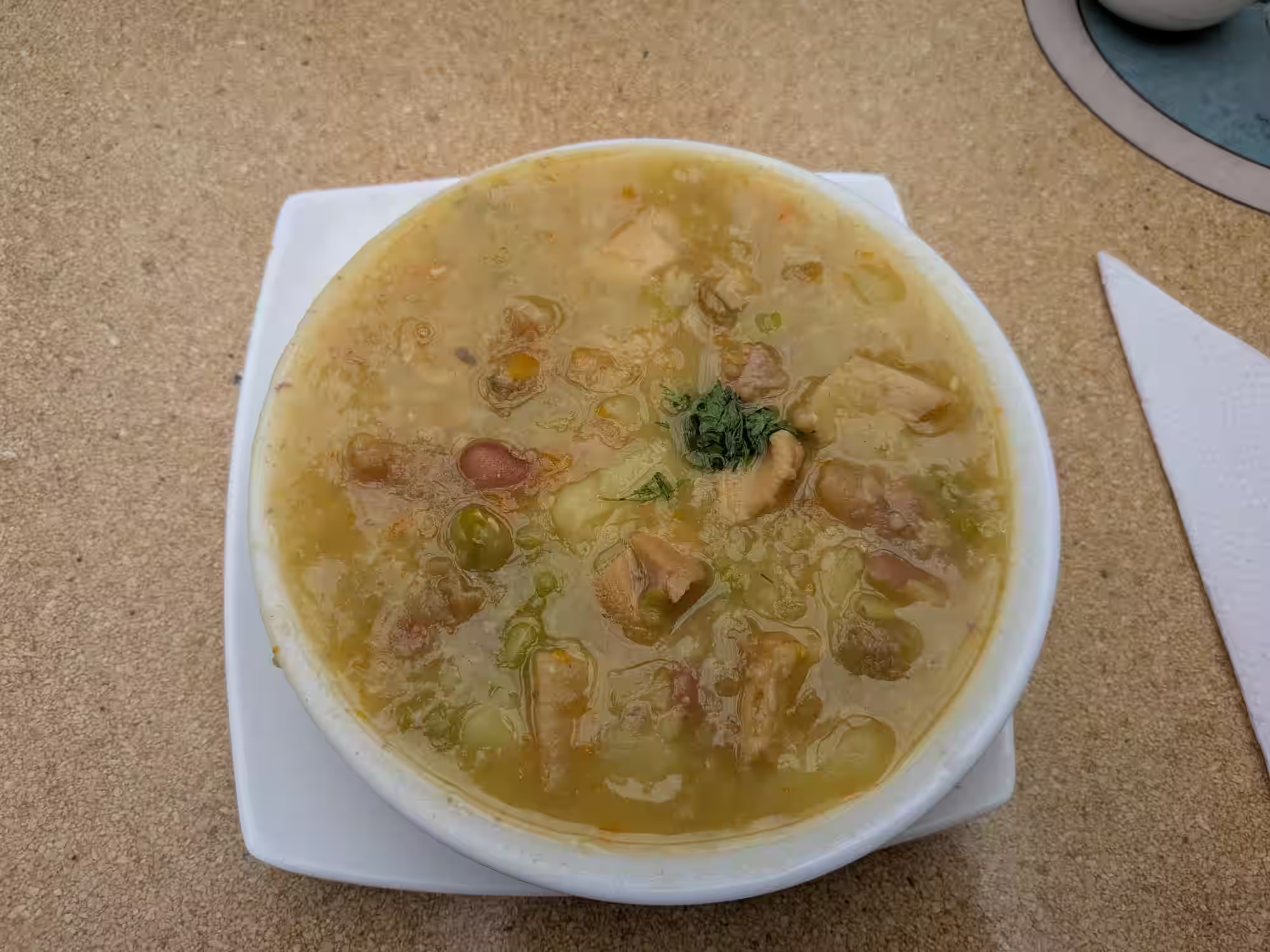
Probably the least appetising dish for some of you, and yet Mondongo is a very popular traditional Colombian soup.
It’s made with slow-simmered beef tripe, with vegetables (carrots, peas) and tubers (potatoes, cassava). It’s seasoned with tomatoes, spring onions, garlic and cumin, and finished with coriander to lift the broth.
Mondongo isn’t eaten on its own: Colombians like to serve it with white rice, a slice of avocado, or sometimes even a ripe banana.
Traditionally, it’s eaten at celebrations or with family at the weekend, but many restaurants serve it at any time.
Price: from 20,000 COP
My opinion: I already wasn’t a big fan of tripe, and trying it confirmed it’s not for me. But I have to admit the broth is very good! If the tripe could be replaced with something else, Mondongo would probably be one of my favourite Colombian soups.
A bit of history: Mondongo comes from a blend of Spanish and African cuisines, mixed with indigenous roots. The Spanish first brought their tripe recipes, such as “Callos a la madrileña”. At the time, indigenous people already made corn-based soups, while Africans used every part of the cow (including tripe) and adapted the Spanish recipes in their own way. The name “Mondongo” took hold over time under African influence, until it became the dish served today.
Where to eat Mondongo in Colombia?
With my Colombian girlfriend’s cousin, we went to eat Mondongo near his home in Bogotá.
If you want to give this soup a try, you can go to this restaurant:
15. Picada: a festive platter to share with friends or family
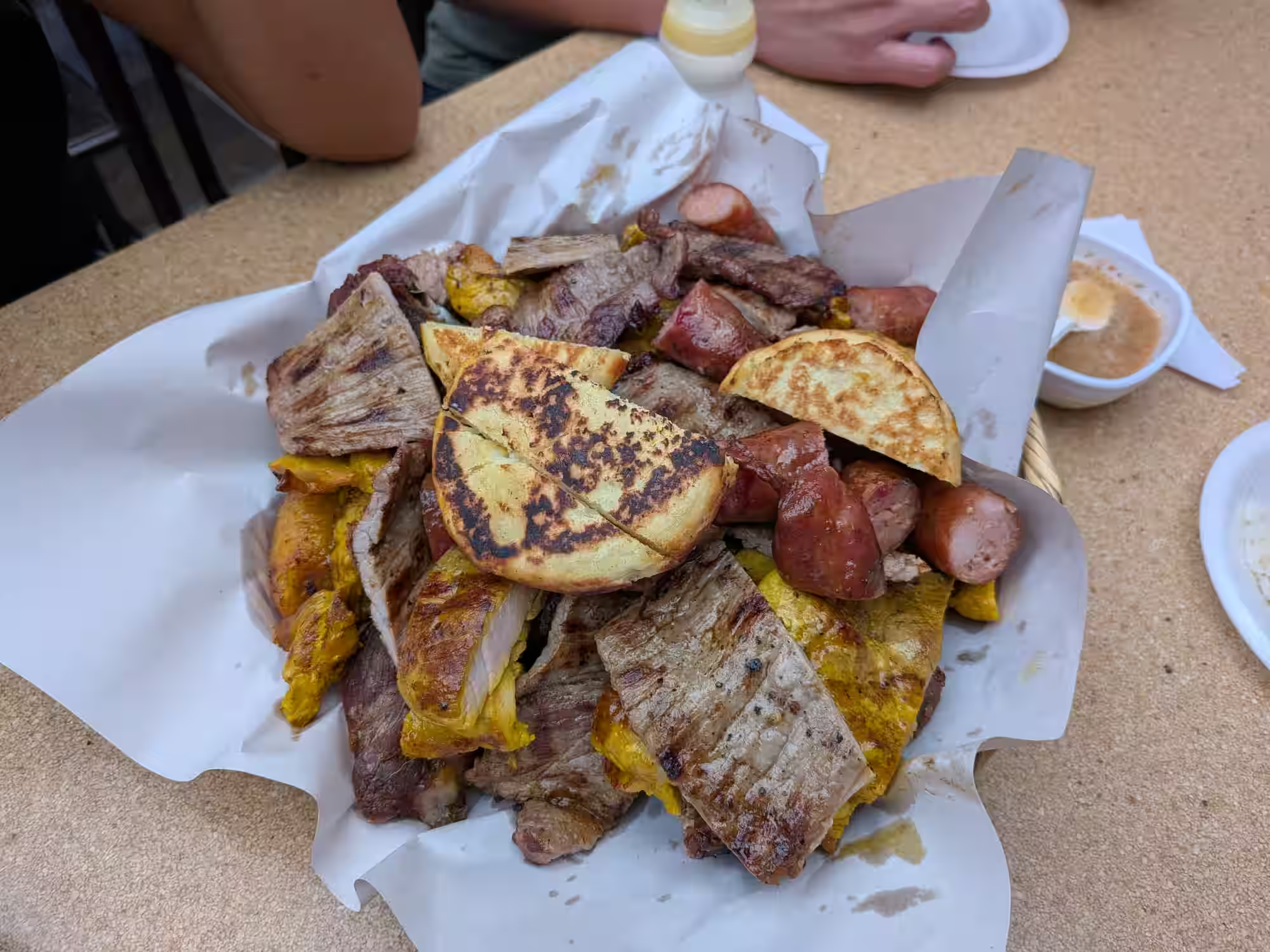
The go-to dish to share with friends or family, Picada is a platter of meats and starchy sides placed in the middle of the table so everyone can help themselves.
It’s usually eaten with your fingers, sometimes with toothpicks or forks.
You’ll find several kinds of meat: beef, chicken, chorizo, and sometimes chicharrón and morcilla depending on the place.
It also comes with sweet arepas, plantains, small potatoes (papas criollas) and sometimes cassava.
Picada is served with sauces to add flavour to the meat, such as guacamole, aji (a hot sauce made with chilli, coriander, spring onion and vinegar), hogao (a Colombian tomato and onion sauce), or simply lime.
Price: from 15,000 COP
My opinion: I first ate Picada with 3 other people. As it’s above all a sharing dish, the portions are very generous. If you’re alone, make sure to ask for a single portion!
A bit of history: Born from indigenous know-how and the cattle brought by the Spanish conquistadors, Picada comes from the countryside of the Cundiboyacense highlands (Cundinamarca and Boyacá). Back then, it was mostly cooked for farm workers: every piece of meat was fried in animal fat to avoid waste. The charcuterie techniques brought by the Spanish added sausages such as morcilla (blood sausage) and chorizo. What was once street food has become a traditional dish that many Colombians enjoy both at home with family and with friends at a local restaurant.
Where to eat Picada in Colombia?
The only place I ate Picada was a restaurant in Bogotá, not far from the airport:
16. Parrilla Santarrosana: the signature dish of Santa Rosa de Cabal

When I went to the Termales Santa Rosa de Cabal to enjoy the region’s natural hot springs, I got to eat Parrilla Santarrosana, a traditional dish from the town of Santa Rosa de Cabal.
The main ingredient the town is so proud of is the chorizo santarrosano, a local sausage made with minced pork and flavoured with local spices (spring onion, garlic, cumin and pepper). It’s grilled over charcoal, which gives it a unique taste much loved by Colombians.
The sausage can be eaten alone, but it’s also served with grilled beef and chicken, arepas, a grilled plantain cut in half and a salad.
A sauce called “Hogao”, made with tomato and onion, is served on the side for dipping the meat.
Price: from 25,000 COP
My opinion: I first ate Parrilla Santarrosana at the Termales Santa Rosa de Cabal, which I recommend if you want to discover these famous hot springs, with an incredible view of the waterfalls. The meats were excellent, and the setting is exceptional!
A bit of history: Before 1925, when the railway reached Santa Rosa de Cabal, the “arrieros” (merchants who carried goods by mule) ate grilled chorizo with an arepa and plantains to regain strength on the road. When the trains arrived, many Colombians came to enjoy the famous local hot springs, which allowed traders to develop quick-service food, with the Parrilla Santarrosana as the signature dish.
Where to eat Parrilla Santarrosana in Colombia?
The only place I can recommend to try this famous dish is the Termales Santa Rosa de Cabal itself. There you’ll find several restaurants serving typical dishes from the region, including Parrilla Santarrosana:
17. Aborrajado: a sweet and savoury fritter
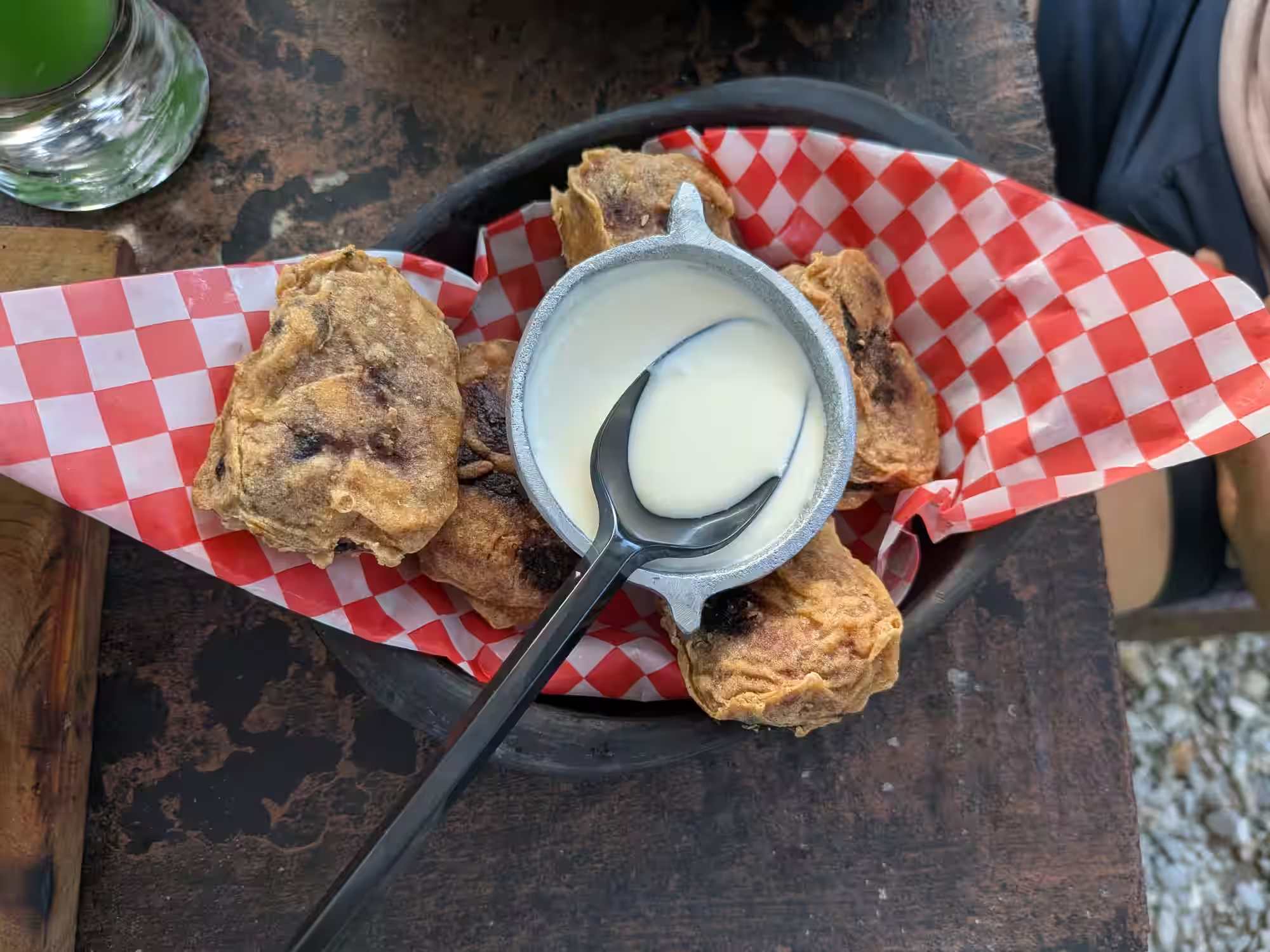
Aborrajado isn’t really a main dish, but rather a starter eaten as an appetiser and shared at the table.
It’s a small fritter made with ripe plantain, filled with a fresh local cheese called “queso campesino” for the salty touch and guava paste for the sweet touch.
It’s coated in a batter of wheat flour, egg, milk and a pinch of salt, then fried for that golden, crispy texture.
Price: from 3,500 COP
My opinion: I first tried Aborrajado in a restaurant in the Quindío region, and they were excellent! The texture is a bit like sweet and savoury nuggets, but 100 times better.
A bit of history: Aborrajado comes from the Valle del Cauca and Colombia’s Pacific coast. Its roots are said to go back to the 19th century and to the cooking know-how of Afro-Colombians around an iconic dish: fufú (mashed plantain). Combined with Spanish ingredients (cheese, batter), this know-how gave birth to this appetiser, found almost everywhere in Cali.
Where to eat Aborrajado in Colombia?
I first tried Aborrajado in a small local restaurant near Salento, in the Quindío region, which I highly recommend for its food:
Frequently asked questions about Colombian food
What are the national dishes of Colombia?
In my opinion, 4 dishes come up again and again when people talk about Colombian food: the Bandeja Paisa, Ajiaco, Tamal and Arepas. You will find these iconic dishes all over Colombia, and locals eat them regularly.
What do Colombians eat for breakfast?
In Colombia, breakfast is the most important meal to start the day well. Colombians prefer savoury, filling dishes such as Changua, Tamal or Arepas, very often served with a fruit juice and a hot chocolate.
Can you eat vegetarian in Colombia?
A very good question, since Colombians eat a lot of meat and fish. Unfortunately there are few vegetarian dishes, apart from a few lighter ones: Changua, Arepas or Patacones are fully vegetarian. You can get by eating salads as starters, but you miss out on part of the food experience if you stick to that kind of dish.
Is Colombian food spicy?
Not at all. None of the dishes I tried was spicy. Only the Aji sauce is hot, and it is served on the side. So nothing to worry about!
Is it safe to eat street food in Colombia?
There are street stalls selling food and drinks, easy to spot with their carts full of ingredients, where dishes are prepared right in front of you. If you come across one, I advise you to avoid the fruit juices, as one of my Colombian girlfriend’s cousins got food poisoning. When in doubt, eat in local restaurants instead. You will find dishes at very good prices there, especially if you order the “menú del día”, a very cheap and complete set menu.