In July 2026, I traveled to Colombia for the first time for a month with my Colombian girlfriend to visit her family.
When I told people around me that I was going to Colombia, the first thing they said was, "Aren't you afraid to go there?"
To which I replied, "Why should I be afraid?"
Here is what they said: "You know that Colombia is a country with a dark past involving drug trafficking, where Pablo Escobar headed the network. Since then, it's still an unstable country with guerrillas and a lot of insecurity!"
Before leaving, it's true that I had stereotypes based on what I had been told about Colombia: drug trafficking, Pablo Escobar, beautiful women, and safety, to name a few.
But this trip was an opportunity for me to truly discover its culture, its people, and the country's customs in depth. And everything I experienced during that time had almost nothing to do with what I had been told.
I am going to list and explain all the clichés I received, along with what I learned on the ground, to prove to you that Colombia is a magnificent country that deserves to be seen in a new light.
Colombia and drug trafficking
This is surely the first image people have of Colombia.
Even though Colombia does still produce cocaine, it represents only a tiny fraction and is only found in the most remote parts of the country. The cartels are mainly outside of tourist areas, and the risk of encountering them is almost zero if you follow the advice of the locals.
At the same time, if the cartels continue to produce it, it is also because there are still consumers behind it. Otherwise, the country would have stopped producing it a long time ago. These consumers are mainly from abroad, primarily the United States and Europe.
For my part, I never met anyone selling drugs on the streets in Colombia. You shouldn't believe that it's everywhere and that you're going to be approached every second by shady characters.
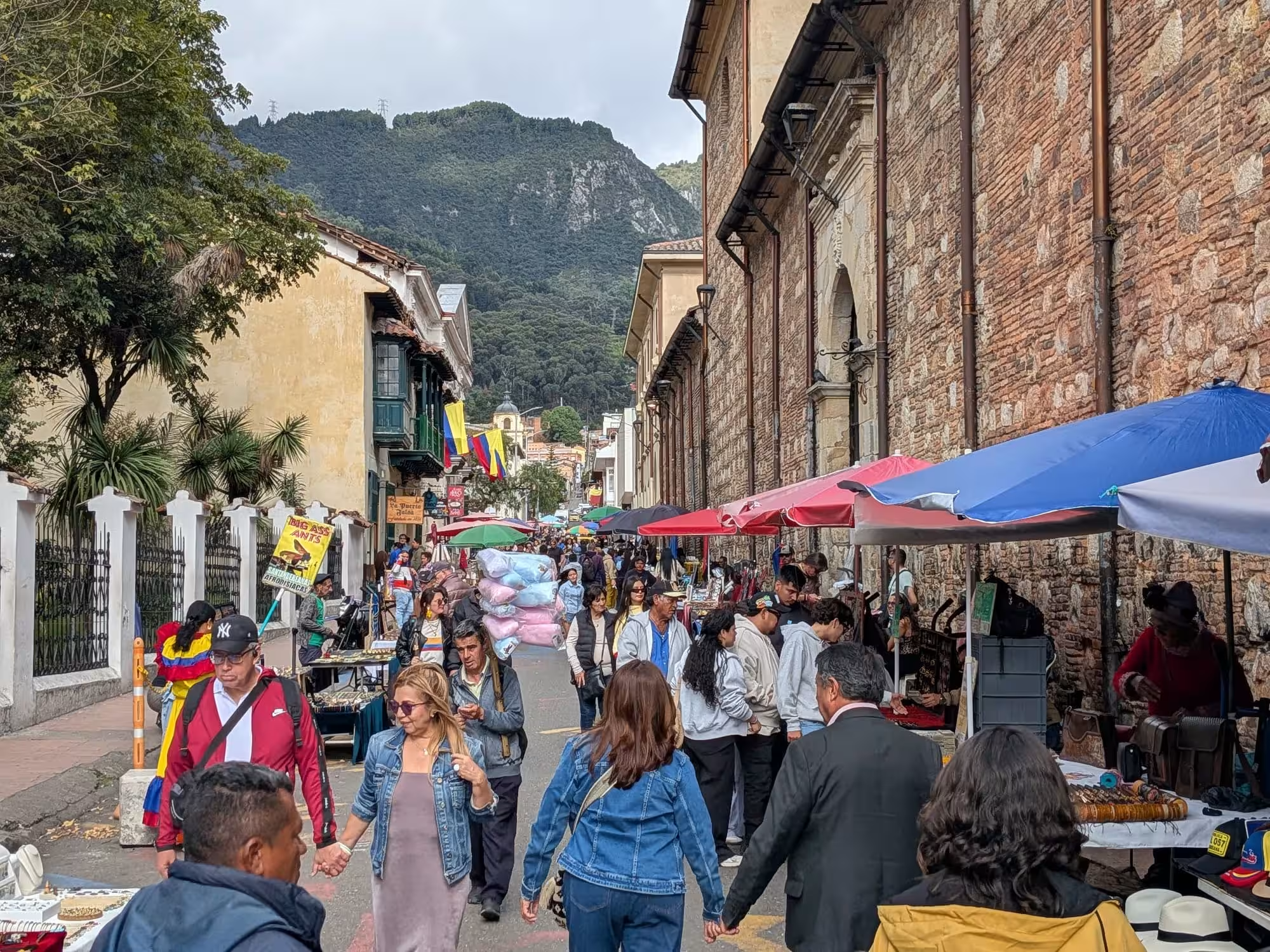
On the contrary, you should know that the Colombian population views drug trafficking and drug use very negatively. If someone is seen with it, they are immediately reprimanded.
Colombia is indeed trying to recover from the heavy past it endured during that dark period by gradually changing its image. What is in the past stays in the past; now it's time for the present, which is about conveying the true Colombian culture.
Colombia and its relationship with Pablo Escobar
Continuing from what I explained about drug trafficking, many people associate Colombia with Pablo Escobar.
In fact, the Netflix series Narcos doesn't help with how people perceive the country, as it only shows the positive things Pablo may have done for his community. But the reality is completely different, because we must remember that "Don Pablo," as he was nicknamed, is primarily known for his crimes against his own people for nearly 10 years.
Even though it is true that the country has a close link to him, Colombians do not like him at all.
If I have one piece of advice, don't mention him, or you'll come across poorly. They will immediately peg you as a typical tourist who arrived in Colombia with that one cliché in mind, without any real interest in understanding the actual culture.
It is important to understand that Pablo Escobar was never held in high regard by the local population. He caused them immense suffering by sowing terror throughout his own country. Mass killings, kidnappings, and hostage-taking are the last things they want to remember.
Colombia and safety
Insecurity exists everywhere in the world, even in countries where you might think it never happens (like Japan).
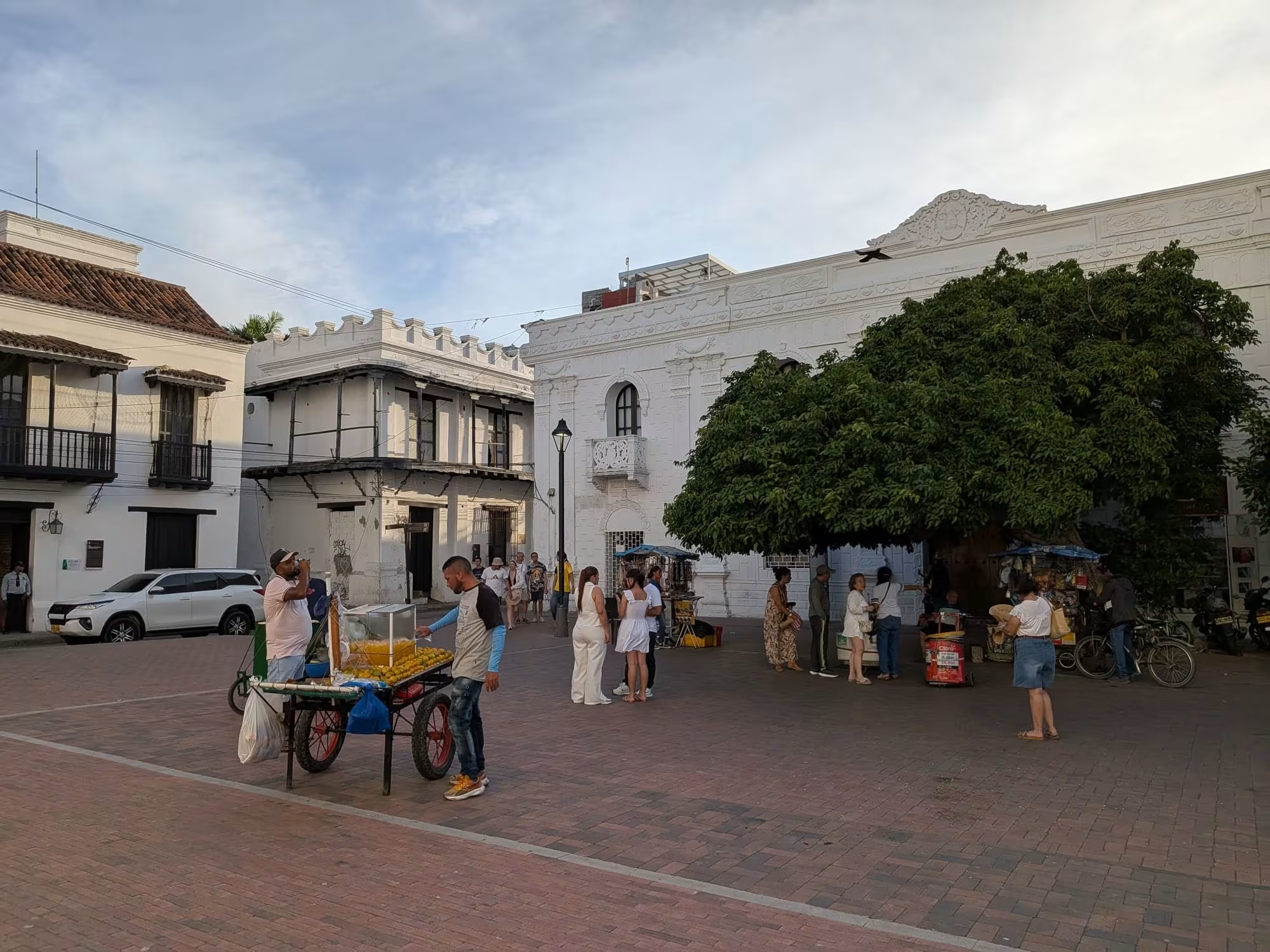
In Colombia, insecurity is a reality; I won't hide that from you. It mostly depends on where you go and at what time.
The only things I encountered on the streets were people asking for money or somewhat pushy touts trying to get you into their restaurants or shops. But that is as far as it goes.
In Bogota, for example, it is recommended not to go out late at night in specific areas, especially if you are alone.
Having gone out at night with my girlfriend and her cousin, if you stick to busy areas, nothing will happen to you.
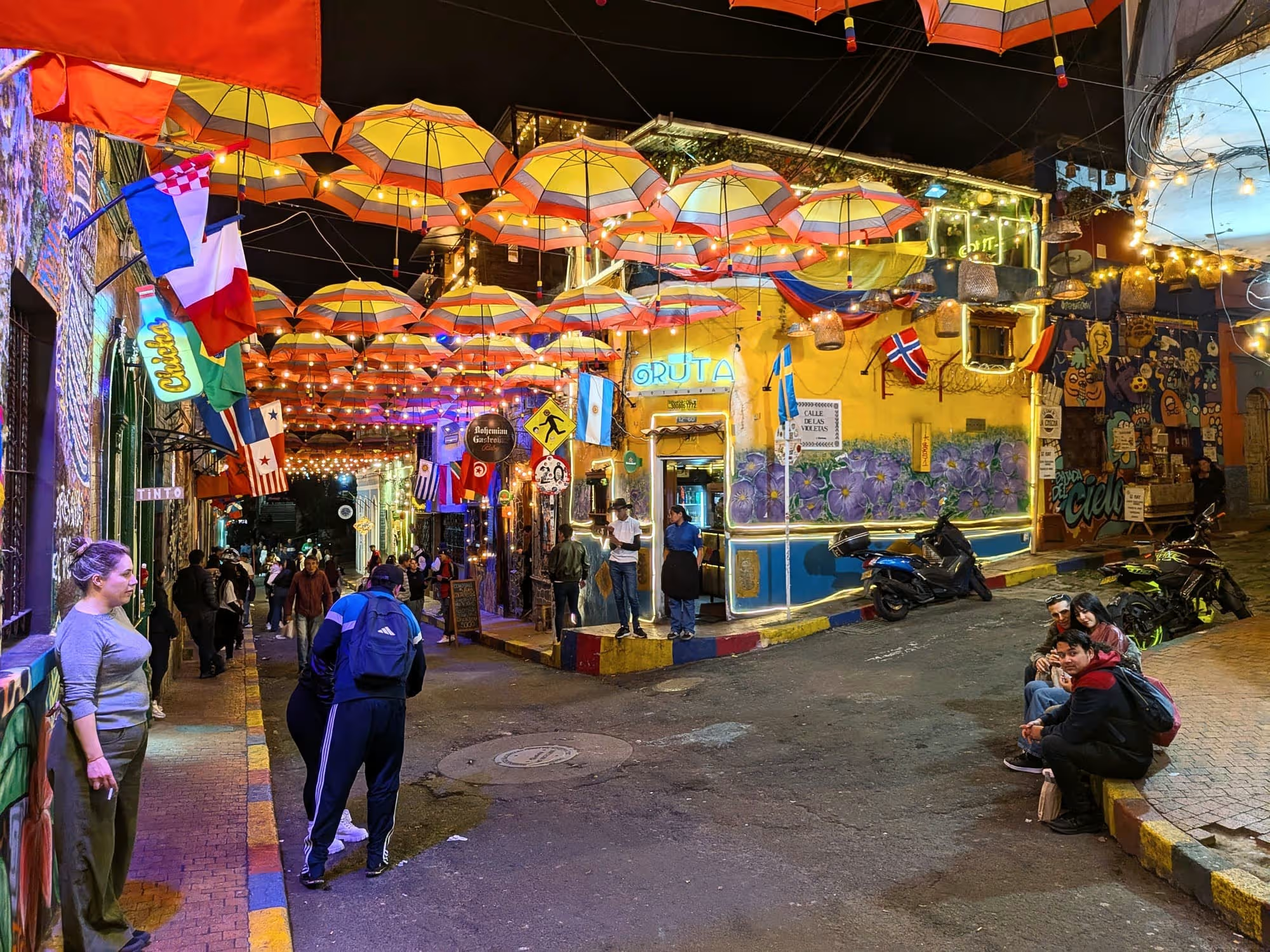
Depending on the city, some working-class neighborhoods should be avoided as they are areas where incidents are more likely to occur. The simplest thing to do is ask locals which areas to avoid, as they know their neighborhoods very well.
But overall, everywhere I went, I had no safety issues. In fact, I often felt safer in any Colombian city than I did in Paris.
If you have any doubts, I invite you to check out my blog, where I list all the interesting places to visit in Colombia without exposing yourself to risks.
Colombia is a poor country
It all depends on how you define poverty in a country. Are we looking at it from an economic perspective or in terms of natural wealth?
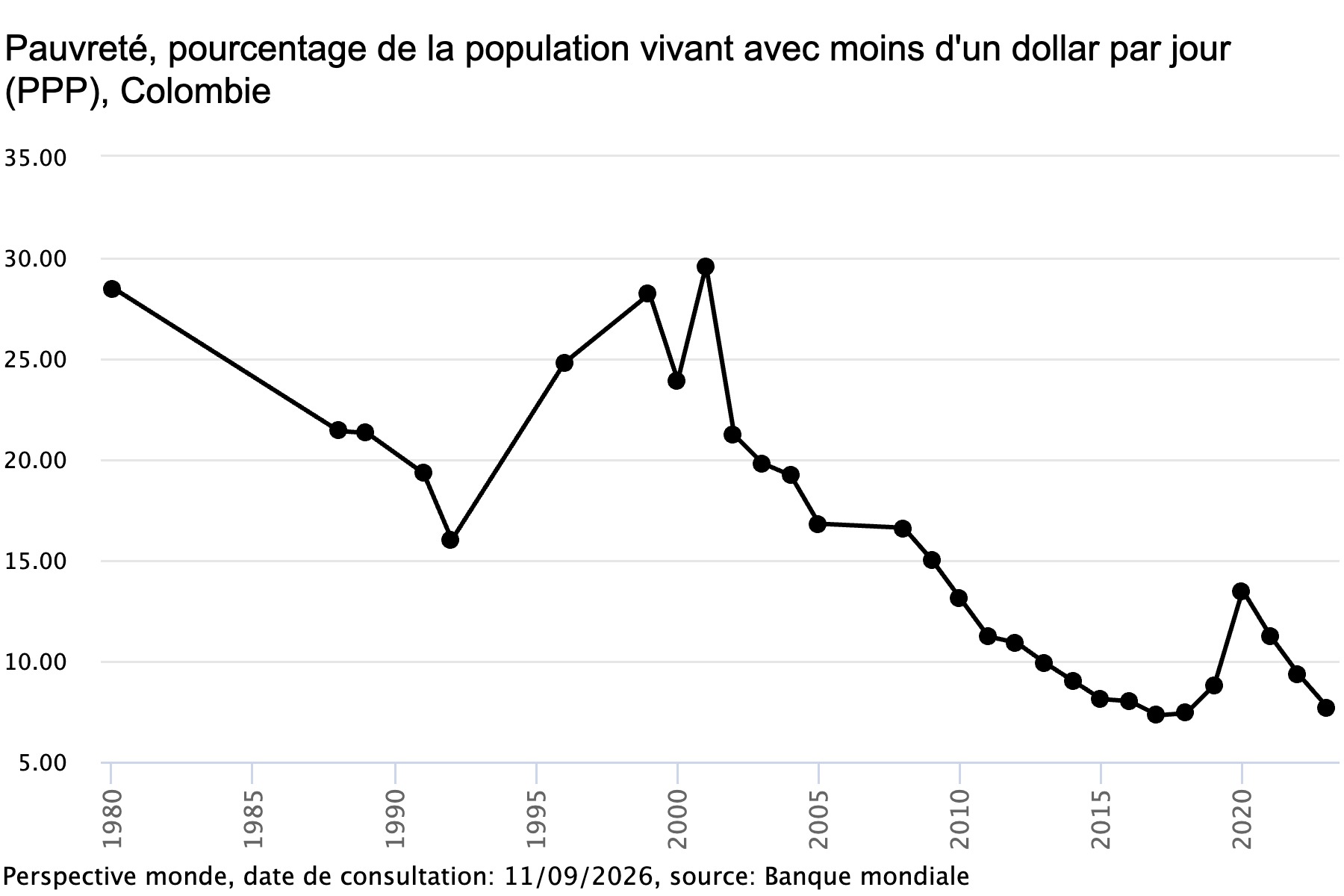
From an economic standpoint, if we refer to this chart showing the percentage of the population living on less than a dollar a day, it stands at 7.7% in 2023. Given that Colombia's total population is 54 million, this represents approximately 4 million Colombians living on less than $30 a month.
Of these 7.7%, nearly half come from rural regions where the economy relies on agriculture.
These figures show that a large portion of the population lives below the poverty line. Given the current cost of living, it is clear that many are unable to live decently.
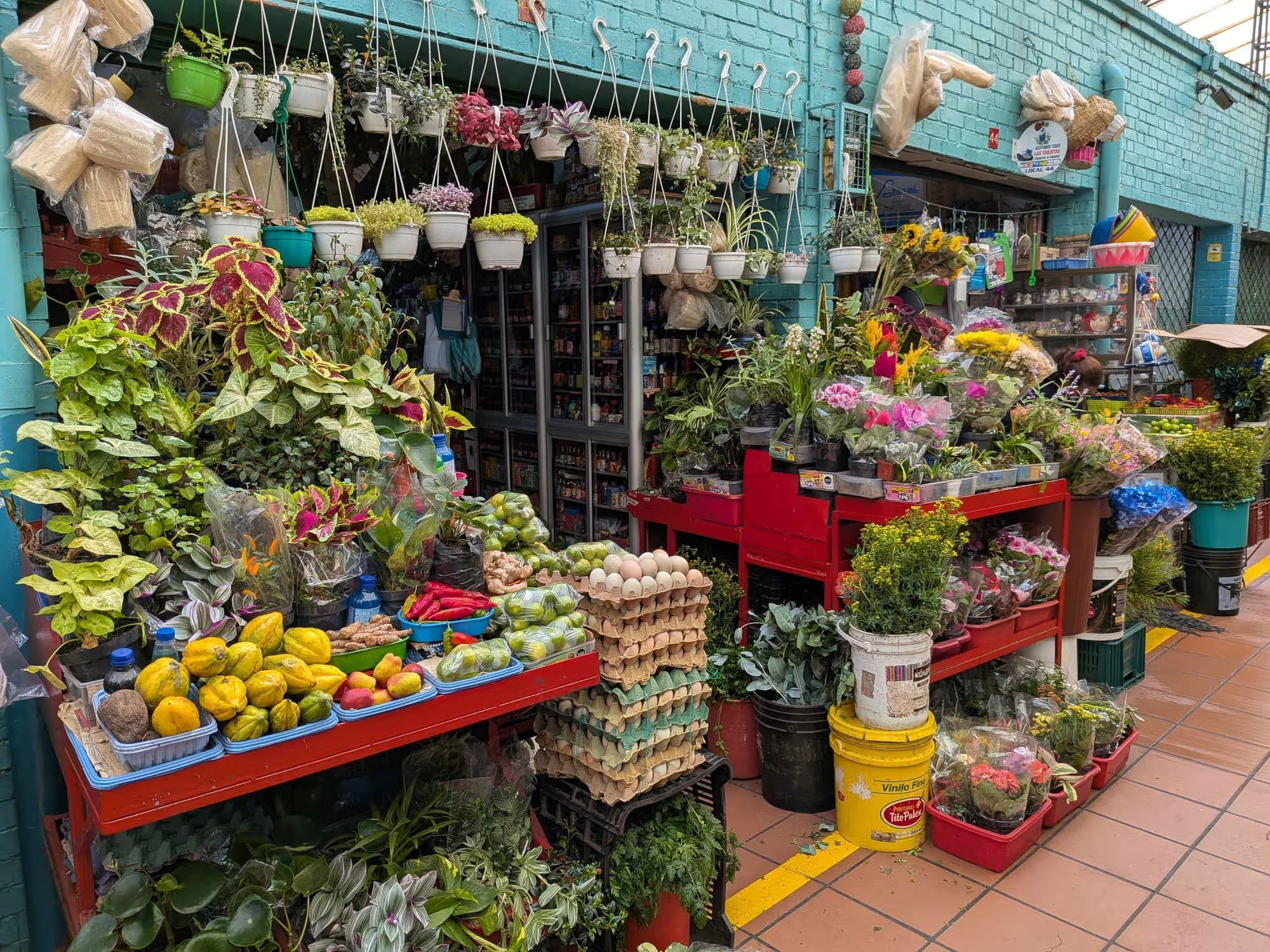
When I went to Colombia, I saw the prices of essential products (fruits, vegetables, meat) for myself, and to say the least, you can barely buy anything for under $1, except for a bottle of water.
On top of this, Colombia faces corruption that has a massive impact on its population.
After watching the documentary film "Sumercé" (which I highly recommend you watch on Vimeo), it becomes clear that farmers very often have to stand up to government authorities to avoid expropriation, even though the land belongs to them.
Similarly, the film shows that regional elections often favor the wealthy, who pay bribes to win people over to their cause, leading to injustices in the election of officials.
BUT Colombia possesses an unparalleled natural wealth that few countries can claim, and in recent years, infrastructure, transportation, and urban planning have been developing rapidly.
Colombian land is rich in minerals and highly fertile for planting and producing fruits and vegetables.
Thanks to its diverse climate, farmers can produce coffee, cocoa, and potatoes in the highlands, for example. They can also produce mangoes, papayas, and coconuts in the tropical zones.
Finally, let’s not forget that more and more tourists are coming to Colombia to discover this natural wealth; eco-responsible tourism is attracting even more visitors and helping to protect these ecosystems, which are vital to the country's biodiversity.
In my opinion, Colombia has a wonderful future ahead for development, thanks to its cultural and natural wealth, but above all, thanks to its warm-hearted people who want to promote a better image of their own country.
Colombia and the warm climate
If you look closely at a world map, Colombia is located just above the Equator.
You might think it’s hot all year round and only pack light clothing. Big mistake!
Because the climate in Colombia works differently. The higher the altitude, the colder it gets. The country is known for having several mountain ranges, which means you will pass through areas with a mild, dry climate (high altitude), and then through parts where it is hotter and more humid (low altitude).
In some areas, such as the Caribbean coast or the Amazon, for example, it is indeed hot and humid.
However, if you are in the Cundinamarca region (which includes the capital, Bogota) or the Boyaca region (a beautiful area I recommend for getting off the beaten path), the climate will be cooler, with temperatures that can drop to 10°C in the evening!
Additionally, high altitudes can cause headaches or a feeling of breathlessness for some people—a symptom known as "soroche" in Colombia, though the body usually adjusts to it after a few days. Generally, if you are in good health, these symptoms do not occur.
So, for a first trip, I strongly advise you to bring warm clothing (jackets, sweaters, pants, raincoats) so you can always adapt to the different climates.
Colombia and beautiful women
Colombian women have a reputation for being both sexy with beautiful curves and more expressive in the way they approach people.
One thing is for sure: Colombian women are beautiful, I won't hide that from you. It is true that many of them have curves, especially around the hips. This is the case with my Colombian girlfriend, for example.
But you shouldn't generalize. I have also had the opportunity to meet Colombian women who don't fit the image you might expect at all.
I have seen with my own eyes many different types of women with different physical appearances.
My girlfriend has more Western features with curves. Other women have more mixed-race features that are closer to indigenous roots, with varying degrees of curves. Along the Caribbean coast, I have seen many women with African features and more pronounced curves.
In any case, no matter where you are in Colombia, you will find nothing but beautiful women!
As for Colombian women being more outgoing, you need to understand the customs and traditions of Colombia in more detail.
Colombian culture is such that men and women are generally expressive, in the sense that they more easily show their emotions and love for those around them.
It is not uncommon to hear Colombians in the street using strong terms like "My love," "My princess," or "Handsome," as these are considered expressions of affection rather than declarations of love.
These expressions are completely normalized in Colombia, and you will need to get used to them. So, if a woman or a man says these words to you, don't take it personally or as an attempt to flirt, but rather as a way of welcoming you warmly!
Colombia only produces coffee
Colombia is indeed a coffee-producing country, holding the 3rd position behind Brazil and Vietnam.
We are very familiar with this image because we often see bags of coffee in supermarkets and coffee shops that originate from Colombia.
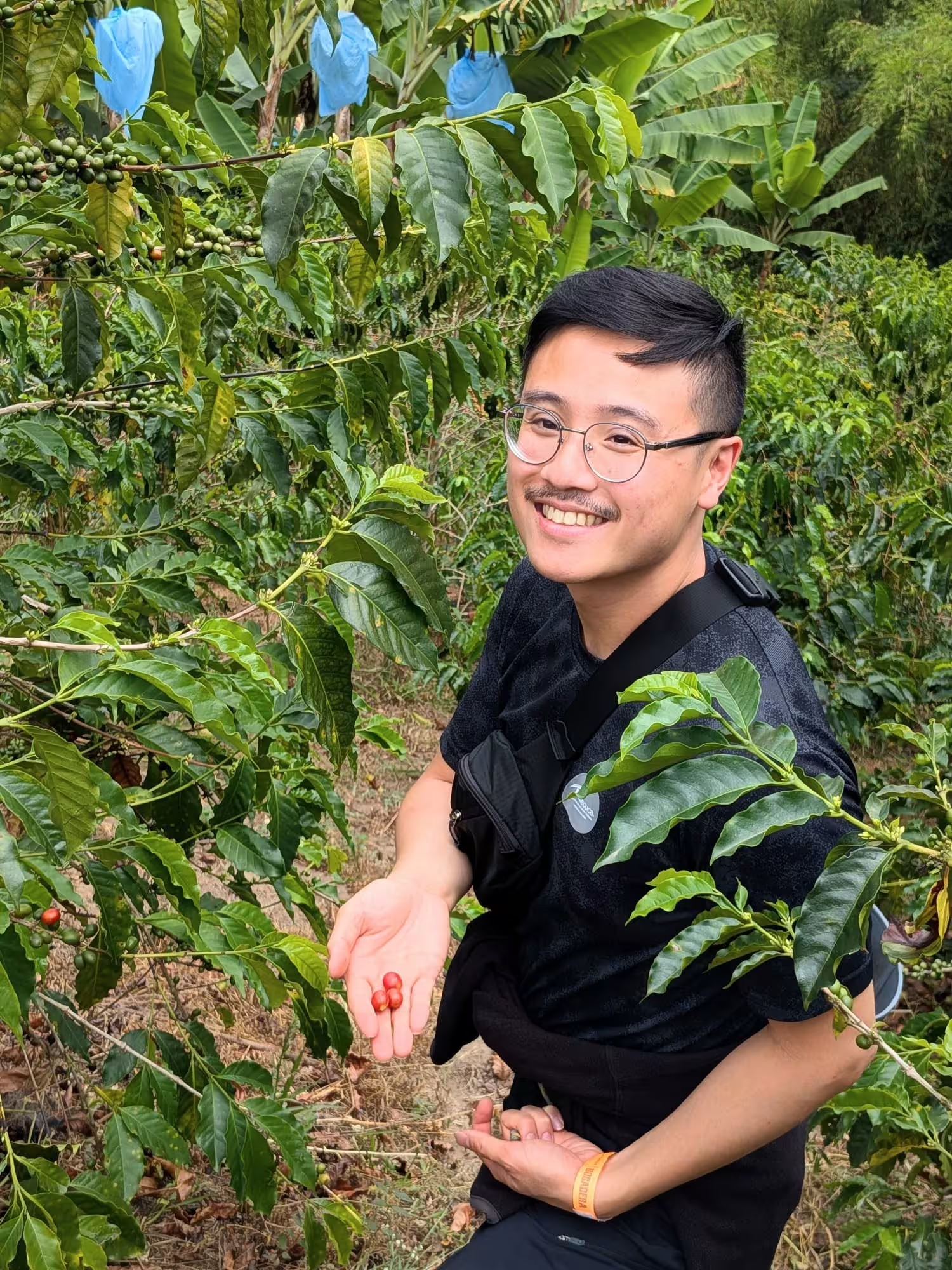
That was also the reason why I absolutely wanted to see with my own eyes how coffee is grown locally.
There are several regions where you can learn about coffee on "fincas," more commonly known as farms in Colombia. For my part, I went to one that is very well-known in the Quindio region: La Recuca. If you are comfortable with Spanish, it is one of my top recommendations!
However, Colombia is about much more than just coffee production, far from it.
You should know that the country itself is self-sufficient in terms of agriculture, as it produces not only coffee but also many varieties of fruits and vegetables, most of which are exotic products that we don't have back home.
Cacao, corn, cassava, mango, avocado, papaya, bananas, and many others are produced in Colombia. You only need to visit a local market to realize the vast array of things you can find.
Thanks to its terrain and climate, which vary according to altitude, as well as its very fertile soil, it is easy to grow almost any edible plant.
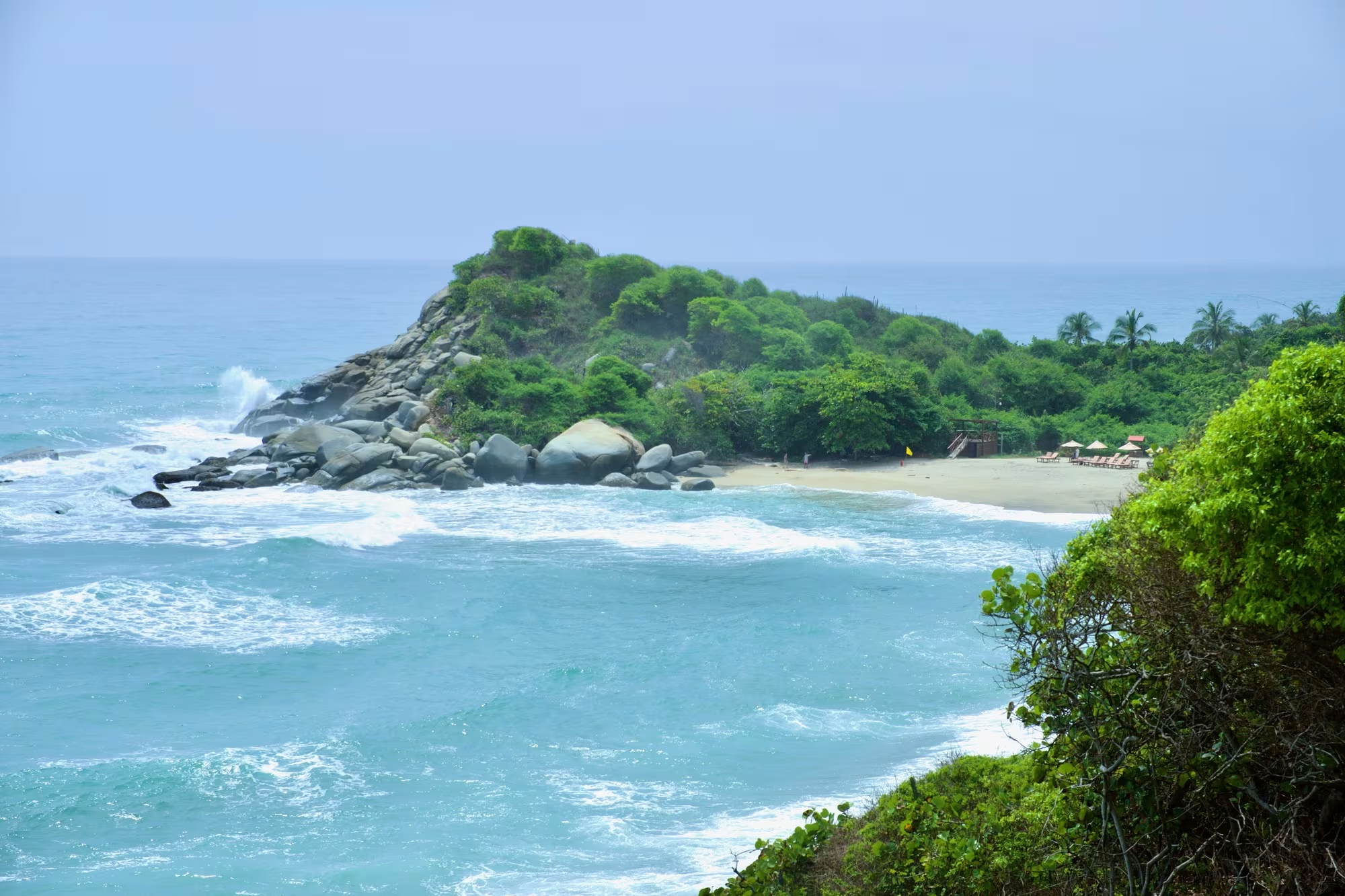
In this sense, it is truly interesting to view Colombia as a natural reserve, because not only can you taste different fruits and vegetables, but you can also admire magnificent landscapes ranging from idyllic beaches and tropical jungles to arid deserts and rugged mountains.
Colombia and its predominantly mixed-race population
Thinking that the entire country has mixed-race skin is incorrect. It is through the various generations since the Spanish colonization that we now find a diversity of Colombians with different skin tones.
The proof is that my girlfriend does not have mixed-race skin, but rather fair skin with a mix of indigenous and Spanish heritage.
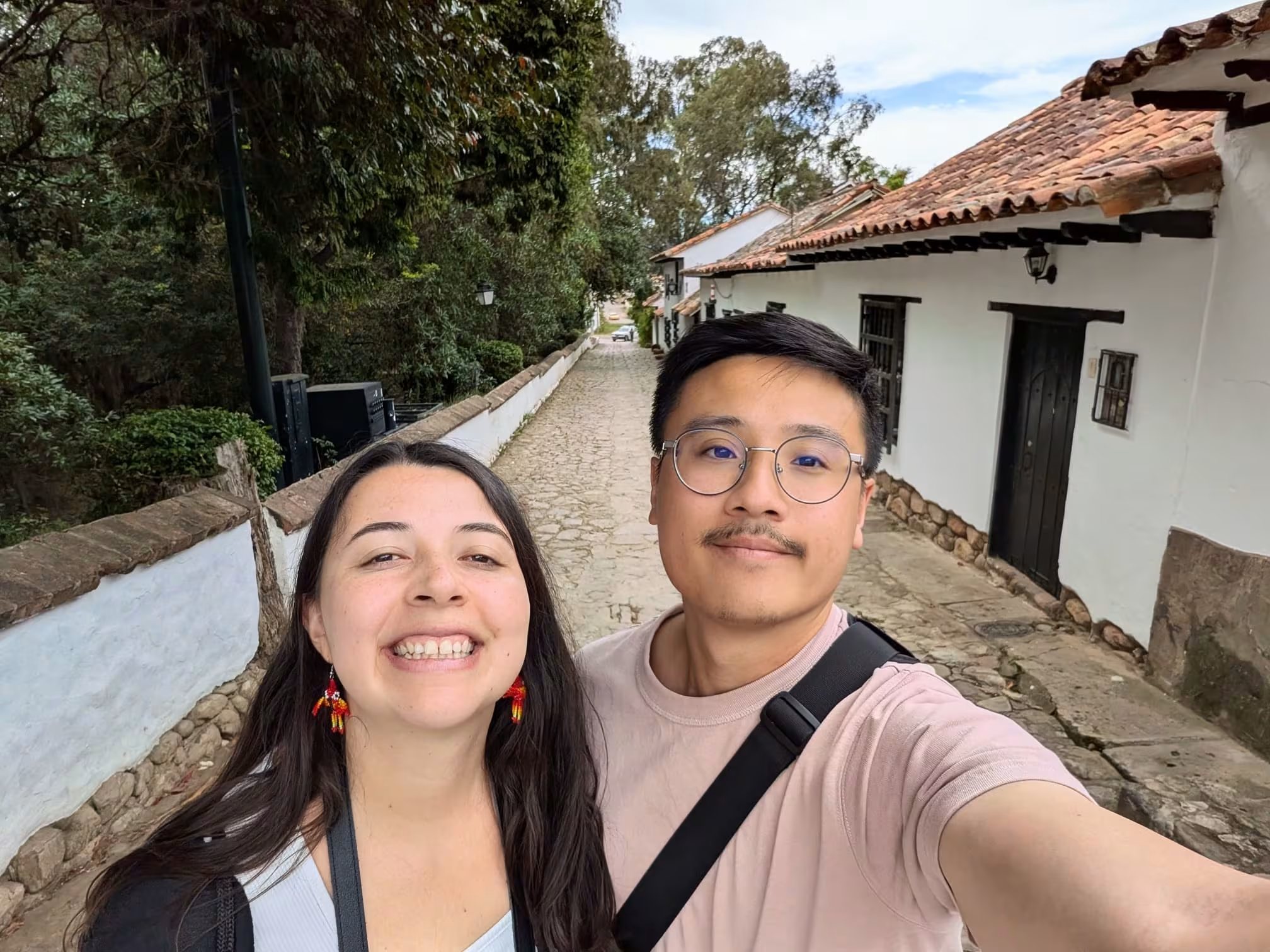
Originally, Colombia was home to indigenous peoples with several ethnic groups spread across the territory. These were populations with tan skin who possessed features similar to Asian peoples.
Starting in the 16th century, the colonization of Colombia by the Spanish was a major turning point, as this was when the mixing of races began: with the arrival of Black slaves, the persecution of indigenous people, and domination by Spanish soldiers, the demographics were bound to change.
We therefore find crosses between Spaniards and indigenous people, just as we find crosses between Spaniards and Africans, as well as indigenous-African crosses. This is why racial mixing is very prevalent in Colombia today.
If you walk the streets of Bogota, for example, you will certainly find many mixed-race people with tan skin, but you will also see people with fair skin. Meanwhile, in other regions like the Caribbean or the Pacific coast, you will find many Afro-Colombians with black skin.
Conclusion
We all hold stereotypes about Colombia that skew our perception of reality.
Given all these misconceptions I’ve laid out, I realize that many people around me are afraid of the idea of traveling to this country, which is actually so magnificent from the inside.
Honestly, after spending a month in Colombia exploring different regions, I have such wonderful memories because I was lucky enough to travel with my Colombian family, which allowed me to learn so much about their culture.
I now know how to go about fully enjoying Colombia for a future trip if I happen to return, which will almost certainly be the case given the many places I still have left to discover!
If you follow my recommendations and advice, you’ll see that your future trip to Colombia will be all the better for it, without having to be constantly on your guard just because you were told a certain place is dangerous.