
Why do so many travellers head to Cartagena de Indias in Colombia? What are the best things to do, see and eat there?
That’s exactly what I’ll explain in detail in this article about the city that left the biggest impression on me, from a historical, architectural and cultural point of view!
📌 Cartagena de Indias at a glance (visited in July 2026)
How many days? 3 days for the walled city, Getsemaní and a day on the islands.
Budget: from €50 a day as a backpacker, €100 a day for more comfort.
Where to stay? The Walled City for a first visit, Getsemaní on a tight budget, Bocagrande for peace and quiet by the beach.
When to go? Any time of year. July is the busiest season, but the atmosphere is fantastic.
Must-sees: the walled city and its ramparts, Getsemaní, Castillo San Felipe de Barajas, the Rosario Islands.
My take: the almost perfectly preserved, colourful colonial buildings and the streets buzzing day and night completely won me over.
How many days do you need in Cartagena de Indias?
Allow 3 days to see the highlights without rushing: one day in the walled city, one day between Getsemaní and Castillo San Felipe, and one day on the islands.
- 2 days: walled city + Getsemaní, no islands. For a quick stop.
- 3 days (recommended): the city highlights + a day on the Rosario Islands or Tierra Bomba.
- 5 days or more: add Barú / Playa Blanca and the village of San Basilio de Palenque.
💡 My experience: my first trip to Cartagena with my Colombian family gave us 3 days there. We explored the Walled City and Getsemaní in 1 day. We then spent a whole day on the beach on Tierra Bomba island. On the last day, we visited Castillo San Felipe de Barajas, took one last walk around the historic centre, then explored a bit of Bocagrande.
Cartagena de Indias: what to know before you go
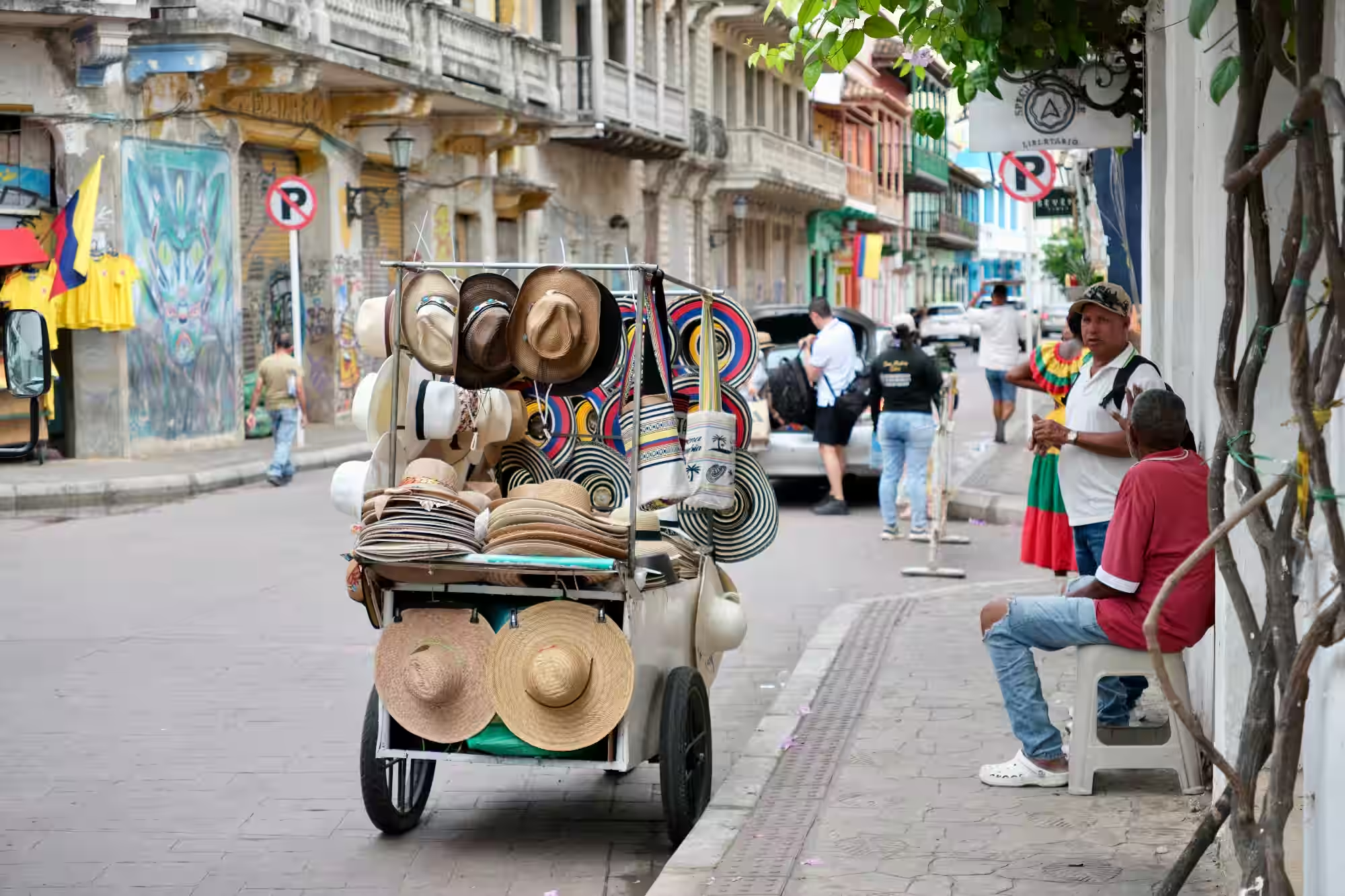
To really make the most of your visit to the city and its surroundings, I encourage you to get to know its history, its culture and the challenges Cartagena de Indias faces.
💡 My experience: thanks to my Colombian in-laws, who explained things to us as we went along, I discovered Cartagena from a different angle, with plenty of stories I’ll share with you here.
The history of Cartagena de Indias
To see this Colombian city rise from the ground, you have to go back to the 16th century.
It was in 1533 that the Spanish colonisers, led by the conquistador Pedro de Heredia, founded Cartagena de Indias on the Caribbean coast.
It was given this name to avoid any confusion with its Spanish namesake, Cartagena, in the region of Murcia in south-eastern Spain.
The choice of location was strategic: the Spanish wanted a place suited to developing a trading port, with favourable conditions for their ships to dock safely.
The bay of Cartagena de Indias (image below), sheltered by the island of Tierra Bomba, was the perfect place for a port protected from the swell: through the Bocagrande pass and the Bocachica pass, Spanish ships could sail in without any trouble.

The Spanish also used this port to bring in enslaved Africans: around 300,000 of them landed on the continent up to the 19th century, forced to build the walled city (today’s city centre) and to work the land.
Some were even made to work as servants in the homes of wealthy Spanish landowners, which was seen as a sign of power at the time.
Since the defeat of the Spanish by Simón Bolívar, Cartagena de Indias has kept its colourful colonial architecture almost intact, along with its rich culture and a population of diverse origins.
Today, the city is increasingly popular with tourists. Between its historic centre, its turquoise beaches and its lively nightlife, Cartagena de Indias is the 3rd most visited city in Colombia, after Bogotá and Medellín (source: MinCIT).
The local population of Cartagena de Indias
Walk around the city and you’ll notice great ethnic diversity.
But above all, I noticed a large Afro-Colombian population. To understand why, we need to go back in time.
Between the 16th and 18th centuries, Spanish colonisers shipped several million enslaved people from West and Central Africa to Latin America.
Colombia received several hundred thousand of them. The port of Cartagena de Indias was one of the busiest in the slave trade, which is why the city has one of the largest populations of their descendants.
Afro-Colombians are still very present in the city and the region today, long after the Spanish left: they survived through the struggle against racial segregation, by fleeing inland and by resisting assimilation into Spanish culture.
Unlike other Colombian cities such as Medellín or Bogotá, Cartagena de Indias is where this community is most present: now well established, it makes up more than a third of the population.
Local culture in Cartagena de Indias
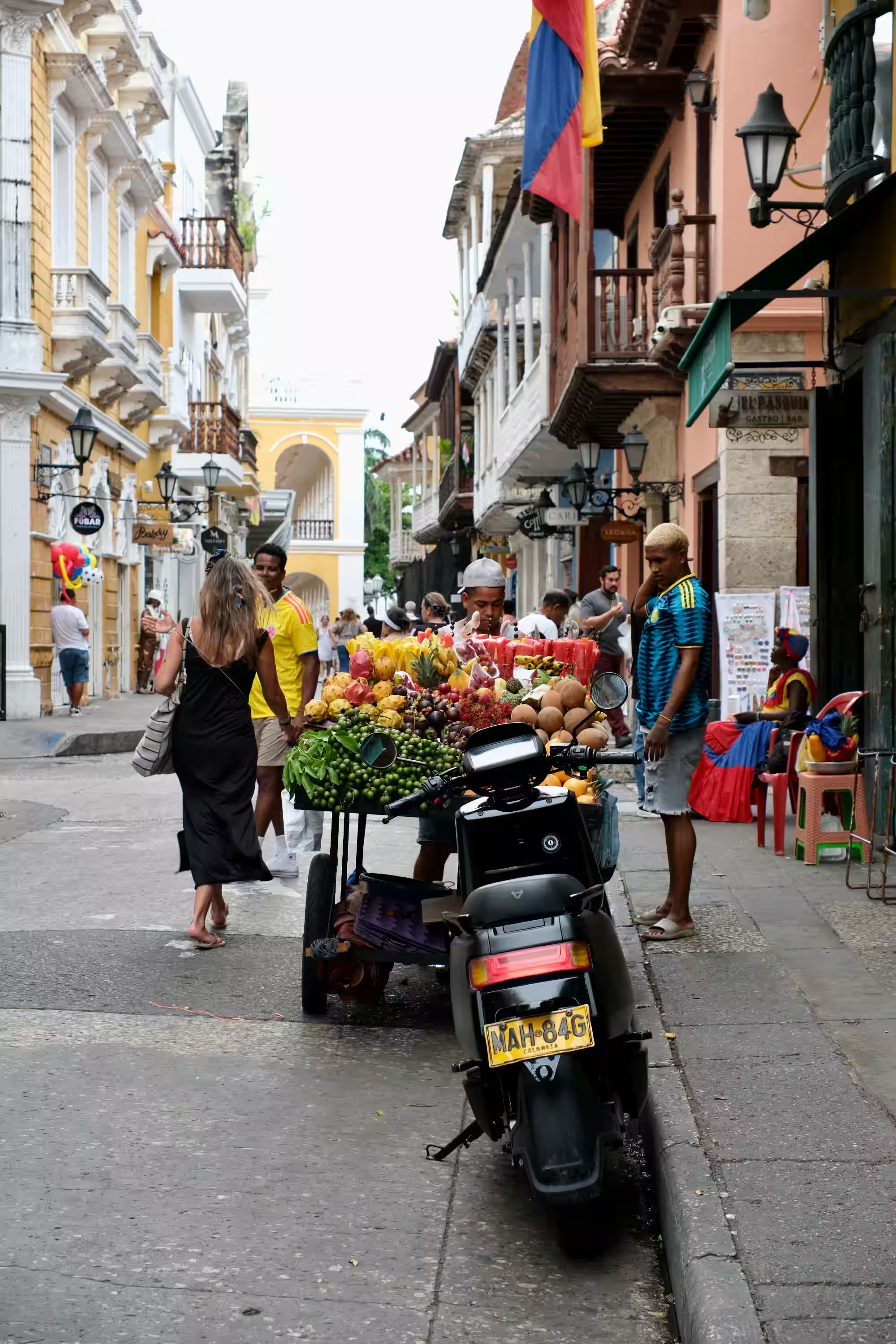
Cartagena de Indias is a truly fascinating city to visit. When I was there, I was struck by the colonial buildings and their well-preserved balconies, with a touch of Afro-Colombian culture adding a colourful, friendly layer to my walks around the centre.
The Getsemaní neighbourhood, just outside the walled city, is home to much of the Afro-Colombian population. There I discovered a whole side of this community’s culture: the food, incredible colourful murals and of course the music, which transported me to a world I didn’t know yet.
Inside the walled city, on the other hand, things look a lot like southern Spain and felt more familiar to me: white houses with yellow stripes, wooden balconies, imposing churches and cobbled streets.
Cartagena de Indias is therefore a city between tradition and modernity, blending colonial heritage with a deeply rooted Afro-Colombian culture.
Cartagena de Indias: what to see?
Now that I’ve given you an overview of Cartagena de Indias, what are the key things to see? Here’s everything in detail!
💡 My experience: my 2 favourites are the Walled City and the Getsemaní neighbourhood. I love wandering through little streets and taking photos of everyday life, so this is exactly my kind of place. The colonial houses with their beautiful balconies and the constant flow of tourists and locals make the atmosphere even more exciting.
Torre del Reloj & Plaza de los Coches: the city’s iconic landmark

Of all the things to see, the Clock Tower, or “Torre del Reloj” in Spanish, is probably the first place to visit.
It’s also the starting point for a walk around the whole historic centre and its many streets and monuments.
When the Spanish first settled in Cartagena, there was only a gate, in the style of old Spain, which served as the main entrance to the city.
The clock tower was only added in 1888, completing the structure we see today.
Opposite stands the sadly famous Plaza de los Coches, a square that was once a slave market for wealthy Spanish landowners. In the middle is a statue of the famous conquistador Pedro de Heredia, founder of Cartagena de Indias.
It’s an important place for locals, and an eye-opening one for visitors who want to follow in the footsteps of Colombia’s colonial history.
San Pedro Claver Church: a religious site dedicated to a Jesuit priest

Of the many churches in Cartagena de Indias, this is the one you really must visit from a historical point of view.
To understand why, you need to know who Saint Peter Claver was.
He was a Spanish Jesuit priest who arrived in Cartagena de Indias from Spain in 1610. After completing his theology studies in Bogotá, he was ordained a priest in 1616.
His mission was to welcome enslaved Africans aboard the ships, who arrived in terrible condition, sometimes close to death, and then to convert them to Christianity with humility.
Claver didn’t just prepare them for baptism: he also cared for the sick on board, fed them and taught them the catechism, explaining the benefits of believing in God.
By the end of his life, Peter Claver had converted around 300,000 enslaved people, before the plague took him.
This is why Saint Peter Claver is considered the “universal patron of missions to Black people”, as his commitment went far beyond the duties he had been given.
His selflessness earned him great recognition from the community. A church is dedicated to him, where you can now see his tomb. It stands just a few metres from Plaza de los Coches, the former slave market.
Entrance fee: free for the church, 21,000 COP for the museum
Plaza Simón Bolívar: the city’s central square

In the heart of the Walled City lies one of its most important squares: Plaza Simón Bolívar.
It’s a beautiful garden surrounded by leafy trees, with the famous statue of Simón Bolívar in the middle.
This little square is a peaceful spot to take a break between visits.
Sit on a bench and simply take in your surroundings. With a bit of luck, you’ll catch an impromptu street performance!
Cathedral of Santa Catalina de Alejandría: the city’s largest church

This was one of my favourite discoveries in Cartagena de Indias, as it’s the largest cathedral in the city.
Built from the 16th century onwards, the cathedral is not only a place of worship but also the seat of the Archbishop of Cartagena de Indias.
Whether from the ramparts or around a street corner, the Cathedral of Santa Catalina de Alejandría is almost always in view.
Up close, I could admire its beautiful exterior colours as the sunlight hit its orange and red walls.
Inside, the setting is simple but just as fascinating when you first look down the central aisle: whitish columns and walls with a wooden ceiling.
Entrance fee: free
Santo Domingo Church: the city’s oldest building

The oldest building in the city is Santo Domingo Church. Construction began in the 1550s.
Along the way, the builders noticed a structural flaw caused by the weakness of the walls, so they added buttresses along the side of the church to hold the structure in place and stop it from collapsing.
From outside, the walls are a pastel orange, while the entrance is made of carved stone, creating a striking visual contrast.
Opposite the church is a lively square with a friendly, relaxed atmosphere. You’ll find souvenir shops and a large coffee shop selling local coffee.
Entrance fee: free
Plaza de San Diego: a lively square at night

At night, Plaza de San Diego is definitely a place I recommend visiting.
Traditional music plays in the background while people settle into the bars and restaurants around the square to enjoy the festive atmosphere.
Some locals sell their goods here: you can buy small traditional souvenirs or try local street food cooked by street vendors.
Price: free
La Serrezuela: a former bullring turned shopping centre

If you’re looking for unusual places to visit in Cartagena de Indias, La Serrezuela is the one.
It was once a bullring that hosted bullfights until 1973, before being turned into a shopping centre.
The old bullring was declared a national heritage site in 1995 and can still be seen right in the middle of the shopping centre.
Price: free
The walls of Cartagena de Indias: protection against invaders
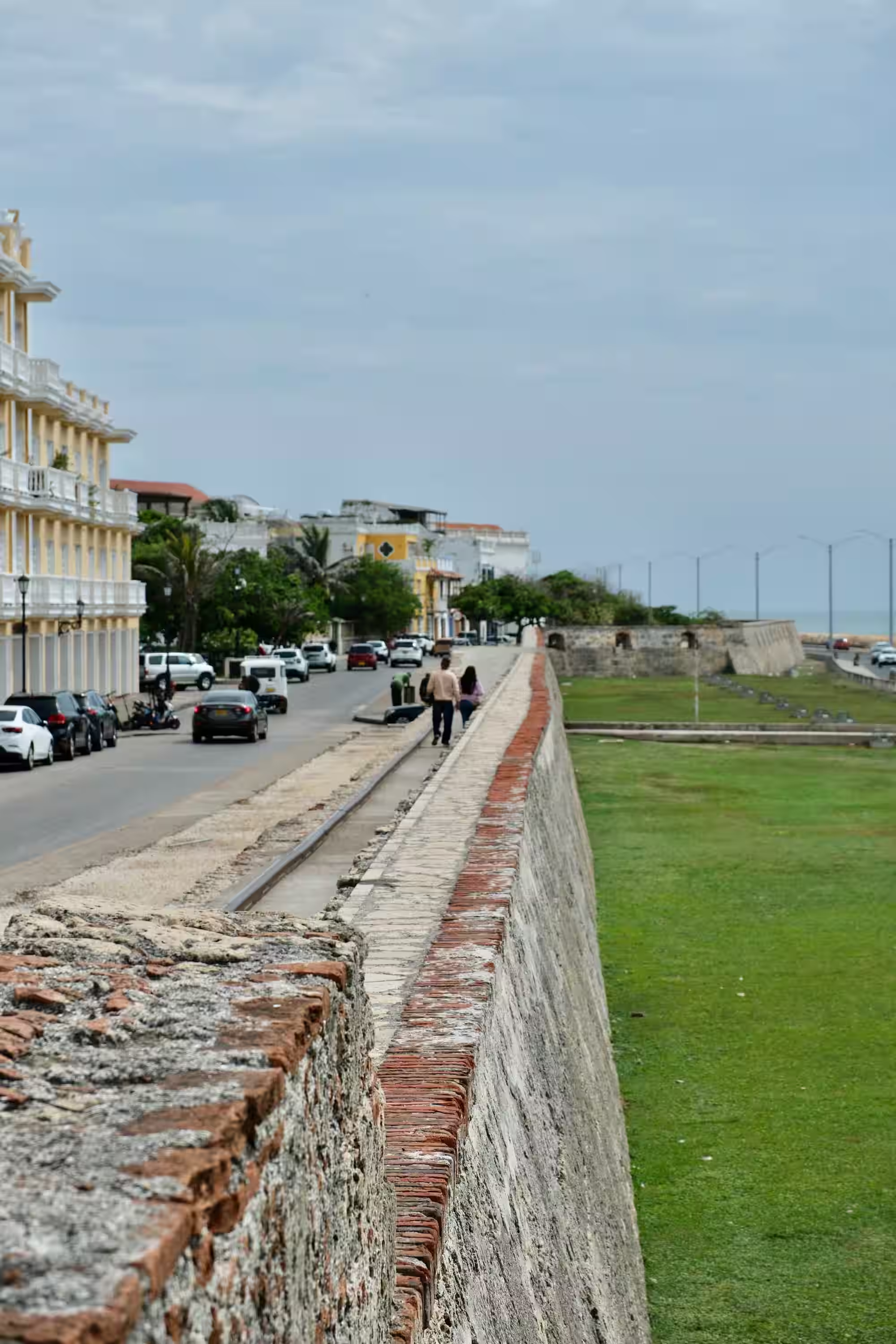
The 11 km of walls around Cartagena de Indias can be walked in half a day at a moderate pace.
They were mainly built to protect the city from invaders, especially pirates constantly trying to seize the city and the treasures held by the Spanish, including gold.
Socially, the walls also separated the rich from the poor, who could only enter the walled city to work.
Price: free
Getsemaní: the working-class artisans’ neighbourhood
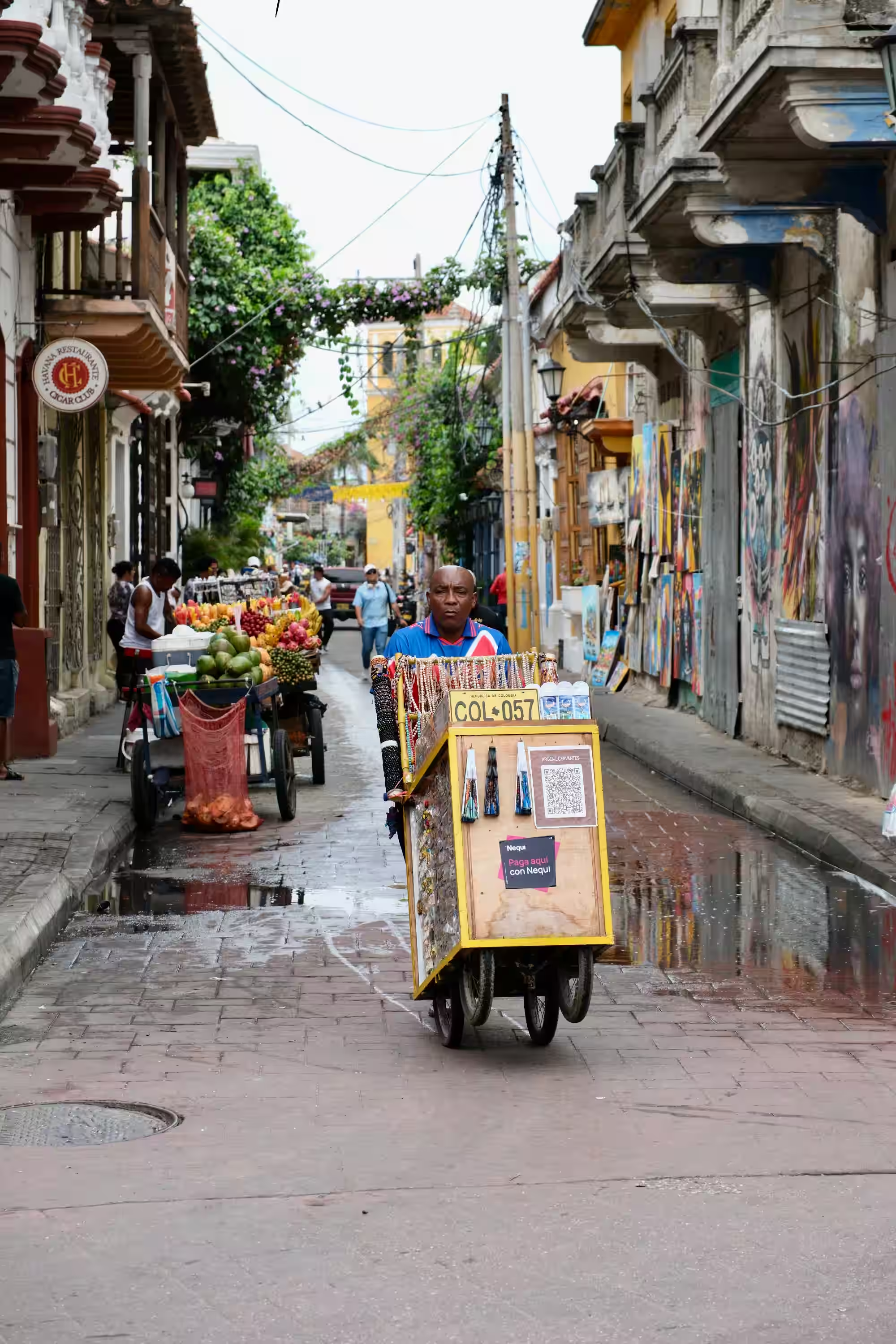
Getsemaní, once the neighbourhood of artisans and enslaved people, right next to the city walls, is now a powerful symbol for the Afro-Colombian community.
Many enslaved people from this neighbourhood chose to rebel against Spanish rule, racial segregation and the slavery they endured.
When I walked around, the atmosphere was very friendly. The houses here are lower, painted in bright colours and decorated with lots of street art, some of it carrying a strong message.
Some houses look abandoned: you can see inside the buildings through the empty windows.
But that doesn’t take anything away from the neighbourhood: its lively streets, with restaurants, street food and street vendors, attract plenty of visitors curious to discover Afro-Colombian culture.
Price: free
Castillo San Felipe de Barajas: a stronghold against invasions

Just outside the city stands a famous fortress that helped fend off enemies arriving by land and sea: Castillo San Felipe de Barajas.
Its construction began in 1536 and was completed in 1657, more than a century of work.
The most famous event was the English invasion of 1741 led by Admiral Edward Vernon, at the head of more than 27,000 soldiers, 186 ships and 2,000 cannons. They were driven back by the Spaniard Blas de Lezo, with only 3,600 soldiers and 6 ships.
Castillo San Felipe de Barajas played a huge part in the Spanish victory over their rivals: thanks to its very robust and complex design, it is considered one of the most ingenious fortresses of its time.
Parts of the fortress contain tunnels built for hiding and launching surprise attacks on enemies who managed to get inside.
For me, the visit was really interesting to see just how well thought out the defence system was. The tunnels are a real maze: you sometimes end up in dead ends. Proof of how cleverly the Spanish designed them for ambushes.
Entrance fee:
- 38,000 COP for adults
- 16,000 COP for children aged 6 to 13
Where to stay in Cartagena de Indias?
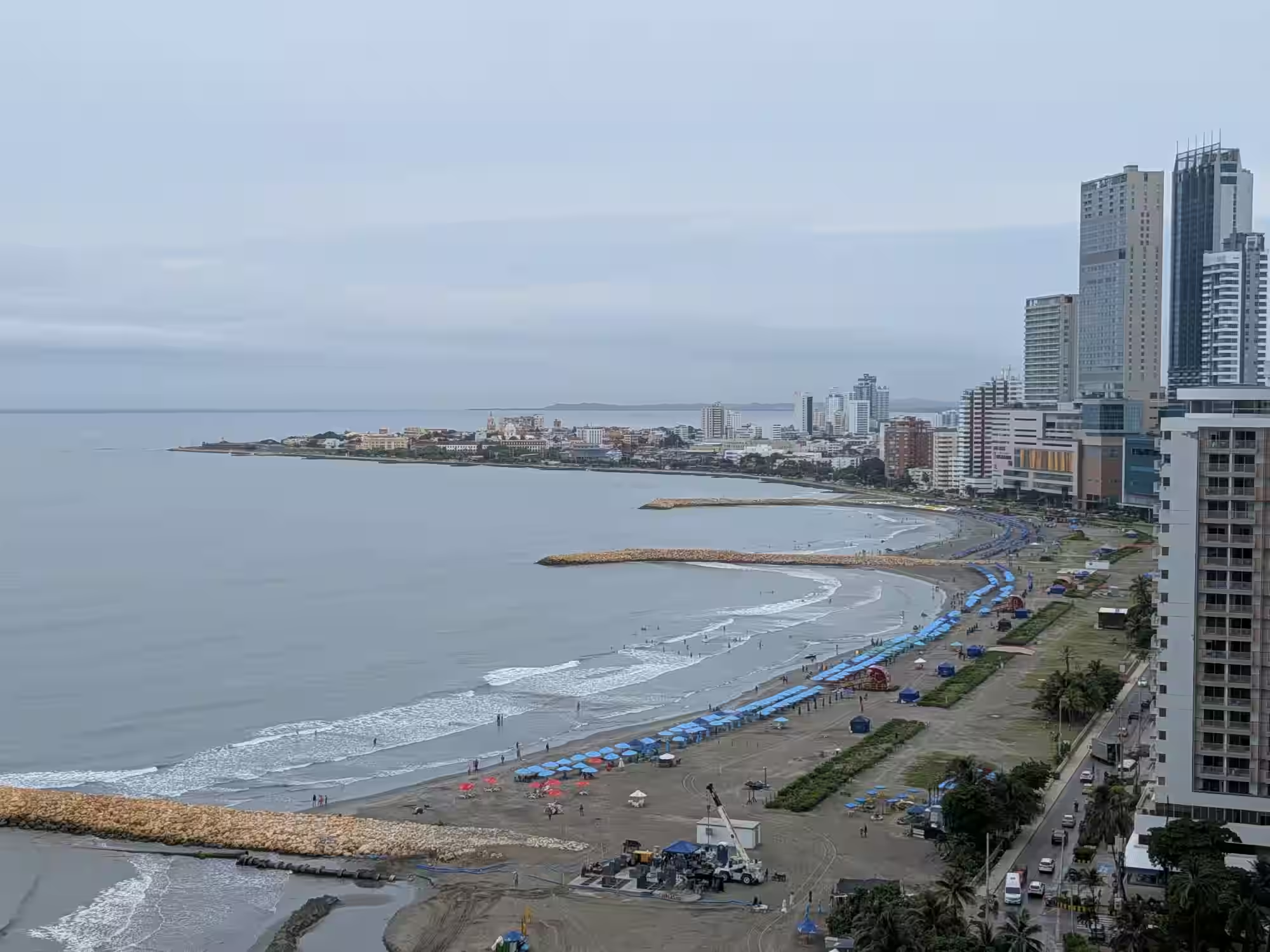
In short: for a first visit, stay in the Walled City; on a tight budget, choose Getsemaní; for the beach, go for Bocagrande.
In recent years, staying in Cartagena de Indias as a tourist has become much more expensive.
Many colonial buildings have been turned into luxury hotels aimed at a fairly well-off clientele. Expect to pay at least €100 a night in the historic centre.
But if you stay a little outside the walled city, you’ll find much cheaper accommodation more easily.
💡 My experience: I stayed in Bocagrande, at the Cartagena Plaza hotel. Spacious, air-conditioned room and helpful staff, but a fairly basic buffet: you can find better for the same price. For a first visit, I’d rather recommend staying in the historic centre to make getting around easier.
I mainly recommend 3 safe, tourist-friendly neighbourhoods to choose your accommodation in Cartagena de Indias:
| Neighbourhood | Best for | Average price / night | Atmosphere | Distance to beach |
|---|---|---|---|---|
| Walled City | First visit, seeing everything on foot | From ~€100 (boutique hotels, few budget options) | Colonial historic centre, very touristy, lively day and night | ~10 min by taxi (Bocagrande) |
| Getsemaní | Backpackers, tight budget | From ~€10 in a dorm (40,000 COP), ~€40-70 for a private room | Working-class, artsy neighbourhood, street art, bars and street food, lively at night | ~10 min by taxi (Bocagrande) |
| Bocagrande | Beach, peace and quiet, families | ~€50-100 (large sea-view hotels) | Modern high-rise district, calmer and residential | Beach on foot |
As for me, I stayed in Bocagrande, at the Cartagena Plaza / Vista al Mar hotel. My Colombian girlfriend’s father chose it, with meals included in the price.
My review of the Cartagena Plaza / Vista al Mar hotel
It’s one of the first hotels built in Cartagena de Indias, and many Colombians stay there. The setting is simple and friendly. The staff are very nice and helpful, although some don’t speak English fluently.
The room is very spacious, with a very large bed for 2. There’s air conditioning, which is no small thing in a city this hot and humid.
For meals, there’s a buffet every day (breakfast, lunch and dinner) with several typical Colombian dishes. Taste-wise, I’d say it’s good without being exceptional. Fussy eaters might not like the dishes on offer.
Online reviews are mixed. For example, on Booking (at the time of writing), it scores 7.7/10, while on Google Maps it has 4.5/5. Many reviewers criticise the food as basic.
My overall opinion of the hotel: you can find better for the same price.
My hotel recommendations in Cartagena de Indias
After comparing reviews on Booking and Google Maps, here are my 3 recommendations if you want to stay in Cartagena de Indias:
- Hotel Boutique Casa del Coliseo: travellers love its central location, its staff and its high-quality service. The only downside: the high price, as it’s a luxury hotel.
- Life is Good Cartagena Hostel: located in the working-class neighbourhood of Getsemaní, it’s popular for its atmosphere, friendly staff, location very close to the centre and very affordable prices.
- Posada La Fe: also in Getsemaní, travellers love its location, its pool, its homely feel and its more than reasonable price.
Also take a look at the map below to find other accommodation that might suit you better!
How to get around Cartagena de Indias and the surrounding area?
There are several ways to get to Cartagena.
From Bogotá, the capital
The easiest option is to fly: it’s only a 2-hour flight. Check the official website of the Colombian airline Avianca, as its prices are very often cheaper than its competitors’.
Average price: 600,000 COP (~€160 return)
Average duration: 2 h
💡 My experience with Avianca: I’ve flown Avianca several times, including to Armenia to visit the coffee region, and to Santa Marta. The flights were always on time and the prices weren’t too high, given the quality of service.
From Santa Marta
The easiest, most convenient and cheapest option is the bus. To book your bus easily, head to Busbud to plan your trip from Santa Marta to Cartagena de Indias in advance.
Average price: 60,000 COP (~€15 one way)
Average duration: ~5 h
💡 My experience: with my Colombian family, we travelled from Santa Marta to Cartagena de Indias in 4 hours by local taxi. It was a bit faster, sure, but the final price was pretty steep… If I did that trip again, I’d take the bus without hesitation!
How to get around the city?
Generally, you can do everything on foot, especially if you stay in the historic centre.
However, there’s one experience unique to the city that you have to try at least once: the Chiva Rumbera.

This bus takes you around the city’s most iconic spots, with a party atmosphere on board.
You can book this experience directly on Civitatis here.
Uber is a good option if you want to go a little further from the centre, to Bocagrande for example. It’s not too expensive, and you’ll easily find drivers around, given how touristy the city is.
What budget for a trip to Cartagena?
Depending on your travel style, here is the minimum daily budget for each category, to give you an idea of what it might cost:
| Backpacker | Couple | Family | |
|---|---|---|---|
| Accommodation | 40,000 COP | 190,000 COP | 310,000 COP |
| Transport | 0 COP | 0 COP | 0 COP |
| Food | 80,000 COP | 240,000 COP | 480,000 COP |
| Activities | 40,000 COP | 80,000 COP | 120,000 COP |
| Total | 160,000 COP | 510,000 COP | 910,000 COP |
| Total (€) | ~€41 (for 1 person) | ~€132 (for 2 people) | ~€240 (for 2 adults and 2 children) |
Note: for transport, I haven’t included the return bus, taxi or plane ticket to get to Cartagena de Indias. I’ve only counted expenses during your stay.
For the “Backpacker” profile, here are my assumptions:
- To keep accommodation as cheap as possible, you stay in hostels, where a night costs around 40,000 COP.
- You eat out without skipping meals and don’t cook for yourself. Some restaurants offer dishes for around 40,000 COP or less.
For the “Couple” profile, I calculated the budget for 2 people:
- You stay in a hotel, with prices around 200,000 COP a night.
- You eat out every day while keeping your budget under control, spending no more than 40,000 COP per dish.
For the “Family” profile, I checked prices for 2 adults and 2 children (under 18):
- Some hotels right in the historic centre offer family rooms (1 double bed + 1 bunk bed) for around 310,000 COP.
- For activities, I used children’s rates, which are very often cheaper.
What to do around Cartagena de Indias?
Cartagena de Indias is about much more than its Walled City and Getsemaní, far from it!
Many travellers also want to enjoy Colombia’s beautiful beaches. So where should you go?
💡 My experience: I spent a day on Tierra Bomba, at Punta Arena beach, with a view of the city. If you walk a little, you’ll find rustic little houses and a very calm local life, far from the hustle and bustle of the walled city.
San Basilio de Palenque: a traditional Afro-Colombian village with a preserved culture
Visiting San Basilio de Palenque is above all about discovering the culture and daily life of the Palenquero community.
This is where you’ll understand their history and their fight for independence and freedom from the Spanish.
If you’re only looking for sights to tick off, it’s not necessarily something I’d recommend. People come here mainly to better understand the local way of life and traditions.
Digging a little deeper, I came across Benkos Tour, a local agency run by the community itself to share its history in depth (food, music, dance, historic neighbourhoods). It’s very well rated on almost every platform. For more information, you can contact them directly on Instagram here.
How to get to San Basilio de Palenque?
- By taxi: the easiest option, but also the most expensive. Allow at least 450,000 COP (negotiable) for a 2-hour one-way trip.
- With a local agency: the all-in-one option to really get to know the Palenquero community with a local guide. The price includes the return trip. The 2 verified, highly rated local agencies are Benkos Tour and Paletur.
Rosario Islands: unmissable paradise islands
If you’re looking for beautiful beaches with turquoise water in an idyllic setting, the Rosario Islands (Islas del Rosario) are a favourite destination for Colombians and foreigners alike.
They’re very popular with travellers who want to stay outside the Walled City and have a bit of budget for hotels on the islands.
How to get to the Rosario Islands?
- By local ferry: the cheapest option, with more freedom. Head straight to the port, Muelle La Bodeguita, right next to the Walled City. However, departures are less frequent, and tickets must be bought on site.
- With GetYourGuide: an option many choose for a first trip to Cartagena de Indias. Coco Cartagena Tours offers a full day exploring the different islands, including a visit to the aquarium. You can book directly via this link.
Barú: coastline and beach time
In recent years, more and more travellers have been visiting the Barú area, known for the Corales del Rosario National Natural Park, beaches that are every bit as beautiful as those on the neighbouring Rosario Islands, and above all a very popular spot: the Aviario Nacional de Colombia, famous for its many bird species.
How to get to Barú?
- By taxi: the most efficient option. With ride-hailing apps, you can get there for around 80,000 COP in about 50 minutes.
- By bus: you can get most of the way by bus, but you’ll need to switch to another means of transport at some point to continue to Barú. For around 12,000 COP and a 2-hour journey, you’ll reach your destination.
Tierra Bomba Island: a lesser-known, more local island
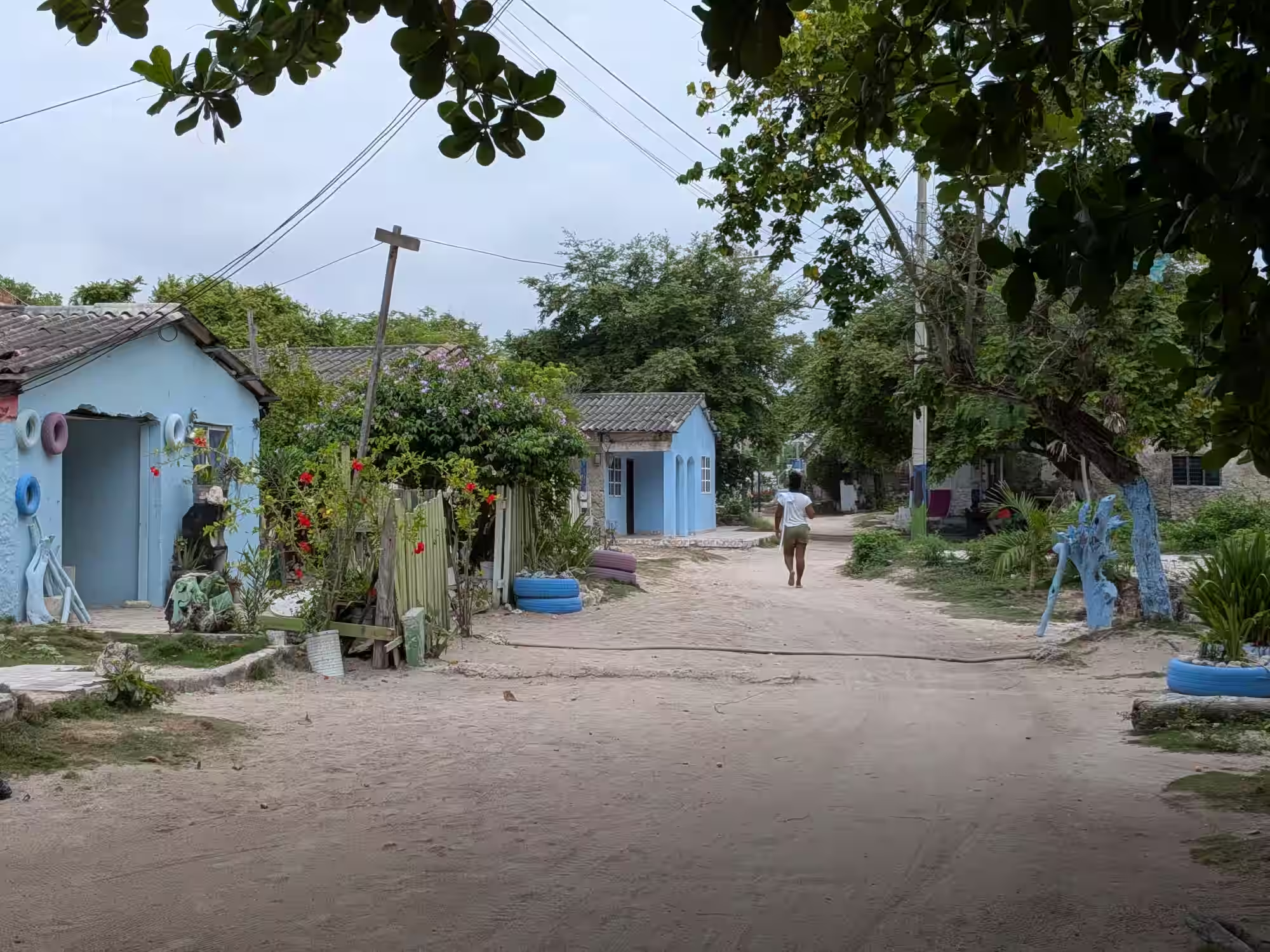
Right opposite Cartagena de Indias, Tierra Bomba is probably the least known of the islands, even though it’s quite large.
The reason: it’s mainly residential, with a predominantly Afro-Colombian population.
I spent a day there enjoying Punta Arena beach, with a lovely view of the city and the port in the distance.
Walking a little, I saw rustic, lived-in little houses typical of the Caribbean. People go about their lives calmly, in a laid-back atmosphere.
To really make the most of the island, I think it would be worth exploring it on foot to discover its full potential.
How to get to Tierra Bomba Island?
- By boat: it’s the only way to get there. Some hotels offer a service to take you there directly. You’ll ride in a small boat, known locally as a “lancha”, driven by locals. In 30 minutes and for 10,000 to 30,000 COP (depending on how many people are on board), you can discover this island few people know about, and yet so different from the city.
Frequently asked questions about Cartagena de Indias
1. Is Cartagena de Indias dangerous?
The tourist neighbourhoods (Walled City, Getsemaní, Bocagrande) are lively and well patrolled, and I always felt safe there. Still, stay careful: keep an eye on your phone and belongings, avoid empty streets at night and use Uber or a taxi to get back late.
2. When is the best time to visit Cartagena de Indias?
You can go all year round, as it’s always hot. The dry season, roughly from December to April, is the most pleasant. July is very busy but the atmosphere is great. October and November are the rainiest months.
3. How many days do you need to visit Cartagena de Indias?
Allow 3 days for the highlights: one day in the Walled City, one between Getsemaní and Castillo San Felipe, and one on the islands. With 5 days, you can add Barú or San Basilio de Palenque.
4. Which neighbourhood should you stay in in Cartagena de Indias?
The Walled City for a first visit, Getsemaní for a tight budget and a more local feel, Bocagrande to be by the beach and away from the bustle.
5. Why is it called “Cartagena de Indias”?
The Spanish gave the city this name when it was founded in 1533, to distinguish it from Cartagena in Spain (region of Murcia). “The Indies” was what the Spanish then called their territories in the Americas.